
 |
|
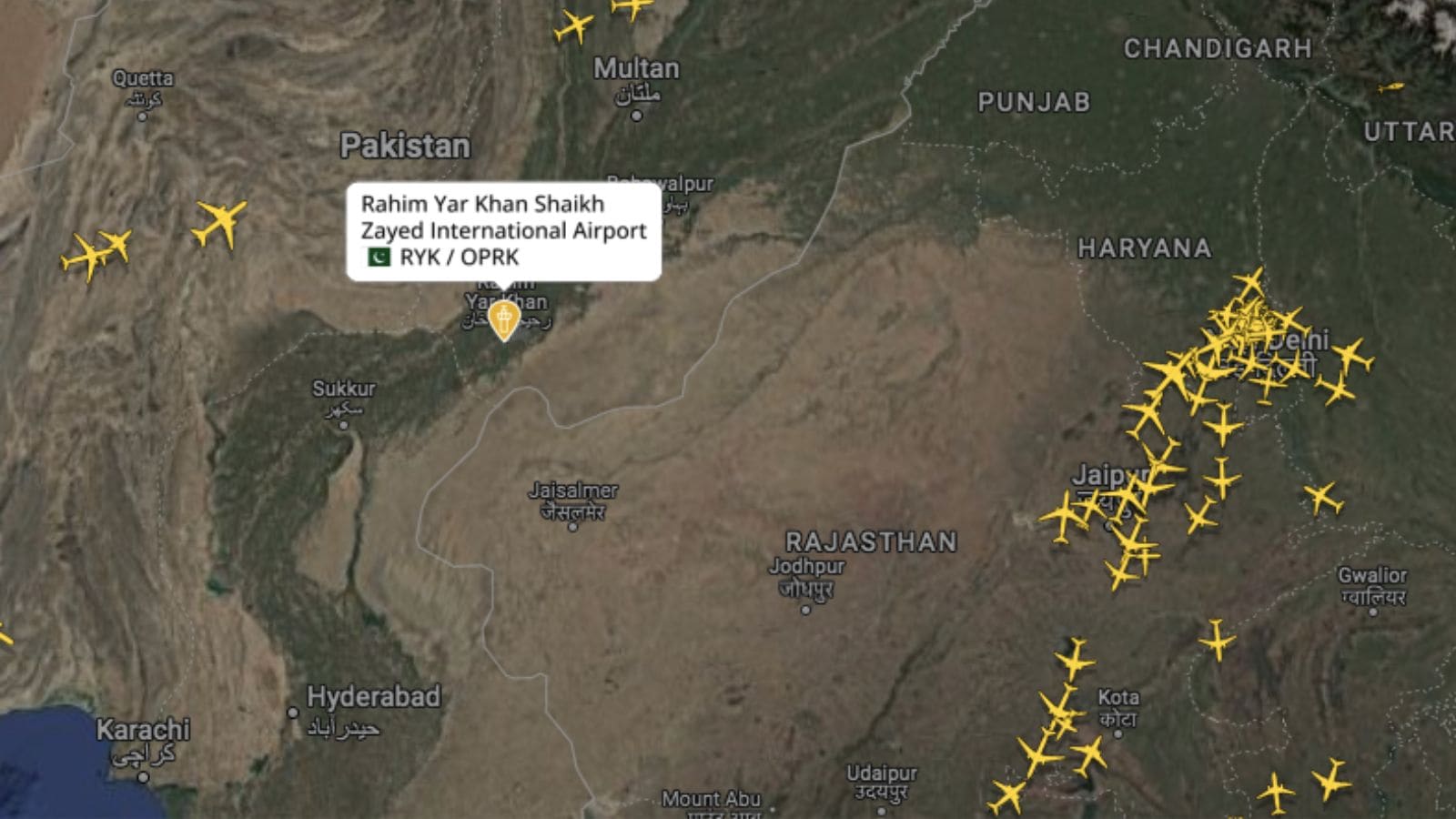
The article details the aftermath of a military strike by India on the Rahim Yar Khan airbase in Pakistan, focusing on the operational status of the airbase's sole runway. Following the strike, the Pakistan Civil Aviation Authority (PCAA) issued a Notice to Airmen (NOTAM) declaring the runway non-operational for a week. This closure, ostensibly due to 'work in progress,' strongly suggests that the runway sustained significant damage from the Indian strike. The timing and duration of the closure, coupled with the NOTAM's vague explanation, lend credence to reports indicating a direct hit by an Indian missile necessitating extensive repairs. The Indian Air Force subsequently confirmed the strike, presenting satellite imagery that corroborated the damage to the runway. The NOTAM itself, reviewed by The Indian Express, specifies the runway's unavailability for flight operations and references ongoing work, a standard aviation term for repairs or construction. The Rahim Yar Khan airbase, which also houses the Sheikh Zayed International Airport, possesses a single runway of substantial length. Its strategic location in the southern part of Pakistan's Punjab province makes its operational status crucial. This incident unfolded within a broader context of escalating military conflict between India and Pakistan, triggered by India's precision strikes on terror infrastructure locations in Pakistan-occupied Kashmir. The airstrike on the Rahim Yar Khan airbase was part of a series of strikes on key Pakistani military targets, including Rafiki, Murid, Chaklala, Sukkur, and Juniya. India employed 'air-launched precision weapons' from its fighter aircraft in these attacks. The article highlights that the Indian actions were a response to Pakistan's 'escalatory' and 'provocative' actions, including attempts at air intrusions that were thwarted by Indian armed forces. The tensions between the two nuclear-armed neighbors reached a peak following the initial Indian strikes, with Pakistan launching drone and missile attacks against India. India retaliated with strikes on Pakistani military assets. Before arriving at a ceasefire understanding, both nations engaged in what was described as the worst fighting in decades, stemming from the deadly attack at Pahalgam in which many tourists were killed by Pakistan-backed terrorists.
The strategic implications of the Rahim Yar Khan airbase closure are significant. The airbase is a vital military asset for Pakistan, and its temporary incapacitation disrupts Pakistan's air defense capabilities and its ability to project air power in the region. Furthermore, the incident serves as a stark reminder of the volatile security situation in the region and the ever-present risk of escalation between India and Pakistan. The use of air-launched precision weapons by India indicates a sophisticated level of military technology and a willingness to employ it in targeted strikes. The confirmation of the strike by the Indian Air Force, accompanied by satellite imagery, underscores India's transparency regarding its military operations and its determination to hold Pakistan accountable for its actions. Conversely, Pakistan's initial reluctance to explicitly acknowledge the damage to the runway, citing 'work in progress' in the NOTAM, suggests an attempt to downplay the extent of the damage and the effectiveness of the Indian strike. The international community is likely to closely monitor the situation, urging both India and Pakistan to exercise restraint and de-escalate tensions. The long-term consequences of the military conflict remain to be seen, but the incident at the Rahim Yar Khan airbase highlights the need for a renewed focus on dialogue and diplomacy to address the underlying causes of instability in the region. The use of NOTAM (Notice to Airmen) in such a situation also brings to light the importance of international aviation regulations and protocols in maintaining safety and transparency during times of conflict. The specifics shared about the runway, such as the 3000 meters bituminous surface and location within the Sheikh Zayed International Airport complex, illustrate the dual-use nature of the facility, serving both military and civilian purposes.
The escalating tensions between India and Pakistan have a significant impact on the stability of the South Asian region. The repeated cross-border attacks and retaliations contribute to a climate of fear and uncertainty, undermining efforts to promote regional cooperation and economic development. The use of advanced military technology, such as precision-guided missiles and drones, raises concerns about the potential for miscalculation and accidental escalation. The international community has a responsibility to encourage India and Pakistan to resolve their differences through peaceful means and to support efforts to build trust and confidence between the two nations. The conflict has also exacerbated humanitarian challenges, particularly in the disputed territory of Kashmir, where civilians are often caught in the crossfire. The need for humanitarian assistance and protection is particularly acute in areas affected by the fighting. The role of non-state actors, such as terrorist groups operating in the region, further complicates the security situation and poses a threat to both India and Pakistan. Addressing the root causes of terrorism and extremism is essential to achieving lasting peace and stability in South Asia. The impact of such conflicts extends beyond the immediate geographical area and affects global security. The use of nuclear weapons by either side would have catastrophic consequences, underscoring the need for responsible behavior and adherence to international norms and treaties. Further, the disruption of air traffic, as exemplified by the NOTAM issued for Rahim Yar Khan, can have broader implications for regional and international aviation. Understanding the intricacies of these incidents is vital for analyzing geopolitical risks and potential global ramifications.
The economic implications of the India-Pakistan conflict are also substantial. The ongoing tensions disrupt trade and investment flows, hindering economic growth and development in both countries. The diversion of resources to military spending further strains public finances and reduces the availability of funds for essential social services, such as education and healthcare. The uncertainty created by the conflict discourages foreign investment and undermines investor confidence. The tourism sector, a vital source of revenue for both countries, is particularly vulnerable to the impact of the tensions. The Pahalgam attack, which targeted tourists, highlights the deliberate effort to destabilize the region and damage its economy. The conflict also disrupts cross-border trade and economic cooperation, particularly in areas such as energy and water resources. The Indus Waters Treaty, a landmark agreement between India and Pakistan, has been under strain in recent years due to the escalating tensions. The need for sustainable economic development and regional cooperation is crucial for addressing the underlying causes of the conflict and promoting lasting peace and stability. The international community can play a vital role in supporting economic development and promoting trade and investment in the region. The development of infrastructure, such as roads, railways, and energy pipelines, can help to connect the region and facilitate economic integration. The promotion of education and job creation is essential for addressing poverty and inequality, which are significant drivers of conflict. Therefore, the situation at Rahim Yar Khan extends beyond a military incident to impact the overall economic and social fabric of both nations and the surrounding regions.
The future trajectory of the India-Pakistan relationship remains uncertain. While the ceasefire agreement represents a positive step, it is essential to address the underlying causes of the conflict and to build trust and confidence between the two nations. The establishment of a credible dialogue mechanism is crucial for resolving outstanding issues, such as the Kashmir dispute, and for preventing future escalations. The international community can play a constructive role in facilitating dialogue and mediating between the two sides. The need for a comprehensive approach to security, which addresses both military and non-military threats, is essential. This includes strengthening border security, combating terrorism and extremism, and promoting regional cooperation on issues such as climate change and water management. The promotion of people-to-people exchanges, such as cultural programs and educational opportunities, can help to build bridges between the two societies and to foster understanding and empathy. The role of civil society organizations and community leaders is crucial in promoting peace and reconciliation. The media also has a responsibility to report accurately and objectively on the conflict and to avoid inflammatory rhetoric that can exacerbate tensions. The long-term goal should be to build a relationship based on mutual respect, trust, and cooperation. This requires a willingness to address historical grievances, to acknowledge past mistakes, and to commit to a future of peace and prosperity. The incident at Rahim Yar Khan serves as a reminder of the fragility of peace in the region and the need for sustained efforts to build a more stable and secure future. Considering the complex dynamics involved, the path toward lasting peace necessitates a multifaceted approach involving political, economic, social, and cultural dimensions.
The response of the international community to the India-Pakistan conflict is critical in shaping its outcome. A unified and consistent message from major powers, urging restraint and de-escalation, can help to prevent further escalation. The international community can also provide assistance in mediating between the two sides and in facilitating dialogue. The role of the United Nations is particularly important in maintaining international peace and security. The UN Security Council can impose sanctions or other measures to prevent further escalation and to enforce international law. The UN can also deploy peacekeeping forces to monitor ceasefire agreements and to provide humanitarian assistance. The international community can also provide financial and technical assistance to support economic development and humanitarian relief efforts in the region. The need for a coordinated and effective response to the conflict is essential. This requires close cooperation between governments, international organizations, and civil society organizations. The international community should also be vigilant in monitoring the situation and in preventing the spread of disinformation and propaganda. The importance of upholding international law and human rights is paramount. All parties to the conflict must respect the principles of international humanitarian law and ensure the protection of civilians. The international community should also hold accountable those responsible for war crimes and human rights violations. The long-term goal should be to build a more just and peaceful world, where conflicts are resolved through diplomacy and dialogue, and where all people can live in dignity and security. The situation at Rahim Yar Khan is a stark reminder of the challenges facing the international community in maintaining peace and security in a complex and interconnected world. Continuing to monitor the geopolitical landscape is essential for anticipating future challenges and proactively responding to the needs of those most vulnerable to violence.