
 |
|
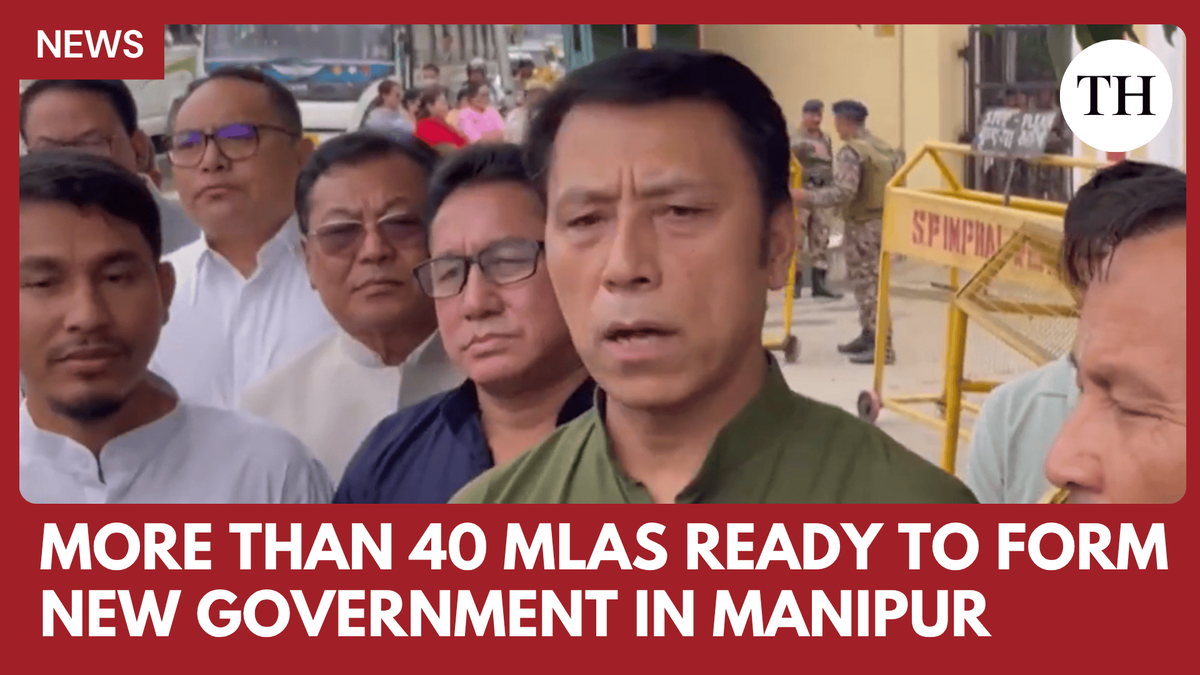
The political landscape of Manipur is currently experiencing significant turbulence, as evidenced by the recent meeting between a group of MLAs and the Governor. This meeting, held at the Raj Bhavan in Imphal, saw over 40 MLAs expressing their readiness to form a new government. This development occurs against the backdrop of ongoing civil disobedience, adding layers of complexity to an already volatile situation. The key players involved include members of the Bharatiya Janata Party (BJP), the National People’s Party (NPP), and an independent MLA, signaling a potential coalition that aims to address the prevailing unrest and restore stability to the state. The push for a "popular" government highlights the desire for a leadership that can effectively represent and serve the diverse needs of the Manipuri population, especially in the face of persistent ethnic tensions and socio-political challenges. The involvement of central BJP leaders and their subsequent downplaying of the significance of the meeting further complicates the narrative, suggesting a divergence in perspectives between the state-level aspirations and the central leadership's strategic considerations. The state has been under President's Rule since February 13, adding another layer of complexity to the political dynamics. The existing ethnic divisions, particularly between the Meitei and Kuki-Zomi communities, have significantly impacted governance. The fact that ten MLAs, including seven from the BJP, representing the Kuki-Zomi communities, have been unable to return to Imphal since the outbreak of ethnic conflict in May 2023 underscores the deep-seated divisions and the challenges in achieving a unified political front. The recent incidents, such as the controversy surrounding the government-run bus and the subsequent demands from the Coordinating Committee on Manipur Integrity (COCOMI), further illustrate the fragile socio-political environment in Manipur. The call for resignations of key administrative and security officials highlights the deep mistrust and dissatisfaction among certain segments of the population, particularly the Meitei community. The history of unrest in Manipur, marked by significant loss of life and displacement, emphasizes the urgency of finding a sustainable solution that addresses the root causes of the conflict and promotes reconciliation among the various communities. The steps taken by the former Chief Minister, Nongthombam Biren Singh, to identify illegal immigrants from Myanmar and Bangladesh, while aimed at addressing specific concerns, also reflect the complex demographic challenges facing the state. The push for a new government should therefore be viewed as a pivotal moment in Manipur's efforts to navigate its complex challenges and chart a path towards peace, stability, and inclusive governance.
The formation of a government in Manipur, even if supported by a majority of MLAs, is not without its significant hurdles. The deep-seated ethnic tensions between the Meitei and Kuki-Zomi communities pose a formidable challenge to any potential administration. The inability of Kuki-Zomi MLAs to return to Imphal highlights the pervasive insecurity and lack of trust, which can undermine the legitimacy and effectiveness of the government. Moreover, the state's history of ethnic violence and unrest necessitates a delicate and inclusive approach to governance. Any perceived bias or preferential treatment towards one community over another could further exacerbate existing tensions and reignite conflict. Therefore, the new government must prioritize dialogue, reconciliation, and equitable resource allocation to build trust and foster a sense of shared ownership among all communities. The involvement of the central BJP leadership in the government formation process adds another layer of complexity. While the central government's support is crucial for the state's stability and development, any perception of interference or imposition of decisions could undermine the state's autonomy and fuel resentment. It is imperative that the central government respects the state's unique socio-political context and allows for a government that is genuinely representative of the people's will. The dynamics within the NDA coalition also play a significant role. The presence of MLAs from different parties, including the BJP, NPP, and independents, necessitates a careful balancing of interests and priorities. The ability of the coalition to maintain unity and cohesiveness will be crucial for the government's stability and effectiveness. Any internal conflicts or power struggles could weaken the government and hinder its ability to address the state's challenges effectively. Therefore, strong leadership, clear communication, and a shared vision are essential for the success of the coalition. The specific issues raised by COCOMI, such as the apology for the bus incident and the resignation of key officials, highlight the deep-seated grievances and demands for accountability. Addressing these concerns requires a transparent and impartial investigation, followed by appropriate action. Failure to address these concerns could further erode public trust and fuel further unrest.
The push for a "popular government" in Manipur should be interpreted as a response to the perceived inadequacies of the current administrative setup, particularly in light of the prolonged President’s Rule. While President’s Rule is intended to provide a temporary solution during times of political instability, its prolonged imposition can lead to a sense of disconnect between the government and the people. A popular government, on the other hand, is seen as more responsive to the needs and aspirations of the local population, as it is directly accountable to the electorate. The call for a popular government also reflects a desire for greater self-determination and autonomy. The people of Manipur, having experienced the challenges of direct rule from the center, may be seeking a government that is more attuned to their specific needs and priorities. This desire for self-governance is a common theme in many regions with complex ethnic and socio-political dynamics. The role of the media and public opinion in shaping the political landscape of Manipur cannot be understated. The incident involving the government-run bus and the subsequent media coverage played a significant role in galvanizing public anger and triggering the civil disobedience movement. The ability of social organizations like COCOMI to mobilize public support and exert pressure on the government highlights the power of civil society in shaping political outcomes. Therefore, the new government must engage with the media and civil society in a transparent and constructive manner to build trust and garner support for its policies and programs. Furthermore, it's crucial that the government addresses the underlying causes of the ethnic conflict in Manipur. This requires a multi-faceted approach that includes dialogue, reconciliation, economic development, and equitable resource allocation. The government must also ensure that the security forces act with impartiality and restraint, and that all citizens are treated with fairness and respect. Only by addressing these underlying issues can the government create a sustainable foundation for peace, stability, and prosperity in Manipur.
The situation in Manipur also serves as a case study for understanding the complexities of governance in ethnically diverse regions. The challenges faced by Manipur are not unique, and many other states and regions around the world grapple with similar issues. The lessons learned from Manipur's experience can inform policy decisions and governance strategies in other conflict-affected areas. One key lesson is the importance of inclusive governance. A government that represents the interests of all communities and ensures equitable access to resources and opportunities is more likely to foster peace and stability. Another important lesson is the need for effective conflict resolution mechanisms. Early intervention and dialogue can prevent disputes from escalating into violence. Furthermore, a strong and impartial judiciary is essential for ensuring that justice is served and that grievances are addressed fairly. The role of external actors, such as neighboring countries and international organizations, can also be significant. External support can provide valuable resources and expertise for conflict resolution and development. However, external actors must also be mindful of the potential to exacerbate tensions or undermine local initiatives. Ultimately, the success of any government in Manipur will depend on its ability to build trust, foster reconciliation, and promote inclusive development. This requires a long-term commitment to dialogue, collaboration, and a willingness to address the underlying causes of the conflict. The challenges are significant, but the potential rewards – a peaceful, stable, and prosperous Manipur – are well worth the effort. The international community should also pay close attention to the situation in Manipur and provide support for efforts to promote peace and development. This support should be tailored to the specific needs of the region and should be delivered in a way that respects the sovereignty and autonomy of the state. The challenges ahead are significant, but the potential rewards – a peaceful, stable, and prosperous Manipur – are well worth the effort. The recent events underscore the urgent need for a comprehensive and sustainable solution to the conflict in Manipur. The future of the state depends on the ability of its leaders to rise above partisan politics and work together to build a better future for all its citizens.
In addition to political maneuvering and coalition building, the economic dimensions of the unrest in Manipur warrant careful consideration. The disruption of economic activities, the displacement of populations, and the overall instability have had a significant impact on the state's economy. Rebuilding the economy and providing livelihood opportunities for those affected by the conflict are crucial for ensuring long-term peace and stability. The government must prioritize investments in infrastructure, education, and healthcare to create a more inclusive and prosperous society. Moreover, promoting entrepreneurship and supporting small businesses can help to create jobs and stimulate economic growth. The government should also explore opportunities for developing the state's natural resources in a sustainable and environmentally responsible manner. However, it is important to ensure that the benefits of economic development are shared equitably among all communities. Any perception of unequal distribution of resources or opportunities could further exacerbate existing tensions and undermine the peace process. The role of civil society organizations and non-governmental organizations (NGOs) is also crucial in addressing the economic needs of the affected populations. These organizations can provide valuable support in the form of food, shelter, medical care, and psychosocial support. They can also help to empower communities to participate in the reconstruction and development process. The government should work in partnership with civil society organizations and NGOs to ensure that aid reaches those who need it most and that development programs are implemented effectively. Furthermore, addressing the root causes of the conflict, such as poverty, inequality, and lack of access to resources, is essential for creating a more resilient and sustainable economy. This requires a long-term commitment to social and economic development that is based on principles of equity, justice, and sustainability. The recent events highlight the interconnectedness of political, economic, and social factors in conflict-affected regions. A comprehensive approach that addresses all of these factors is essential for achieving lasting peace and stability in Manipur. The government must also engage with the international community to mobilize resources and expertise for economic development and conflict resolution. The challenges are significant, but the potential rewards – a peaceful, stable, and prosperous Manipur – are well worth the effort.
The legal and security dimensions of the Manipur crisis require a comprehensive and nuanced approach. Ensuring the rule of law, maintaining public order, and protecting the rights of all citizens are essential for creating a secure and stable environment. The government must prioritize strengthening the capacity of the police and the judiciary to effectively investigate and prosecute crimes, and to ensure that justice is served fairly and impartially. It is also important to address the underlying causes of crime and violence, such as poverty, inequality, and lack of access to education and employment opportunities. Furthermore, the government must ensure that the security forces act with restraint and respect for human rights. Allegations of human rights abuses should be investigated promptly and thoroughly, and those responsible should be held accountable. The government should also work to build trust between the security forces and the local communities. This requires transparency, communication, and a commitment to community policing. The role of traditional justice systems and customary law should also be considered. These systems can play a valuable role in resolving disputes and maintaining social harmony, but they must also be consistent with human rights standards. The government should work to integrate traditional justice systems into the formal legal framework in a way that respects both local customs and international norms. Furthermore, addressing the issue of illegal immigration and cross-border trafficking is crucial for ensuring national security and protecting the rights of citizens. The government must strengthen border controls, improve immigration enforcement, and work with neighboring countries to combat transnational crime. However, it is important to ensure that any measures taken to address these issues are consistent with human rights principles and do not discriminate against any particular community. The recent events underscore the need for a comprehensive and integrated approach to legal and security issues in Manipur. The government must work in partnership with the judiciary, the police, civil society organizations, and the international community to create a secure and just society for all its citizens. The challenges are significant, but the potential rewards – a peaceful, stable, and secure Manipur – are well worth the effort.
The sociocultural dynamics underpinning the Manipur crisis necessitate a deeper understanding and recognition of the diverse identities and histories within the state. Promoting intercultural dialogue, mutual respect, and a shared sense of belonging are crucial for fostering social cohesion and preventing future conflicts. The government, along with civil society organizations and community leaders, must actively work to promote understanding and empathy between different communities. This can be achieved through educational initiatives, cultural exchange programs, and joint community projects. The role of language and literature in preserving and promoting cultural heritage should also be recognized. Supporting local languages, promoting indigenous art forms, and encouraging the documentation and preservation of oral traditions are essential for safeguarding cultural diversity. Furthermore, addressing historical grievances and injustices is crucial for building trust and fostering reconciliation. This requires a transparent and impartial process of truth-telling, reconciliation, and reparations. The government should also work to promote inclusive narratives of Manipur's history that recognize the contributions and experiences of all communities. The media can play a significant role in shaping public perceptions and promoting understanding between different communities. The government should encourage responsible journalism and promote media literacy to combat hate speech and misinformation. Furthermore, recognizing and addressing the specific needs and concerns of marginalized groups, such as women, children, and persons with disabilities, is crucial for ensuring social justice and promoting inclusive development. The government should also work to empower local communities to participate in decision-making processes that affect their lives. This requires decentralization of power, strengthening local governance institutions, and promoting community participation in development planning and implementation. The recent events underscore the importance of addressing the sociocultural dimensions of the Manipur crisis. A comprehensive approach that recognizes and respects cultural diversity, promotes intercultural dialogue, and addresses historical grievances is essential for achieving lasting peace and social harmony. The challenges are significant, but the potential rewards – a culturally vibrant, socially cohesive, and inclusive Manipur – are well worth the effort.
The role of education in shaping a more peaceful and prosperous future for Manipur cannot be overstated. Investing in quality education, promoting critical thinking, and fostering a culture of tolerance and respect are essential for creating a generation of citizens who are equipped to address the challenges facing the state. The government must prioritize improving access to education, particularly for marginalized communities, and ensuring that all children have the opportunity to attend school. This requires addressing issues such as poverty, discrimination, and lack of infrastructure. The curriculum should be designed to promote intercultural understanding, respect for diversity, and a sense of shared citizenship. History lessons should be inclusive and balanced, and should recognize the contributions and experiences of all communities. Furthermore, education should be used to promote critical thinking, problem-solving skills, and a culture of innovation. Students should be encouraged to question assumptions, challenge stereotypes, and develop their own independent judgments. The role of teachers in shaping the minds of young people is crucial. Teachers should be trained to be sensitive to the needs of diverse learners and to promote a culture of respect and tolerance in the classroom. They should also be provided with ongoing professional development opportunities to stay abreast of the latest pedagogical techniques and to enhance their knowledge of local cultures and histories. Furthermore, promoting vocational training and skill development is essential for equipping young people with the skills they need to succeed in the workforce. The government should work in partnership with industry to identify skill gaps and to develop training programs that meet the needs of the local economy. The recent events underscore the importance of investing in education as a means of promoting peace, social cohesion, and economic development in Manipur. A comprehensive approach that addresses the diverse needs of learners, promotes intercultural understanding, and fosters a culture of innovation is essential for creating a brighter future for the state. The challenges are significant, but the potential rewards – a well-educated, skilled, and engaged citizenry – are well worth the effort.
In conclusion, the situation in Manipur is multifaceted, encompassing political, economic, security, sociocultural, and educational dimensions. Addressing the crisis requires a holistic and integrated approach that considers all of these factors. The formation of a new government, while a significant step, is only one piece of the puzzle. A successful government must prioritize inclusive governance, reconciliation, economic development, security, sociocultural understanding, and education. The government must also work in partnership with civil society organizations, community leaders, the international community, and the people of Manipur to build a more peaceful, stable, and prosperous future for the state. The challenges are significant, but the potential rewards are immense. The future of Manipur depends on the ability of its leaders and its people to come together, overcome their differences, and build a society that is based on principles of justice, equity, and respect for all. This requires a long-term commitment to dialogue, collaboration, and a willingness to address the underlying causes of the conflict. The recent events underscore the urgency of finding a comprehensive and sustainable solution to the Manipur crisis. The international community should provide support for efforts to promote peace, development, and human rights in the state. The people of Manipur have suffered for too long. It is time to put an end to the violence and to create a brighter future for all. The path forward will not be easy, but with courage, determination, and a commitment to justice and equality, the people of Manipur can overcome the challenges they face and build a society that is a model for peace and prosperity in the region. The government should also promote transparency and accountability in all its dealings, and should ensure that all citizens have equal access to information and opportunities. Furthermore, the government should work to strengthen local governance institutions and to empower communities to participate in decision-making processes. The success of the new government will depend on its ability to build trust and to create a sense of shared ownership among all communities in Manipur. The challenges are significant, but with strong leadership, good governance, and the support of the people, the potential rewards are enormous.
Source: 44 MLAs are ready to form government, Manipur Governor told