
 |
|
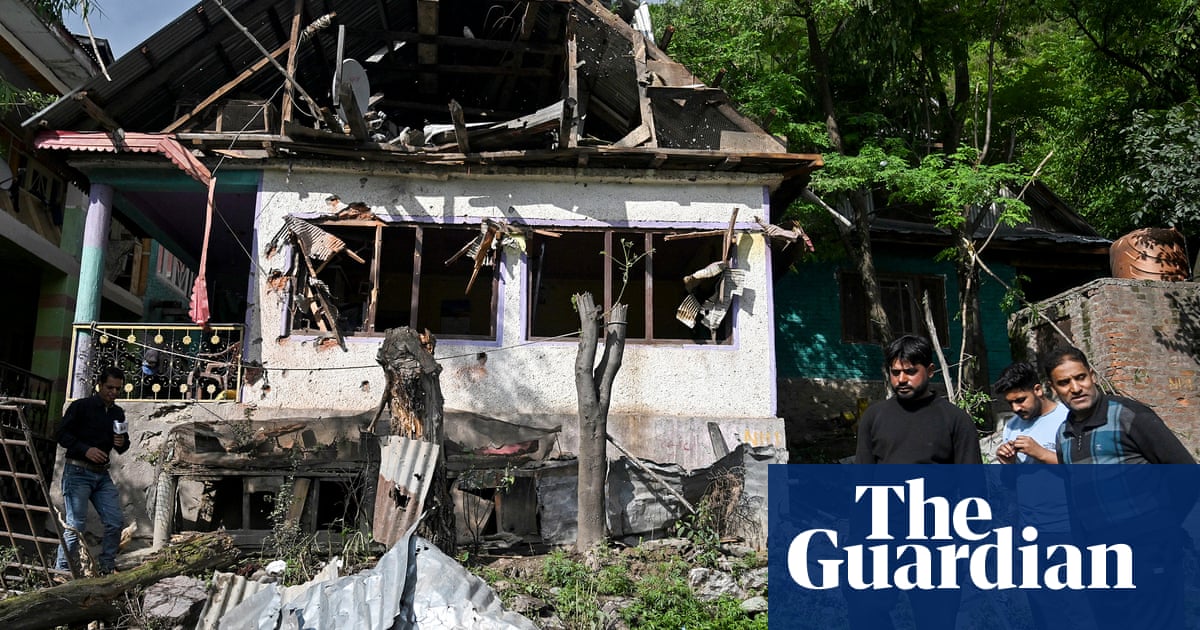
The article paints a grim picture of life in Kashmir, a region caught in the crosshairs of a long-standing conflict between India and Pakistan. It highlights the cycle of violence that plagues the area, focusing on the recent escalation triggered by a militant attack on tourists in Pahalgam. This attack, which resulted in the deaths of 25 tourists and a local guide, served as a catalyst for renewed hostilities between the two nuclear-armed neighbors. India accused Pakistan of having links to the attack, a claim that Pakistan vehemently denied. The subsequent artillery fire across the Line of Control (LoC), the heavily militarized de facto border dividing Kashmir, forced civilians like Rina Begum to flee their homes, leaving behind devastated houses and shattered lives. Begum's experience exemplifies the plight of ordinary Kashmiris who are constantly living under the shadow of violence and uncertainty. The article emphasizes the deep-seated fear and anxiety that pervade Kashmiri society, even in times of relative calm. The residents recognize the fragility of the peace and are skeptical that it will last, given the unresolved issues that fuel the conflict. Begum’s statement, “I pray this calm lasts, But these countries will never coexist peacefully unless their issues are resolved. It’s only a matter of time – weeks, months or years – before we’re caught in their war again,” encapsulates this sentiment perfectly. The article also points out the complex political dynamics at play in the region. India's decision to revoke Kashmir's limited autonomy in 2019, splitting it into two union territories, has further alienated the local population and fueled resentment against the Indian government. The subsequent crackdown on dissent and the implementation of new laws that stripped local people of exclusive rights over land and jobs have exacerbated tensions and created a sense of insecurity. The Indian government justified these measures as a step towards development and better security, but critics argue that they have only served to further marginalize the Kashmiri people and strengthen the hands of militant groups. The article highlights the resurgence of militancy in the region since 2019. Highly trained militants, equipped with modern communications and sophisticated jungle warfare skills, are carrying out attacks not only against government forces but also against Hindu minority communities, non-local laborers, and Hindu pilgrims. These attacks underscore the precariousness of the security situation in Kashmir and challenge the Indian government's narrative of normalcy. The article also raises concerns about the potential for future escalation between India and Pakistan. The hawkish rhetoric from Indian officials, particularly the statement that “any attack on Indian soil will be considered an act of war,” is seen as increasing the likelihood of future military action. Counter-terrorism experts warn that such statements could play into the hands of militant groups, who may be seeking to provoke a full-scale war between India and Pakistan. The article also explores the role of new technologies in the conflict. The use of drones and loitering munitions during the recent flare-up suggests that these weapons could become a permanent feature of future conflicts in the region. This raises the specter of a new era of warfare, where targeted assassinations and precision strikes become commonplace, further blurring the lines between peace and war. The constant threat of violence and the heavy-handed security measures imposed by the Indian government have created a climate of fear and repression in Kashmir. Hundreds of people have been detained in the aftermath of the Pahalgam attack, and many have been held under the Public Safety Act, a draconian law that allows detention without trial for up to two years. This has led to widespread allegations of human rights abuses and further alienated the local population. The article ends on a pessimistic note, suggesting that the situation in Kashmir is likely to remain volatile and unpredictable in the foreseeable future. The unresolved political issues, the resurgence of militancy, and the hawkish rhetoric from both India and Pakistan all contribute to a sense of impending crisis. Unless a genuine effort is made to address the underlying causes of the conflict, the cycle of violence is likely to continue, inflicting further suffering on the Kashmiri people.
The core issue at the heart of the Kashmir conflict lies in the unresolved territorial dispute between India and Pakistan, both of whom claim the entire region. This claim is rooted in the historical context of the partition of India in 1947, when the princely state of Jammu and Kashmir was given the option to accede to either India or Pakistan. The then-ruler, Maharaja Hari Singh, initially hesitated but ultimately signed the Instrument of Accession with India in October 1947, following an invasion by Pakistani tribesmen. However, Pakistan has consistently challenged the legitimacy of this accession, arguing that it was obtained under duress and does not reflect the wishes of the Kashmiri people. The dispute has led to multiple wars between India and Pakistan, including the Indo-Pakistani Wars of 1947, 1965, and 1971, as well as the Kargil War of 1999. Despite numerous attempts at mediation, including efforts by the United Nations and various international actors, the issue remains unresolved. The Line of Control (LoC), which divides Kashmir between India and Pakistan, is a highly militarized zone and a frequent site of cross-border firing and skirmishes. In addition to the territorial dispute, the conflict is also fueled by ethnic and religious tensions. The majority of the population in Indian-administered Kashmir is Muslim, while India is a predominantly Hindu country. This religious divide has been exploited by separatist groups and militant organizations, who seek to either merge with Pakistan or achieve independence from India. Pakistan has historically supported these groups, providing them with training, arms, and logistical support. India accuses Pakistan of sponsoring terrorism in Kashmir, while Pakistan denies these charges, claiming that it only provides moral and diplomatic support to the Kashmiri people. The Indian government has responded to the insurgency with a massive counterinsurgency campaign, deploying hundreds of thousands of troops to the region. This has led to widespread allegations of human rights abuses, including extrajudicial killings, torture, and arbitrary detentions. The revocation of Kashmir's limited autonomy in 2019 has further exacerbated tensions and fueled resentment against the Indian government. The move was widely condemned by human rights organizations and international observers, who argued that it violated the rights of the Kashmiri people and undermined the region's unique cultural identity. The Indian government defended the decision, arguing that it was necessary to bring Kashmir into the mainstream of Indian society and promote economic development. However, critics argue that the move was primarily aimed at suppressing dissent and consolidating Indian control over the region. The international community has largely called for a peaceful resolution to the Kashmir dispute, urging India and Pakistan to engage in dialogue and address the underlying causes of the conflict. However, progress towards a resolution has been hampered by a lack of trust between the two countries and a reluctance to compromise on their respective positions. The United States has traditionally played a mediating role in the conflict, but its influence has waned in recent years. Other countries, such as China and Russia, have also expressed interest in mediating the dispute, but their efforts have so far been unsuccessful. The future of Kashmir remains uncertain. Unless India and Pakistan can find a way to resolve their differences and address the grievances of the Kashmiri people, the region is likely to remain a source of instability and conflict for years to come.
Beyond the immediate political and security dimensions, the Kashmir conflict has profound humanitarian consequences for the civilian population. The constant threat of violence, the displacement of communities, and the disruption of daily life have created a pervasive sense of fear and insecurity. Access to basic services, such as healthcare and education, is often limited, and the economy has been severely impacted by the ongoing conflict. The mental health of the Kashmiri people has also suffered greatly. The trauma of witnessing violence, the loss of loved ones, and the constant stress of living in a conflict zone have taken a heavy toll. Many Kashmiris suffer from anxiety, depression, and post-traumatic stress disorder (PTSD). Children are particularly vulnerable, as they are exposed to violence and trauma at a young age. The lack of educational opportunities and the disruption of family life can have long-term consequences for their development. The conflict has also had a devastating impact on the environment. The heavy military presence has led to deforestation and soil erosion, while the use of explosives and artillery has damaged the region's fragile ecosystem. The pollution of water sources and the disruption of wildlife habitats have further exacerbated the environmental damage. The international community has a responsibility to provide humanitarian assistance to the Kashmiri people and to support efforts to promote peace and reconciliation. This includes providing medical care, education, and psychosocial support, as well as working to protect the environment and promote sustainable development. It is also important to ensure that the human rights of all Kashmiris are respected and protected, and that those responsible for human rights abuses are held accountable. The media also has a crucial role to play in reporting on the conflict in a fair and accurate manner. It is important to avoid sensationalism and to focus on the human impact of the conflict. The media can also help to promote understanding and empathy between the different communities in Kashmir and to foster a culture of peace and reconciliation. Ultimately, a lasting solution to the Kashmir conflict will require a comprehensive approach that addresses the underlying political, economic, and social issues. This includes engaging in meaningful dialogue with all stakeholders, respecting the rights of the Kashmiri people, and promoting sustainable development in the region. It is also important to address the root causes of extremism and to promote tolerance and understanding between different religions and cultures. The path to peace in Kashmir will not be easy, but it is essential that all parties work together to create a more just and sustainable future for the region. The international community must play its part in supporting this effort and in ensuring that the voices of the Kashmiri people are heard. The future of Kashmir depends on our collective commitment to peace, justice, and human dignity. The current situation, as highlighted by Rina Begum's plight and the escalating tensions, underscores the urgent need for a renewed focus on diplomatic solutions and humanitarian assistance. Failing to address the root causes of the conflict will only perpetuate the cycle of violence and suffering, leaving generations of Kashmiris to live in fear and uncertainty. The world cannot afford to ignore the plight of Kashmir; it is a moral imperative to work towards a peaceful and just resolution that respects the rights and aspirations of all its people.
Source: ‘I pray this calm lasts’: fear lingers in Kashmir amid uneasy peace