
 |
|
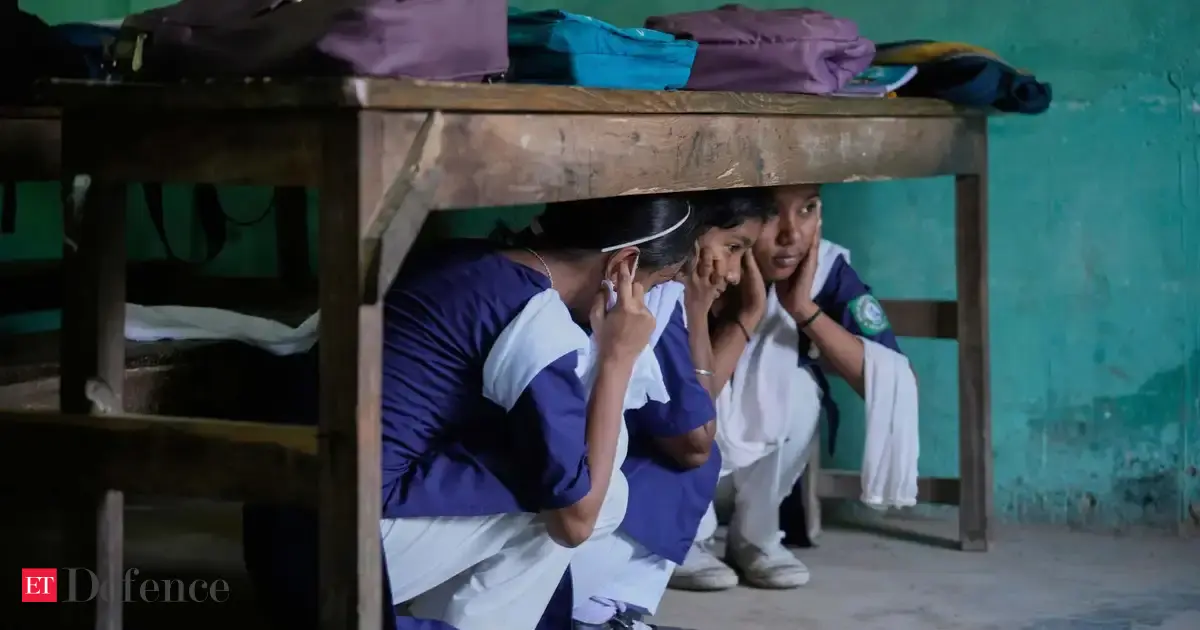
The resurgence of mock security drills in the Indian states bordering Pakistan signals a heightened state of alert and a recalibration of India's strategic posture towards its neighbor. Following reports of 'Operation Sindoor,' a military operation purportedly targeting terrorist sites within Pakistani territory, the decision to conduct these exercises underscores a multi-pronged approach aimed at bolstering national security, signaling resolve, and potentially influencing Pakistani behavior. These drills, planned in Gujarat, Punjab, Rajasthan, and Jammu and Kashmir, serve not only as a practical exercise for security forces but also as a visible demonstration of India's preparedness to respond to potential threats emanating from across the border. The timing of these drills, coming on the heels of Operation Sindoor, is particularly significant. It suggests a deliberate and coordinated effort to maintain pressure on Pakistan and to deter future acts of cross-border terrorism. The article highlights that a previous mock drill on May 7 was followed by an operation destroying terror launch pads, indicating a pattern of proactive security measures. The article explicitly states that Operation Sindoor achieved three key objectives: political, military, and psychological. The military objective, as articulated by the Prime Minister, was to degrade the capabilities of terrorist groups operating near the border. The article reports that this objective was supposedly accomplished in Bahawalpur, Muridke, and Muzaffarabad. This claim, if substantiated, would represent a significant blow to the infrastructure and operational capacity of these groups. The political aim was to increase the cost for Pakistan of supporting terrorism. This involved sending a message that sponsoring or enabling terrorist activities would have tangible consequences for Pakistan's relationship with India, potentially including the suspension of existing agreements or the imposition of economic or diplomatic sanctions. The suspension of the Indus Waters Treaty, mentioned in the article, would be a significant escalation, given its importance to Pakistan's water security. The psychological aim was to instill a sense of vulnerability among terrorists, conveying the message that no location within Pakistan is beyond the reach of Indian military action. This is designed to create a climate of fear and uncertainty, potentially disrupting terrorist planning and recruitment efforts. The article emphasizes a shift in India's strategic approach towards Pakistan. It suggests that India is no longer willing to allow the Line of Control (LoC) or Pakistan's nuclear arsenal to serve as a shield for terrorist activities. This implies a willingness to take more assertive action, even at the risk of escalation. The article directly quotes the Prime Minister's instruction to the armed forces to respond to every 'goli' with a 'gola,' indicating a more robust and retaliatory posture. The claim that India had communicated its intention to strike terror camps in Pakistan to both US President Donald Trump and US Senator Marco Rubio further suggests a concerted effort to build international support for its actions. This is crucial for mitigating potential international condemnation and ensuring that India's actions are viewed as legitimate self-defense. Air Marshal A.K. Bharti's briefing on the precision strikes on Pakistani airbases and radar installations provides additional context for understanding the escalation of tensions. The article states that these actions were in response to repeated drone attacks from Pakistan on Indian military and civilian sites, highlighting a tit-for-tat dynamic. The presentation of 'before and after' satellite images showing damage to key Pakistani airbases is intended to demonstrate the effectiveness of the Indian strikes and to deter further provocations. The article concludes with Air Marshal Bharti's statement that the initial focus was solely on terrorist groups, but the relentless attacks from Pakistan forced a broader military response. This implies a gradual escalation of the conflict, with each side responding to the actions of the other. The current situation remains tense, with Operation Sindoor reportedly ongoing and the suspension of the Indus Waters Treaty still in effect. The potential for further escalation remains a significant concern, and both India and Pakistan will need to exercise restraint and engage in diplomatic efforts to de-escalate the situation and prevent a wider conflict. The increased readiness shown by the drills, combined with assertive political and strategic signalling, paints a picture of a nation determined to protect its interests and respond forcefully to perceived threats, marking a critical juncture in the complex and often volatile relationship between India and Pakistan. The situation remains fluid, and further developments will need to be closely monitored to assess the long-term implications for regional security and stability.
The strategic implications of India's actions, as outlined in the article, extend far beyond the immediate tactical gains of targeting terrorist infrastructure. The narrative presented highlights a significant shift in India's policy towards Pakistan, moving away from a posture of restraint and reactive defense to one of proactive deterrence and assertive self-defense. This transformation is underpinned by a number of key factors, including a perceived failure of traditional diplomatic and security measures to curb cross-border terrorism, a growing sense of national resolve to protect India's sovereignty and security, and a calculated assessment of the regional and international landscape. The emphasis on achieving political, military, and psychological objectives underscores the comprehensive nature of India's strategy. The military objective, while focused on degrading terrorist capabilities, is also intended to send a broader message to Pakistan about the costs of sponsoring or tolerating terrorism. The political objective is aimed at isolating Pakistan internationally and pressuring it to change its behavior. The psychological objective is designed to demoralize terrorist groups and erode their support base. The reported communication with US officials, including President Trump and Senator Rubio, suggests a deliberate effort to garner international support for India's actions. This is particularly important in the context of potential international criticism or sanctions. By securing the backing of key allies, India can enhance the legitimacy of its actions and minimize the risk of diplomatic backlash. The suspension of the Indus Waters Treaty is a particularly contentious issue. The treaty, which has been in place for decades, is a vital source of water for Pakistan, and its suspension would have significant economic and social consequences. India's willingness to consider this drastic measure demonstrates the depth of its frustration with Pakistan's alleged support for terrorism. The escalation of the conflict, as evidenced by the Indian air strikes on Pakistani airbases and radar installations, represents a dangerous turn of events. The reciprocal attacks and counter-attacks underscore the potential for a rapid and uncontrolled escalation, with potentially catastrophic consequences. The assertion by Air Marshal Bharti that the initial focus was solely on terrorist groups, but the relentless attacks from Pakistan forced a broader military response, is a key point of contention. This claim is likely to be disputed by Pakistan, which may argue that India's actions were disproportionate or unjustified. The article's portrayal of India's actions as a response to Pakistani provocations is intended to bolster the narrative of self-defense and to justify the use of force. The broader context of the India-Pakistan relationship, which has been characterized by decades of conflict and mistrust, is crucial for understanding the current situation. The two countries have fought multiple wars and have a long history of border disputes and cross-border terrorism. The current escalation is just the latest chapter in this long and troubled history. The strategic implications of India's actions will depend on a number of factors, including Pakistan's response, the international community's reaction, and the long-term impact on the regional security environment. If Pakistan responds with restraint and takes steps to curb cross-border terrorism, it may be possible to de-escalate the situation and prevent a wider conflict. However, if Pakistan retaliates aggressively, the situation could quickly spiral out of control. The international community's reaction will also be critical. If the major powers condemn India's actions, it could face increased pressure to de-escalate. However, if they support India's right to self-defense, it could embolden India to continue its assertive policy. The long-term impact on the regional security environment will depend on whether the current crisis leads to a fundamental shift in the India-Pakistan relationship. If the two countries can find a way to resolve their disputes and build trust, it may be possible to create a more stable and peaceful region. However, if the current escalation leads to a further deterioration in relations, it could increase the risk of future conflict.
In conclusion, the article paints a picture of a volatile and rapidly evolving situation between India and Pakistan. The decision to conduct mock security drills in border states, coupled with reports of military strikes and a recalibrated strategic posture, underscores a significant escalation in tensions. The article emphasizes India's determination to protect its national security and respond forcefully to perceived threats, while also highlighting the potential risks of further escalation and the need for both sides to exercise restraint. The long-term implications of these events for regional stability and the future of the India-Pakistan relationship remain uncertain. The article's presentation of information and the language used suggest a specific perspective on the events. It is important to consider other viewpoints and sources of information to gain a more complete and nuanced understanding of the situation. The strategic calculations underlying India's actions are complex and multi-faceted. The decision to take a more assertive approach towards Pakistan is likely based on a careful assessment of the costs and benefits, as well as a calculation of the risks involved. The potential benefits include deterring future acts of cross-border terrorism, strengthening India's national security, and projecting an image of strength and resolve. The risks include provoking a wider conflict, damaging India's international reputation, and destabilizing the regional security environment. The psychological dimension of the conflict is also important. The use of symbolic language and imagery, such as the Prime Minister's instruction to respond to every 'goli' with a 'gola,' is intended to rally public support and to project an image of strength and determination. The article's focus on the political, military, and psychological objectives of Operation Sindoor underscores the comprehensive nature of India's strategy. The potential for miscalculation and unintended consequences is ever-present in situations of heightened tension and military confrontation. The risk of escalation is particularly high in the context of the India-Pakistan relationship, given the history of conflict and mistrust between the two countries. The role of external actors, such as the United States and China, will also be crucial in shaping the outcome of the current crisis. These powers have a significant stake in regional stability and could play a role in mediating between India and Pakistan. The need for diplomacy and dialogue is paramount. While military action may be necessary in certain circumstances, it is not a substitute for diplomacy. India and Pakistan must find a way to resolve their disputes peacefully and to build trust and cooperation. The long-term stability and prosperity of the region depend on it. This article presents one perspective on a complex situation, and readers should seek out additional information from a variety of sources to form their own informed opinions. The implications of these actions are far-reaching and will likely shape the future of the India-Pakistan relationship for years to come.
Source: Mock drills are back. 4 states bordering Pakistan to conduct exercises tomorrow