
 |
|
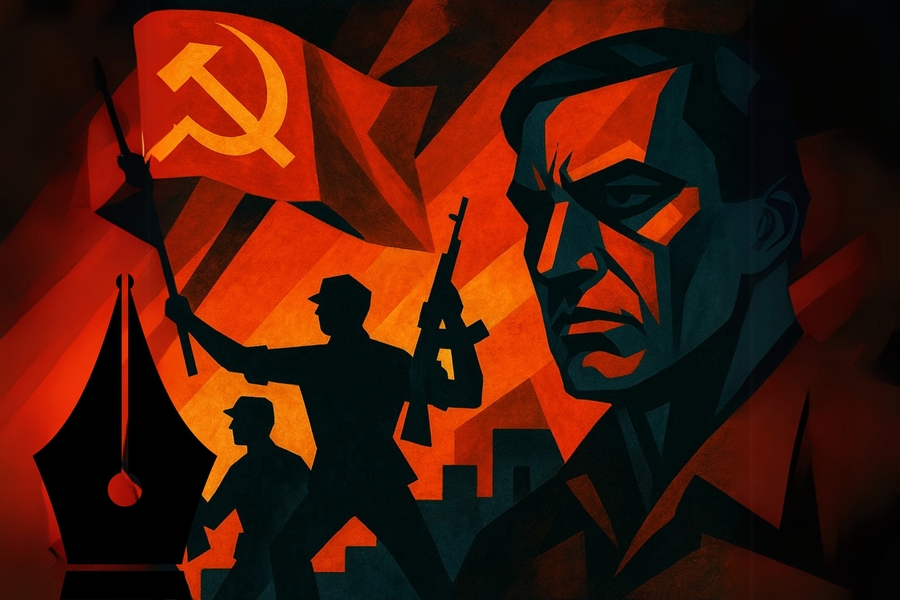
The endurance of Naxalism in India, spanning over six decades, is a complex issue rooted not merely in the resilience of the insurgents themselves, but in a systemic web of political patronage, governmental inaction, and intellectual justification. The article meticulously dissects this 'red protection ecosystem,' arguing that the ultra-violent, armed insurgency has survived and inflicted damage due to the consistent support it has received from various factions within Indian society, ranging from politicians seeking electoral advantages to academics romanticizing the movement as a righteous rebellion against state oppression. The narrative refrains from characterizing the Naxalites as inherently powerful or inherently popular but rather depicts them as being strategically shielded by these actors, enabling their persistence even in the face of sustained security operations.
Early in the movement, the Naxalites found unlikely collaborators within the mainstream political landscape. Instead of being decisively crushed when they were fragmented and geographically confined, multiple former Congress ministers in Andhra Pradesh confessed to routinely soliciting the help of Naxalites during elections. This wasn’t an isolated incident or act of political desperation but a pervasive electoral strategy that spanned multiple cycles. The coordination between former Chhattisgarh Chief Minister Ajit Jogi and Maoists followed a similar pattern. Such deliberate choices to leverage the Naxalites granted them both legitimacy and vital resources, facilitating their expansion and entrenchment. The article explicitly highlights that this wasn't merely about covert deals; it was about normalizing the idea that one could transition from bullets to ballots without any accountability. Adhir Ranjan Chowdhury, a prominent figure with known Naxalite roots, ascended through the Congress ranks, ultimately becoming the West Bengal State Congress President. This political trajectory whitewashed his past affiliations, sending a message to active insurgents that political rehabilitation was always a viable option. This early political patronage laid the foundation for the movement's long-term survival.
The bloodiest phase of the Naxalite movement occurred in the 2000s, with casualty figures skyrocketing between 2006 and 2010. One would expect a rational state to respond with overwhelming force, yet the government's response was characterized by indecision and debilitating delays. Prime Minister Manmohan Singh publicly conceded that his government had failed to effectively counter the insurgency, even as thousands of lives were being lost. His 'holistic approach' was perceived as a euphemism for paralysis rather than a coherent strategy. The Dantewada massacre in 2010, in which 76 CRPF personnel were brutally killed by Naxals, should have marked a turning point, prompting decisive action. However, Congress leader Digvijay Singh publicly opposed the use of the Air Force in anti-Naxal operations, despite Home Minister P. Chidambaram's advocacy for stronger action. This prioritization of restraint over retribution, even after significant loss of life, demonstrates a critical failure in leadership and a lack of political will to decisively confront the insurgency. The murder of 24 Congress leaders, including Chhattisgarh Congress Chief Nand Kumar Patel, also failed to elicit a robust and sustained counter-insurgency response. While leaders like Chandrababu Naidu had responded to similar attacks with aggressive counter-insurgency measures, the Congress remained committed to 'dialogue' and 'humanitarian' frameworks, squandering a golden opportunity to crush the movement when it was most vulnerable. This failure allowed the Naxalites to regroup, adapt, and prolong their reign of terror.
Further complicating the situation was the ideological cover provided by influential figures in India's intellectual and activist circles during the 2010s. As security forces began to exert greater pressure on the Naxalites, a new form of protection emerged: the moral and intellectual justification of their actions by prominent academics and activists. Arundhati Roy’s writings portrayed Maoists not as violent insurgents but as idealistic rebels fighting for justice. Her characterization of the movement as 'Gandhi, but with guns' attempted to legitimize armed extremism as a form of freedom fighting. Her praise for the 'people of Dantewada' after the massacre of 76 soldiers highlighted the dangerous tendency to romanticize the violence inflicted by the Naxalites. Other figures, such as human rights activist Gautam Navlakha, claimed that the insurgency was a 'rebellion to save land, forests, water and minerals,' downplaying the countless instances of extortion, executions, and terror perpetrated against the very tribal communities the Naxals claimed to protect. This false dichotomy—that one must either support the Naxals or a neglectful, oppressive state—became a powerful tool in justifying the movement's violence. Figures like Varavara Rao even argued that the Naxalite movement had not killed as many people as the bourgeois parties, conveniently ignoring the brutal coercion and executions of tribal dissenters. This academic and activist shield provided the Naxalites with a form of legitimacy they had never possessed before, transforming murderers into martyrs and turning a violent, coercive movement into a cause célèbre among the urban elite.
Regrettably, the pattern of appeasement and normalization has persisted even into the 2020s. The elevation of Danasari Anasuya, a former Maoist involved in armed encounters with police, to a ministerial position in Telangana demonstrates a remarkable lack of accountability and a continued willingness to integrate individuals with violent pasts into the political mainstream. Her promise of government assistance to the family of a slain Maoist leader further underscores the political establishment's apparent lack of memory and shame. Telangana Chief Minister Revanth Reddy's characterization of Naxalism as 'only a social issue' and his insistence on democratic dialogue reflects a continued downplaying of the movement's violent nature. Rahul Gandhi's comparison of Naxalites to RSS members and his accusation of selective crackdowns by the BJP demonstrate a partisan approach to a serious national security issue. Congress spokesperson Supriya Shrinate's public reference to Maoists killed in security operations as 'martyrs' represents a profound betrayal of the men and women in uniform who risk their lives to combat this threat. The UPA’s legacy of softness continues to resonate in recognitions like the Padma Vibhushan nomination for Gummadi Vittal Rao, a radical balladeer whose writings have previously inspired violent uprisings. This consistent pattern of downplaying, excusing, or outright supporting the Naxalite narrative within the Congress and Left parties highlights the deeply entrenched nature of the 'red protection ecosystem.'
In conclusion, the long survival of Naxalism in India is not a historical accident or a story of insurgent brilliance but the outcome of a systemic pattern of political patronage, governmental inaction, and intellectual cover. This 'red protection ecosystem' has allowed the movement to grow, entrench itself, gain moral currency, and remain relevant even as its operational capacity diminishes. The reduction of the Naxalite movement to a mere fight for tribal rights is not only misleading but dangerously obscures the violence inflicted on the very people the insurgents claim to represent. As the Centre renews its commitment to eliminating the insurgency by March 2026, it is crucial to confront the fundamental question of who has enabled its survival for so long. The answer lies not only in forests and hilltops but also in Parliament, campuses, editorial rooms, and activist forums. The fight against Naxalism must involve holding accountable those who have enabled, justified, and normalized its actions. Only then can the nation truly address this enduring threat and resolve the war of narratives that has allowed it to persist for so long.
Source: Red Corridor's Mystery: How India’s Deadliest Insurgency Was Kept Alive For Decades