
 |
|
India's pursuit of a fifth-generation fighter jet capability has been a long and arduous journey, marked by both ambition and setbacks. The recent announcement by the Ministry of Defence (MoD) to fast-track the development of the Advanced Medium Combat Aircraft (AMCA), an indigenous fifth-generation fighter, signifies a renewed commitment to achieving self-reliance in advanced military technology. However, this ambition is not without its challenges, as the history of India's previous attempts, particularly the Fifth Generation Fighter Aircraft (FGFA) program with Russia, reveals a complex landscape of technological hurdles, geopolitical considerations, and bureaucratic complexities. The FGFA program, initiated in 2007, aimed to co-develop a stealth fighter platform tailored to Indian requirements, based on the Sukhoi T-50 (later Su-57). India invested $295 million in the preliminary design phase, envisioning a twin-engine platform with super-cruise capabilities, advanced stealth features, internal weapon bays, and next-generation avionics. However, the program soon encountered significant obstacles, primarily related to cost escalation, technology transfer, and performance shortfalls. Russia demanded an additional $5 billion, later reduced to $3.7 billion, to cover its share of the developmental costs. The MoD agreed to a compromise but also insisted on incorporating around 50 modifications specific to the Indian Air Force (IAF), including engine upgrades, improved stealth, and enhanced weapons carriage. While Sukhoi initially agreed to share critical design information with Hindustan Aeronautics Limited (HAL), the designated manufacturing agency, and increase HAL's work share, concerns persisted regarding the level of technology transfer and the aircraft's performance relative to expectations. The IAF initially planned to procure 200-250 FGFA aircraft, but this number was later reduced, and ultimately, India withdrew from the program in 2018, forfeiting its investment. The decision to abandon the FGFA program was driven by several factors, including years of delays, cost overruns, dissatisfaction with the level of technology transfer, and concerns about the aircraft's stealth profile and engine performance. Despite the setbacks, many IAF veterans believed that staying the course with the FGFA project, despite its shortcomings, would have provided India with valuable experience in developing and operating stealth fighters, similar to what other advanced air forces, like China's, had accomplished. Moreover, continued participation in the FGFA could have strengthened India's research and development base for future indigenous projects like the AMCA. The failure of the FGFA program highlighted the challenges of relying on foreign collaborations for critical defense technologies and underscored the need for a more self-reliant approach.
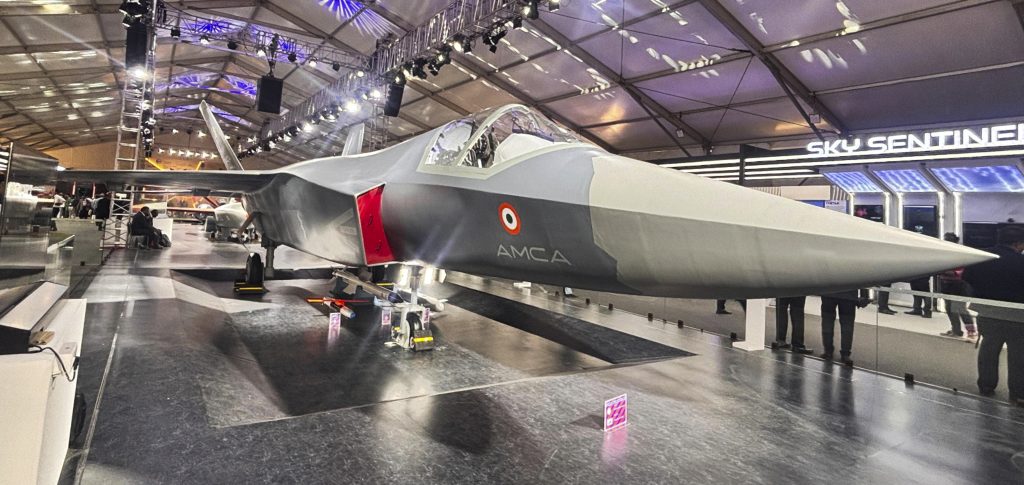
The current push for the AMCA represents a renewed effort to achieve India's fifth-generation fighter ambitions through indigenous development. The MoD has sanctioned the Aeronautical Development Agency (ADA) and HAL to develop the AMCA from the ground up, aiming to leapfrog technological barriers using local resources and control. The AMCA is envisioned as a twin-engine, 25-tonne multi-role stealth fighter with internal weapons bays, serpentine air intakes, radar-absorbent materials, AI-assisted mission systems, and sensor fusion. The project aims to involve a wide consortium of public sector and private vendors under the government's Aatmanirbhar Bharat (self-reliant India) policy, drawing lessons from past setbacks with the Tejas light combat aircraft (LCA) program. The AMCA is planned in two variants: a Mark 1 with an imported engine and a Mark II with an indigenous engine. Delivery of the first prototypes is scheduled for 2035. However, the path to AMCA's development is fraught with challenges. The technological risks, particularly in stealth shaping, low-observable materials, propulsion, and mission computers, are significant. The most pressing hurdle remains engine development, as India lacks a fifth-generation capable power pack and relies on US-origin General Electric GE F414 engines. The full technology transfer for local manufacturing of these engines remains uncertain, as GE has historically been cautious about sharing sensitive technologies, such as single-crystal turbine blades, thermal barrier coatings, and cooling channels. Furthermore, concerns exist regarding intellectual property rights (IPR) for technologies co-produced or indigenized with respect to the GE-414s. The fundamental concern is whether HAL or the Defence Research and Development Organisation (DRDO) can modify any indigenously built version of the F414 engine without GE's consent. Establishing a full-scale production line for a 4.5/5-generation jet engine domestically is a massive undertaking, requiring specialized tooling and a quality-controlled supply chain ecosystem to meet GE's strict quality audits and oversight.
India's failure to build a domestic modern fighter manufacturing network can be traced back to the unraveling of the 2007-08 Medium Multi-Role Combat Aircraft (MMRCA) deal, a project to procure 126 fighter jets, with 108 to be built in India under transfer of technology (ToT) agreements. France's Rafale emerged as the winner in 2012, but protracted negotiations over cost, technology transfer, and liability clauses led to the collapse of the deal in 2015. Instead, India opted for a direct purchase of 36 Rafales in flyaway condition, further delaying the development of indigenous manufacturing capability. This missed opportunity meant India continued to depend heavily on foreign original equipment manufacturers (OEMs) for advanced combat aircraft, without acquiring the institutional knowledge and industrial base needed for independent production. Unlike China, which leveraged joint ventures and aggressive reverse-engineering to build a competent domestic fighter aircraft industry, India's public sector defense units like HAL remained underfunded and over-regulated. Indigenous programs like the Tejas LCA were beset by delays and capability gaps. While the AMCA project seeks to course-correct, it faces an uphill battle without an established supply chain, proven stealth technology, or a domestic jet engine. The project emphasizes modularity, digital fly-by-wire systems, and next-generation cockpit ergonomics, aiming for full design authority and autonomy in development and future upgrades. Ultimately, India's ability to manufacture a fifth-generation fighter hinges not just on technology, but on policy coherence, private sector integration, and decisive leadership. Unless these structural issues are swiftly and meaningfully addressed, India risks repeating its earlier FGFA missteps with the AMCA. The success of the AMCA project will depend on overcoming technological hurdles, fostering indigenous innovation, securing reliable technology transfers, and establishing a robust domestic manufacturing ecosystem. It requires a coordinated effort involving government, industry, and research institutions, with a clear vision and unwavering commitment to achieving self-reliance in advanced military technology. The lessons learned from the FGFA program and the MMRCA deal must be carefully considered to ensure that the AMCA project does not suffer the same fate, and that India finally achieves its long-held ambition of developing a world-class, indigenous fifth-generation fighter jet.
Source: India’s Fighter Jet Ambitions: From Russian Roulette to Indigenous Dreams