
 |
|
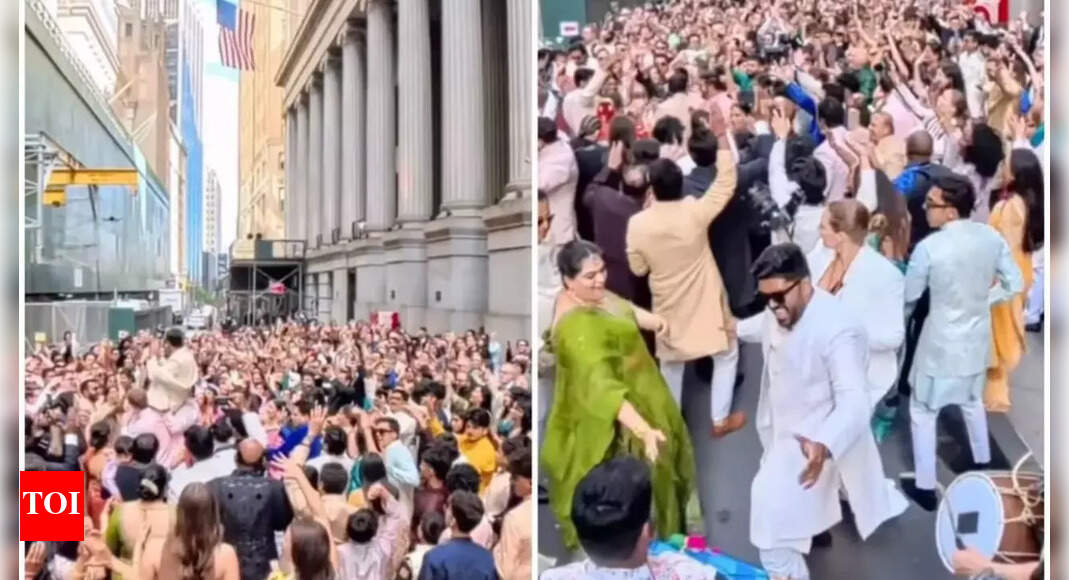
The streets of New York City, a place synonymous with ambition, relentless pursuit, and the towering symbols of financial power, witnessed an unexpected spectacle recently. A vibrant, energetic, and thoroughly Indian baraat, a groom's wedding procession, numbering around 400 people, brought Wall Street to a standstill. The visual contrast was striking: the sober, grey landscape of the New York Stock Exchange, a place typically associated with calculated risks and high-stakes deals, was transformed into a jubilant dance floor, echoing with Bollywood tunes and the infectious energy of a wedding celebration. The story, quickly amplified through social media, encapsulates the growing cultural influence of the Indian diaspora and the ability of traditions to transcend geographical boundaries, even briefly disrupting the established order of global finance. The baraat itself, a quintessential Indian wedding tradition, involves the groom being led to the wedding venue in a joyous procession, accompanied by music, dancing, and general revelry. In this particular instance, the scale and location of the event amplified its impact. Imagine the scene: hundreds of people, many dressed in vibrant traditional Indian attire, dancing to a fusion of pop and Bollywood music, with the iconic skyscrapers of the New York Stock Exchange as a backdrop. This juxtaposition of cultures and contexts created a moment that resonated with many, both online and offline. DJ AJ, who provided the music for the event, captured the sentiment perfectly when he exclaimed, "We shut down Wall Street for a 400-person baraat - who would've ever thought?!" His statement highlights the sheer improbability of such an event occurring in such a location. The video he shared, which quickly went viral, showcased the infectious energy of the procession, with people dancing around the bride and groom, who were resplendent in their wedding attire. The towering skyscrapers of the New York Stock Exchange added a surreal quality to the video, further emphasizing the unexpected nature of the event. The fact that an Instagram influencer and Gujarati actor, Devarshi Shah, was also involved in the baraat further amplified its reach and visibility. Shah's video showcased the groom dancing in a car, surrounded by his American groomsmen, all dressed in pink and white ethnic ensembles. His caption, "What a surreal afternoon. Wall Street shut down for the baraat and seeing everyone dance in their full glory was a sight to behold! To celebrating love, today & forever!" captures the joyous and celebratory atmosphere of the event. The online reaction to the viral videos was overwhelmingly positive, with people expressing surprise, amusement, and appreciation for the cultural spectacle. Comments ranged from playful observations about market disruption to enthusiastic endorsements of the DJ's musical choices. One person on X (formerly Twitter) wrote, "Video shows the vibrant baraat with people dancing in the middle of the financial district. Talk about a market disruption!" Another added, "Indians are crazy, they shut down Wall street, NYC for a Baraat." The event served as a reminder of the power of cultural traditions to transcend geographical boundaries and to create moments of unexpected joy and celebration in even the most unlikely of settings. It also highlighted the growing cultural influence of the Indian diaspora, which continues to shape and enrich the global landscape. The mixing of "Empire State of Mind" with Indian dhol beats further exemplified this cultural fusion, creating a unique and memorable auditory experience. In conclusion, the Wall Street baraat was more than just a wedding procession; it was a cultural statement, a celebration of love and tradition in the heart of global finance, and a reminder that even in the most serious of environments, there is always room for joy, celebration, and a little bit of Bollywood magic.
The shutdown of Wall Street, even temporarily, for such a culturally rich event invites further analysis. Beyond the sheer novelty of the situation, it speaks to the increasing visibility and influence of Indian culture on the global stage. The Indian diaspora, spread across the globe, has consistently maintained strong ties to its cultural roots, and events like this baraat serve as a visible manifestation of that connection. Moreover, the willingness of the groom's American groomsmen to participate fully in the celebration, even donning traditional Indian attire, highlights the cross-cultural exchange and understanding that is increasingly prevalent in today's interconnected world. The event can also be interpreted as a subtle challenge to the established norms and expectations of Wall Street. The financial district, typically associated with serious business and a focus on profit, was temporarily disrupted by a display of joy, celebration, and community. This juxtaposition of values served as a reminder that life is about more than just money and that cultural traditions and human connections are equally important. Furthermore, the viral nature of the videos underscores the power of social media to amplify cultural events and to share them with a global audience. The images and videos of the Wall Street baraat quickly spread across various platforms, reaching millions of people and generating a wave of positive reactions. This highlights the role of social media in promoting cultural understanding and in showcasing the diversity of the global landscape. The event also served as a testament to the resilience of Indian culture, which has managed to maintain its distinct identity despite the pressures of globalization. The baraat, a centuries-old tradition, was brought to the heart of New York City and adapted to the modern context, demonstrating its ability to evolve and adapt while still retaining its core values and significance. The integration of Bollywood music with Western pop songs further exemplifies this fusion of cultures, creating a unique and memorable experience for all involved. The event also highlights the importance of community and celebration in Indian culture. Weddings are not merely individual events but are communal celebrations that involve family, friends, and the wider community. The Wall Street baraat was a visible manifestation of this communal spirit, with hundreds of people coming together to celebrate the union of two individuals. The energy and enthusiasm of the participants were infectious, creating a sense of joy and camaraderie that transcended cultural boundaries. It is worth noting that the event also required significant planning and coordination. Organizing a 400-person baraat in the heart of New York City is no easy feat, and the organizers deserve credit for their efforts in ensuring that the event ran smoothly and safely. The fact that they were able to shut down Wall Street, even temporarily, is a testament to their organizational skills and their ability to navigate the complex regulations and logistics of the city.
Finally, the Wall Street baraat can be seen as a symbol of hope and optimism in a world that is often characterized by conflict and division. The event brought together people from different backgrounds and cultures to celebrate love, joy, and community. It served as a reminder that despite our differences, we are all interconnected and that we can find common ground in shared human experiences. The positive reaction to the event also suggests that people are hungry for positive news and uplifting stories. In a world saturated with negative headlines, the Wall Street baraat provided a welcome dose of joy and optimism, reminding us of the beauty and diversity of human culture. The event also raises questions about the future of public spaces in cities. As cities become increasingly crowded and commercialized, it is important to preserve spaces where people can come together to celebrate, connect, and express themselves. The Wall Street baraat demonstrated the potential for public spaces to be transformed into vibrant hubs of cultural activity, enriching the lives of residents and visitors alike. It also highlights the importance of cultural diversity in cities. Cities are melting pots of cultures, and the presence of diverse communities enriches the urban landscape and fosters innovation and creativity. The Wall Street baraat was a visible manifestation of this cultural diversity, showcasing the vibrancy and dynamism of the Indian diaspora in New York City. The event also serves as a reminder of the importance of supporting cultural traditions and preserving cultural heritage. Cultural traditions provide a sense of identity and belonging and help to connect us to our past. By supporting and celebrating cultural traditions, we can ensure that they continue to thrive for generations to come. In conclusion, the Wall Street baraat was a remarkable event that captured the imagination of people around the world. It was a celebration of love, tradition, and community, a visible manifestation of cultural diversity, and a reminder of the power of human connection. The event serves as a source of inspiration and a reminder that even in the most serious of environments, there is always room for joy, celebration, and a little bit of Bollywood magic. The cultural impact is immense, showcasing the beauty of Indian traditions, the power of social media, and the growing influence of the Indian diaspora on the global landscape. It truly was a once-in-a-lifetime event that will be remembered for years to come, a testament to the enduring power of love, joy, and the human spirit, all set against the backdrop of the iconic New York Stock Exchange.