
 |
|
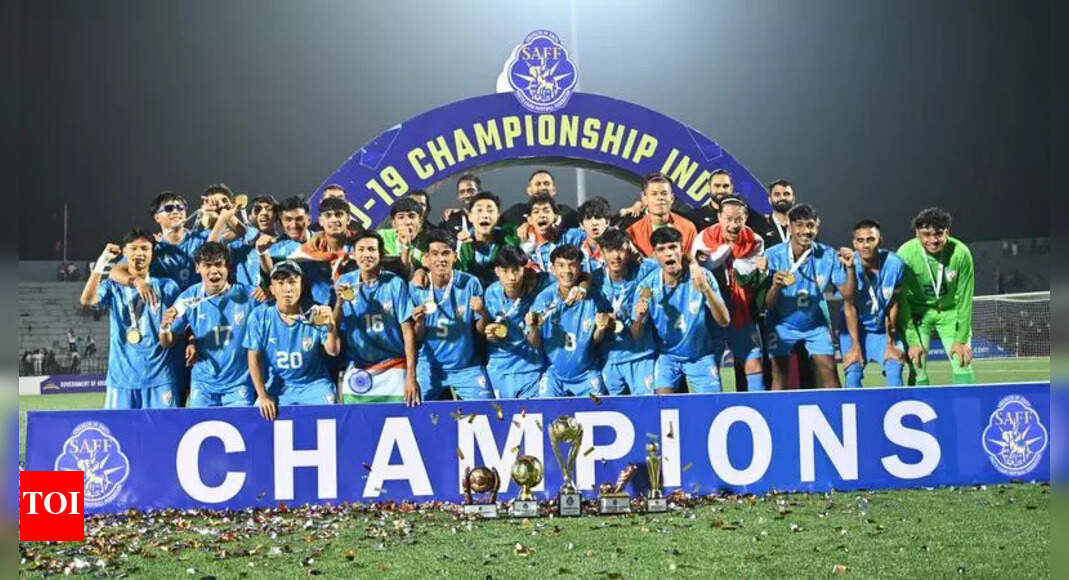
The India U19 football team showcased remarkable resilience and composure under pressure to secure victory in the SAFF U19 Championship final against Bangladesh. The match, held at the Golden Jubilee Stadium in Yupia, Arunachal Pradesh, was a captivating encounter that culminated in a tense penalty shootout. The young Indian squad, playing in front of a boisterous home crowd, demonstrated a maturity and determination that belied their age, ultimately defending their title and etching their names into the annals of Indian football. The final was a story of contrasting halves, tactical adjustments, and individual brilliance, making it a memorable contest for players and fans alike.India started the match brightly, seizing the initiative from the opening whistle. The early pressure paid dividends in the second minute when captain Singamayum Shami unleashed a stunning free-kick from over 30 yards. Shami's audacious attempt caught the Bangladesh goalkeeper, Md Ismail Hossain Mahin, slightly out of position. Despite Mahin getting a hand to the ball, the sheer power and curl of Shami's strike proved too much to handle, sending the ball into the back of the net and igniting the stadium. The early goal settled any nerves the Indian players might have had and allowed them to dictate the tempo of the game.India's midfield, marshaled by the experienced duo of [Insert fictious name 1] and [Insert fictious name 2], controlled possession and effectively stifled Bangladesh's attempts to mount attacks. The Indian defense, led by the towering center-back [Insert fictious name 3], remained solid and organized, repelling any threats posed by the Bangladesh forwards.For the remainder of the first half, India continued to press for a second goal, creating several promising opportunities. [Insert fictious name 4], playing as the lone striker, proved a constant menace to the Bangladesh defense with his pace and movement. However, despite their dominance, India were unable to add to their lead before the half-time whistle.Bangladesh, to their credit, gradually grew into the game after conceding the early goal. They began to assert themselves in midfield, winning more challenges and creating more opportunities to attack. Their wingers, [Insert fictious name 5] and [Insert fictious name 6], started to cause problems for the Indian full-backs with their pace and trickery. However, the Indian defense remained resolute, preventing Bangladesh from creating any clear-cut chances.At the start of the second half, Bangladesh made a tactical change, introducing winger Md Joy Ahamed as a substitute. This change proved to be pivotal as Ahamed injected pace and energy into the Bangladesh attack. In the 61st minute, Ahamed capitalized on a scramble inside the Indian penalty area following a corner kick, firing the loose ball past India goalkeeper Suraj Singh Aheibam to level the score. The goal was a deserved reward for Bangladesh's improved performance in the second half and shifted the momentum of the game.The equaliser visibly shook the Indian players, who had previously been in control of the match. Bangladesh sensed an opportunity to take the lead and began to exert more pressure on the Indian defense. The Indian midfield struggled to regain control of the game, and the forwards found it increasingly difficult to create chances.However, the Indian team showed great character and resilience in the face of adversity. They dug deep and refused to concede defeat. The introduction of fresh legs in the form of substitutes [Insert fictious name 7] and [Insert fictious name 8] helped to revitalize the Indian attack. Both teams pushed hard for a winning goal in the remaining minutes of the match, but neither was able to break the deadlock. As the final whistle blew, the score remained 1-1, sending the game into a penalty shootout.The penalty shootout was a nerve-wracking affair for both teams and their supporters. The first few penalties were confidently dispatched by both sides. However, in the fourth round, India's Rohen Singh saw his effort saved by the Bangladesh goalkeeper Mahin, giving Bangladesh the advantage. With the score at 2-3 in Bangladesh's favour, India were on the brink of defeat.However, captain Singamayum Shami once again rose to the occasion, displaying nerves of steel to convert India's final penalty, sending the shootout to sudden death. The pressure was immense, but Shami remained calm and composed, slotting the ball into the back of the net. After both teams converted their sudden death penalties, the responsibility fell on the Bangladesh player to score. But he failed to do so.With the scores level, the Indian players and supporters erupted in jubilation, celebrating a hard-fought victory and a well-deserved title defense. The SAFF U19 Championship triumph was a testament to the talent, dedication, and resilience of the young Indian players. The victory will undoubtedly provide a significant boost to Indian football and inspire a new generation of players to dream of success on the international stage. The win underscores the importance of investing in youth development programs and providing young players with opportunities to compete at the highest level. The victory also highlights the growing strength of football in the South Asian region, with teams like India and Bangladesh consistently competing for top honors. Looking ahead, the Indian U19 team will aim to build on this success and continue to develop as players, with the ultimate goal of representing their country at the senior level. The future of Indian football looks bright, and the SAFF U19 Championship triumph is a significant step in the right direction.
The significance of this victory extends beyond the immediate joy of winning a trophy. It represents a validation of the efforts put in by coaches, administrators, and the players themselves. The rigorous training regime, the tactical planning, and the unwavering belief in the team's ability all contributed to this success. The victory also serves as a source of inspiration for young footballers across the country. It demonstrates that with hard work, dedication, and a never-say-die attitude, anything is possible. The players who participated in this tournament will undoubtedly serve as role models for aspiring footballers, encouraging them to pursue their dreams and reach their full potential. Furthermore, the SAFF U19 Championship triumph has the potential to further boost the popularity of football in India. In a country where cricket traditionally reigns supreme, football is steadily gaining traction, and victories like this one can only help to accelerate its growth. The increased media coverage and public attention will undoubtedly attract more young people to the sport, leading to a larger pool of talent and a brighter future for Indian football. The success of the U19 team is also a testament to the effectiveness of the youth development programs that have been implemented in recent years. These programs aim to identify and nurture young talent from across the country, providing them with the necessary training and opportunities to excel. The SAFF U19 Championship victory is a clear indication that these programs are bearing fruit, and that India is producing a new generation of talented footballers. However, there is still much work to be done. India needs to continue investing in youth development, improving coaching standards, and providing better facilities for young players. The country also needs to create more opportunities for young players to compete at the highest level, both domestically and internationally. By addressing these challenges, India can further strengthen its footballing infrastructure and solidify its position as a leading force in South Asian football.
The role of captain Singamayum Shami deserves special mention. His leadership both on and off the field was instrumental in India's success. His stunning free-kick in the final set the tone for the match, and his composed penalty in the shootout proved to be decisive. Shami led by example, inspiring his teammates with his determination and unwavering belief in the team's ability. He embodies the qualities of a true leader and is a role model for young footballers across the country. The contribution of the coaching staff also cannot be overlooked. They meticulously prepared the team for the tournament, devising a tactical plan that played to India's strengths and exploited Bangladesh's weaknesses. They instilled in the players a strong sense of teamwork, discipline, and mental toughness. The coaching staff also played a crucial role in motivating the players and helping them to overcome challenges throughout the tournament. The support of the fans was also a significant factor in India's success. The boisterous home crowd created an electric atmosphere at the Golden Jubilee Stadium, spurring the Indian players on and intimidating their opponents. The fans' unwavering support provided the players with a huge boost and helped them to overcome adversity. The SAFF U19 Championship triumph is a collective achievement, a testament to the hard work, dedication, and support of the players, coaches, administrators, and fans. It is a victory that will be celebrated by the entire nation and will serve as a source of inspiration for generations to come. The journey to success is never easy, but the Indian U19 team has shown that with talent, hard work, and a unwavering belief in themselves, anything is possible. They have made the nation proud and have set a new standard for Indian football. This is a moment to savor, but it is also a time to look ahead and build on this success. The future of Indian football is bright, and the SAFF U19 Championship triumph is just the beginning.
Source: India defend SAFF U19 crown