
 |
|
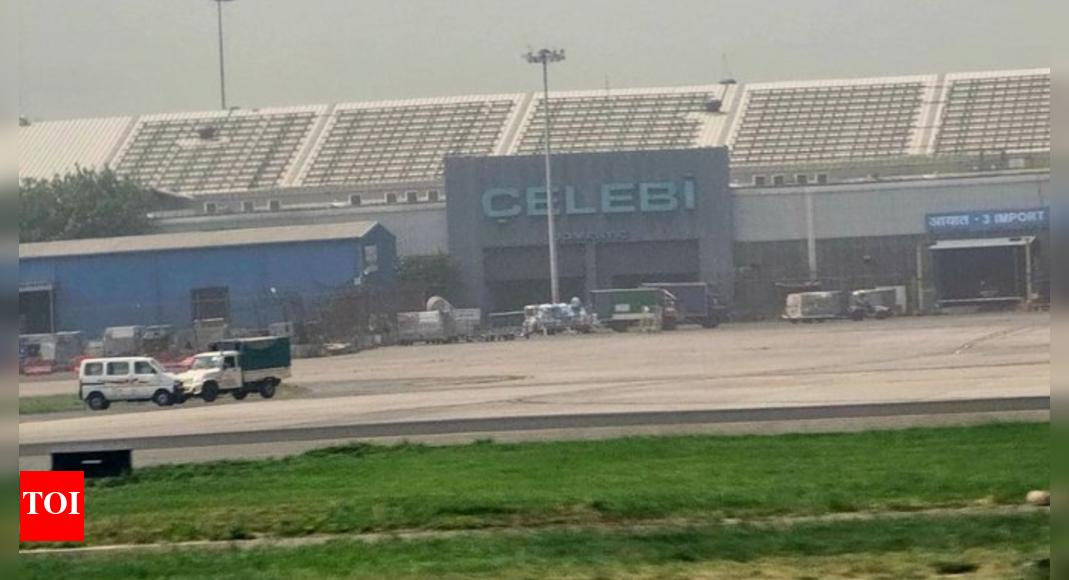
The Indian government has revoked the security clearance for Celebi Airport Services India Pvt Ltd, a ground handling agency operating at nine major Indian airports. This decision, made by the Bureau of Civil Aviation Security (BCAS), is attributed to concerns regarding national security. The revocation order, issued by BCAS joint director (operations) Sunil Yadav, takes immediate effect. Celebi provides ground handling services at passenger and cargo terminals in Delhi, Mumbai, Bengaluru, Hyderabad, Chennai, Ahmedabad, Goa, Cochin, and Kannur. The company's operations encompass a range of security-sensitive tasks, including baggage handling, cargo loading and unloading, passenger check-in assistance, and aircraft maintenance. The sudden revocation of Celebi's security clearance necessitates immediate action from the operators of the affected airports. These operators must now make arrangements to fill the void left by Celebi's departure. Stopgap measures, such as engaging other ground handling companies, will be necessary to ensure the smooth functioning of airport operations in the short term. Subsequently, these airports will likely issue tenders to appoint new ground handling agencies to provide long-term services. Several ground handling companies are reportedly interested in capitalizing on this opportunity to expand their business in the Indian aviation sector. The move will significantly disrupt operations across several key Indian airports, at least until replacement services are secured. The decision to revoke Celebi's security clearance is rooted in deeper geopolitical considerations. The article highlights Turkey's consistent support for Pakistan, particularly during Operation Sindoor. Concerns have been raised about the potential risks of allowing a company from a nation perceived as openly hostile to operate in sensitive areas within Indian airports. Sources within the security establishment have indicated that Celebi's presence at Indian airports has been a subject of concern for some time. However, recent events, such as Turkey's statements and support for Pakistan following the Pehelgam attack, may have accelerated the decision-making process. The ownership structure of Celebi has also come under scrutiny. The company is partially owned by Sumeyye Erdogan, daughter of Turkish President Recep Tayyip Erdogan, who is married to Selcuk Bayraktar, son of Turkish businessman Ozdemir Bayraktar. Selcuk Bayraktar's company is known for producing Bayraktar Akinci Yiha drones, which have reportedly been used against India at border cities. This connection between Celebi and the Turkish government through family ties has further fueled security concerns. Celebi's website emphasizes its significant growth in India, highlighting its presence at Mumbai International Airport through a joint venture, followed by the establishment of Celebi Airport Services India and Celebi Delhi Cargo Terminal Management India at Delhi Airport. Over the past decade, the company has expanded its operations to nine stations across India, providing passenger services, load control and flight operation services, ramp services, and general aviation services. The company handles approximately 58,000 flights annually, manages 5.4 lakh tonnes of cargo, and employs 7,800 individuals. The revocation of Celebi's security clearance raises several questions about the future of ground handling services in India. It underscores the importance of national security considerations in awarding contracts for critical airport operations. It also signals a potential shift in India's approach towards foreign companies operating in sensitive sectors, particularly those with ties to countries perceived as being aligned with adversarial nations. The decision serves as a warning to other international companies operating in India that their business activities will be closely scrutinized and that any perceived threats to national security will not be tolerated. The fallout from this decision will likely be significant, with potential impacts on air travel, cargo transportation, and employment. The process of transitioning to new ground handling providers will require careful planning and execution to minimize disruptions to airport operations. The security establishment will be closely monitoring the situation to ensure that any vulnerabilities are promptly addressed and that the safety and security of Indian airports are maintained. The incident also highlights the complex interplay between geopolitics, economics, and national security in the context of international business. The decision to prioritize national security over economic considerations reflects a growing trend among nations worldwide to safeguard their strategic interests in an increasingly volatile global environment. The move to revoke Celebi's security clearance will undoubtedly strain relations between India and Turkey, adding another layer of complexity to their already fraught diplomatic relationship. The incident could also have broader implications for India's relations with other countries that are perceived as being closely aligned with Pakistan. In conclusion, the revocation of Celebi's security clearance is a significant event with far-reaching consequences for the Indian aviation sector and the country's relations with Turkey. It underscores the importance of national security considerations in awarding contracts for critical airport operations and signals a potential shift in India's approach towards foreign companies operating in sensitive sectors. The incident serves as a reminder that businesses operating in the global arena must be aware of the geopolitical risks and potential implications of their activities. The decision to prioritize national security over economic considerations reflects a growing trend among nations worldwide to safeguard their strategic interests in an increasingly volatile global environment. The consequences of this decision will be felt for some time to come, as the Indian aviation sector adjusts to the absence of Celebi and adapts to the new security landscape.
The immediate impact of the security clearance revocation for Celebi Airport Services will be felt most acutely at the nine Indian airports where it currently operates. Delhi, Mumbai, Bengaluru, Hyderabad, Chennai, Ahmedabad, Goa, Cochin, and Kannur will all need to swiftly implement contingency plans to ensure continued smooth operation of passenger and cargo services. This involves coordinating with existing ground handling companies to absorb Celebi’s responsibilities, potentially leading to increased workloads and logistical challenges for those firms. Airports may face short-term delays and disruptions as they adjust to the new operational landscape, particularly during peak travel seasons. The long-term solution will involve issuing tenders for new ground handling contracts, a process that could take several months to complete. During this interim period, the airports will need to maintain rigorous oversight of ground handling operations to ensure compliance with safety and security standards. The disruption caused by Celebi’s departure could also create opportunities for other ground handling companies to expand their market share. AISATS, Bird Group, Bird Flight Services, Agile Airport Services, and AI Airport Services Ltd. are among the companies likely to bid for the vacated contracts. This increased competition could potentially lead to improved service quality and competitive pricing in the long run. However, it also presents challenges for airports in selecting the most qualified and reliable service providers. The decision to revoke Celebi’s security clearance has significant implications for the company’s employees in India. The company employs approximately 7,800 individuals, many of whom now face uncertainty about their future employment prospects. The Indian government and airport authorities may need to work with Celebi to ensure a smooth transition for these employees, potentially offering opportunities for them to be absorbed by other ground handling companies. The revocation also raises questions about the broader impact on foreign investment in the Indian aviation sector. International companies may become more hesitant to invest in India if they perceive a risk of arbitrary revocation of security clearances based on geopolitical considerations. The Indian government will need to reassure foreign investors that it remains committed to a stable and predictable regulatory environment. The decision to revoke Celebi's clearance also puts a spotlight on the increasingly complex intersection of national security and international business. As global supply chains become more interconnected, governments are facing growing pressure to balance economic benefits with the need to protect national security interests. This often involves making difficult decisions that can have significant economic and diplomatic consequences. The Celebi case highlights the challenges of navigating this complex landscape and the need for businesses to be aware of the geopolitical risks associated with their operations. In the long run, the Indian government may need to develop a more comprehensive framework for assessing and managing the security risks associated with foreign companies operating in sensitive sectors. This framework should be transparent, predictable, and based on objective criteria to ensure fairness and consistency. It should also involve ongoing monitoring and evaluation of companies’ activities to ensure compliance with security standards. The Celebi case serves as a valuable lesson for both governments and businesses about the importance of proactive risk management and the need to anticipate and mitigate potential threats to national security. The Indian aviation sector will undoubtedly adapt to the absence of Celebi, but the long-term implications of this decision will continue to be felt for years to come.
The underlying motivations behind the Indian government's decision to revoke Celebi Airport Services' security clearance are multifaceted, extending beyond purely security-related concerns to encompass broader geopolitical and diplomatic considerations. The article explicitly mentions Turkey's historical alignment with Pakistan, particularly its support during Operation Sindoor, as a significant factor contributing to the decision. This longstanding geopolitical dynamic has created a sense of unease within the Indian security establishment regarding the presence of a Turkish-linked company operating in critical infrastructure like airports. The perception of Turkey as a nation sympathetic to Pakistan's interests, especially in the context of ongoing tensions between India and Pakistan, raises concerns about potential vulnerabilities and security risks. The article further highlights the family ties between Celebi's ownership and the Turkish government as a contributing factor. Sumeyye Erdogan, the daughter of Turkish President Recep Tayyip Erdogan, is married to Selcuk Bayraktar, whose company manufactures drones that have reportedly been deployed against India by Pakistan. This connection between Celebi and the Turkish leadership raises questions about potential conflicts of interest and the possibility of undue influence. While there is no direct evidence to suggest that Celebi has engaged in any specific acts of espionage or sabotage, the mere perception of a potential security risk is sufficient to warrant a precautionary response from the Indian government. The timing of the decision, following recent events such as Turkey's statements and support for Pakistan after the Pehelgam attack, suggests that these geopolitical tensions may have served as a catalyst for the revocation. The Pehelgam attack, a terrorist incident in Jammu and Kashmir, likely heightened security concerns and reinforced the perception of Turkey as a nation sympathetic to Pakistan. In this context, the Indian government may have felt compelled to take decisive action to demonstrate its resolve to protect national security interests, even at the expense of potential economic consequences. The revocation of Celebi's security clearance can also be interpreted as a signal to other countries that India is prepared to take a firm stance against perceived threats to its sovereignty and security. The decision sends a clear message that India will not tolerate any actions or associations that could potentially undermine its national interests. This stance reflects a broader trend among nations worldwide to prioritize national security concerns in an increasingly complex and uncertain geopolitical environment. The revocation of Celebi's security clearance also serves as a reminder of the importance of due diligence and risk assessment in international business. Companies operating in sensitive sectors must be aware of the geopolitical risks associated with their operations and take proactive measures to mitigate potential threats. This includes conducting thorough background checks on potential partners and investors, as well as implementing robust security protocols to protect against espionage and sabotage. The Indian government's decision to revoke Celebi's security clearance is ultimately a reflection of its commitment to safeguarding national security interests. While the decision may have economic and diplomatic consequences, the government appears to have concluded that the potential risks associated with allowing Celebi to continue operating in Indian airports outweighed the potential benefits. This decision underscores the importance of national security as a primary consideration in international business and serves as a cautionary tale for companies operating in sensitive sectors.
Beyond the immediate geopolitical concerns and security considerations, the revocation of Celebi Airport Services India Pvt Ltd's security clearance unveils a broader narrative about the evolving dynamics of international relations, economic security, and the assertion of national sovereignty. This incident serves as a microcosm of the increasing complexities faced by nations navigating a globalized world, where economic interdependence is often intertwined with security vulnerabilities and competing geopolitical interests. The Indian government's decision highlights a growing trend among nations to prioritize strategic autonomy and resilience in the face of perceived threats. By revoking Celebi's clearance, India is signaling its willingness to accept potential economic disruptions in order to safeguard its national security interests. This decision reflects a shift away from a purely economic-driven approach to international relations towards a more cautious and security-conscious perspective. The incident also underscores the importance of diversifying supply chains and reducing dependence on potentially unreliable partners. The reliance on a foreign company with perceived ties to adversarial nations for critical airport operations exposed a vulnerability in India's infrastructure that the government felt compelled to address. This realization may prompt India to invest in developing domestic capabilities in ground handling and other essential aviation services. The revocation of Celebi's clearance could also serve as a catalyst for greater scrutiny of foreign investments in sensitive sectors. The Indian government may implement stricter regulations and due diligence processes to ensure that foreign companies operating in critical infrastructure are not posing a threat to national security. This could involve closer examination of ownership structures, security protocols, and potential conflicts of interest. The incident also raises questions about the role of international law and agreements in governing cross-border business activities. While companies have a legitimate expectation of fair treatment and legal protection, governments also have a sovereign right to take measures to protect their national security interests. Balancing these competing interests requires a careful consideration of the specific circumstances and a commitment to transparency and due process. The revocation of Celebi's clearance is likely to have ripple effects beyond the aviation sector. Other industries may also face increased scrutiny and tighter regulations as the Indian government seeks to enhance its overall economic security. This could create challenges for foreign companies operating in India, but it could also create opportunities for domestic businesses to fill the void left by those who are deemed to pose a security risk. Ultimately, the revocation of Celebi's clearance represents a significant turning point in India's approach to international business and national security. It signals a willingness to prioritize strategic autonomy and resilience over purely economic considerations. This decision will undoubtedly shape the future of foreign investment in India and will have far-reaching implications for the country's relations with other nations. The incident serves as a reminder that in an increasingly complex and interconnected world, nations must be vigilant in protecting their national interests and proactive in addressing potential threats.