
 |
|
The fragile peace between India and Pakistan dissolved following a deadly attack in Kashmir targeting Indian tourists, an incident that ignited national outrage in India and prompted retaliatory strikes against what India claims were terrorist infrastructure within Pakistani territory and Pakistan-administered Kashmir. The attack, which claimed the lives of 25 Indian tourists and their guide, immediately placed the onus of blame on Pakistan, with the Indian government vowing to avenge the deaths. This response was fueled by intense public pressure, driven by media coverage that emphasized the targeting of Hindus, which amplified calls for Prime Minister Narendra Modi to take decisive action. The demand for retribution was palpable, with newspaper columns and television debates saturated with calls to 'teach Pakistan a lesson.' However, the delayed reaction from the Indian government in the two weeks following the attack led some to question whether India would indeed retaliate, creating an air of uncertainty prior to the strikes.
The Indian strikes, executed in a coordinated manner involving air and drone attacks, targeted nine locations, including areas within Pakistan’s Punjab province, marking the first time since the 1971 war that India has launched missiles into this region. India asserted that these strikes were aimed at terrorist infrastructure linked to Lashkar-e-Taiba and Jaish-e-Mohammed, groups responsible for numerous deadly terrorist attacks in India. Notably, India emphasized that it avoided targeting Pakistani military bases or weaponry and conducted the strikes entirely from Indian airspace, seemingly drawing lessons from a previous confrontation in 2019 when an Indian aircraft was shot down over Pakistan. This approach suggested an attempt to offer Pakistan an 'off ramp' to prevent further escalation, given that both countries and their allies could ill afford a full-blown war, unseen since the Kargil conflict in 1999. Pakistan, already grappling with significant internal challenges, including a surge in Islamist militancy along the Afghan border, separatist movements in Balochistan, and a severe economic crisis, faces a weakened Sharif coalition government, adding complexity to its response.
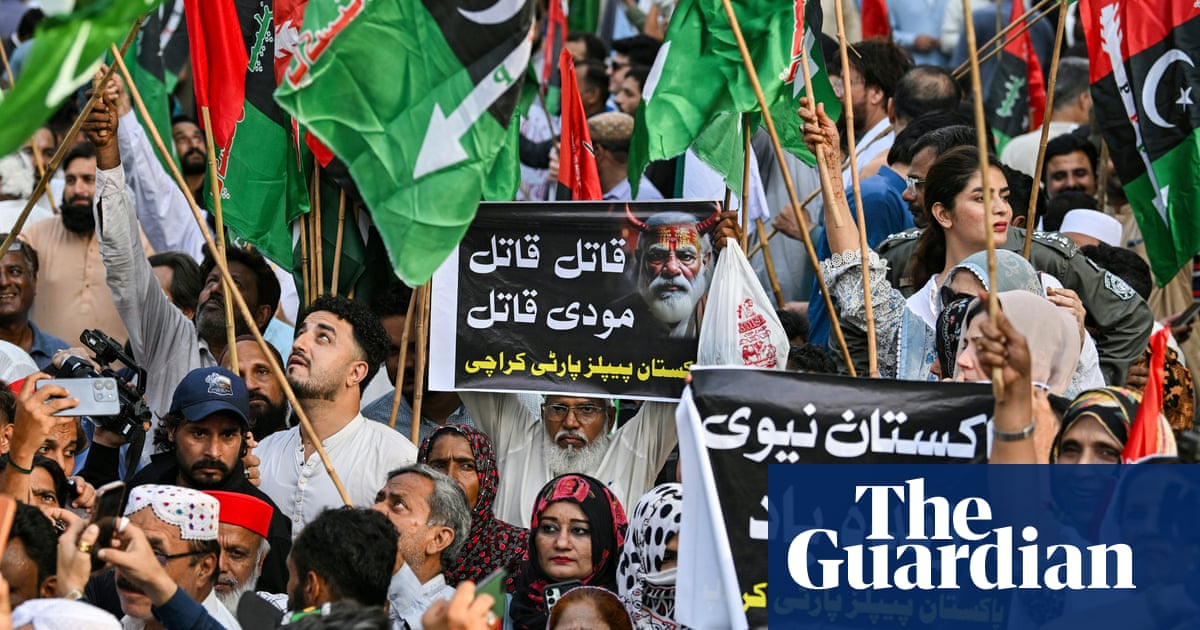
Despite India's attempts at de-escalation signaling, Pakistan swiftly condemned the strikes as an 'act of war' and claimed to have shot down five Indian military aircraft involved in the attacks, a claim yet unconfirmed by the Indian government. The Pakistan National Security Council issued a statement accusing India of 'igniting an inferno' and authorized the Pakistan army to respond to defend the nation's sovereignty. Given the weakened state of the Sharif government, the decision on how to respond rests heavily with the powerful army chief, General Asim Munir. This is a cause for concern among those seeking de-escalation, as Munir is known for his hardline stance on India and his aggressive rhetoric on Kashmir, which has already been viewed as inflammatory in Delhi. His inclination towards aggressive action and demonstrations of military strength, as opposed to diplomatic solutions, adds to the apprehension.
Pakistan's military might perceive India's strikes, especially those impacting Punjab, as a direct provocation warranting a strong response. Punjab, a crucial political base for the Sharif family and the military heartland of Pakistan, has not experienced Indian missile strikes in over half a century. The targeting of a mosque within Punjab further exacerbates the situation. The exact targets of Pakistan’s retaliation remain uncertain. While Pakistan frequently accuses India of supporting cross-border terrorism, it lacks equivalent militant camps to strike within India. A direct attack on Indian military targets could escalate the conflict dramatically. Analysts agree that Pakistan is likely to respond sooner rather than later, as prolonged delays would increase the risk of escalation.
A significant concern is the potential absence of the United States as a third-party mediator. Historically, the US has played a vital role in de-escalating tensions between India and Pakistan, leveraging its influence on both sides. However, with Donald Trump at the helm of the White House, there is a noticeable lack of interest in engaging in this long-standing conflict. Trump's dismissive remarks following India’s strikes highlight this shift. Without a powerful and neutral mediator, the risk of the conflict spiraling out of control significantly increases, as both countries may feel compelled to claim victory. The absence of a strong US presence leaves India and Pakistan potentially isolated in managing their volatile relationship, a situation that could lead to unpredictable and dangerous outcomes. The potential for miscalculation and escalation is high in the absence of external pressure and mediation.
Source: India and Pakistan can ill afford war, but who will talk them down?