
 |
|
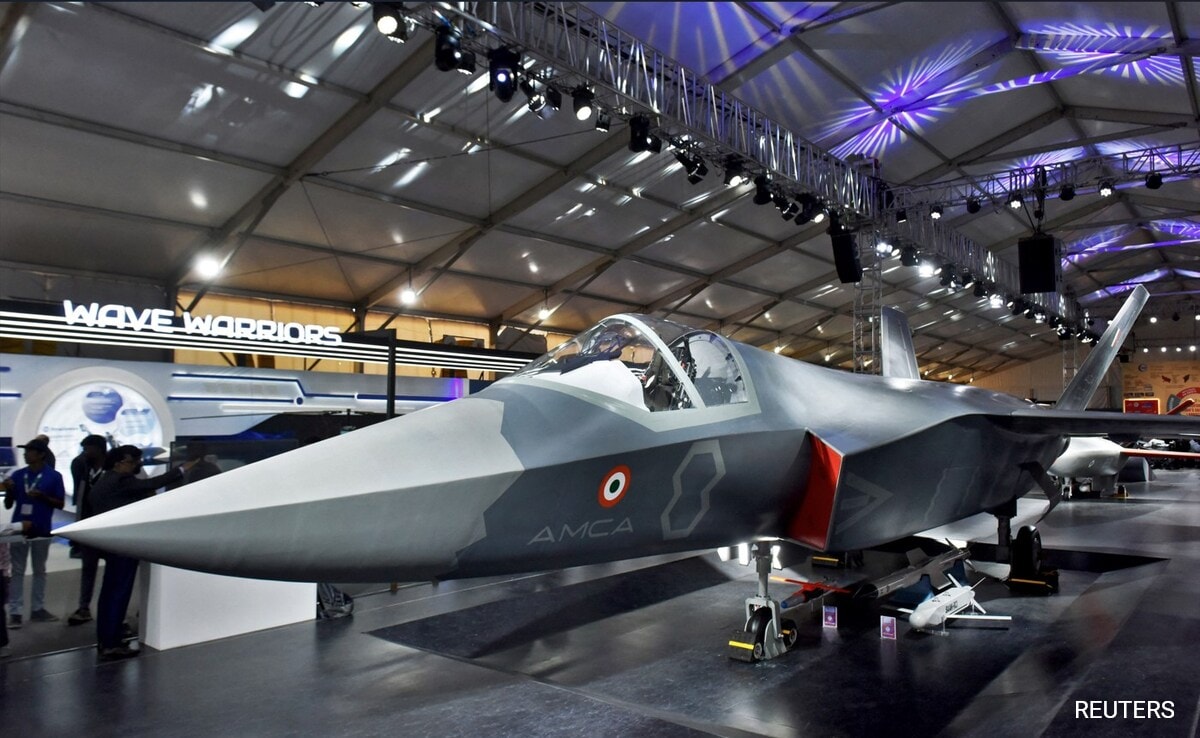
The geopolitical landscape of South Asia is undergoing a significant transformation, marked by an escalating arms race and a burgeoning focus on advanced military technologies. The recent approval by India of a project to develop its own stealth fighter jet, coupled with reports of China's offer to supply Pakistan with advanced stealth aircraft, underscores the growing strategic competition between these regional powers. This development highlights the increasing importance of air superiority and technological advancement in maintaining regional stability and projecting power. The Indian decision to pursue an indigenous stealth fighter program is a direct response to China's increasing military capabilities and its growing influence in the region. With China already possessing and testing 6th generation aircraft and offering advanced fighter jets to Pakistan, India recognizes the need to modernize its air force and develop its own advanced military technologies. The program, spearheaded by the Aeronautical Development Agency (ADA), aims to produce a twin-engine, 5th generation military aircraft, marking a significant step forward in India's defense capabilities. The involvement of both public and private defense firms in the project is a strategic move to leverage the expertise and resources of both sectors. This collaboration is expected to accelerate the development process and enhance the quality of the final product. The decision to allow private firms to participate in the project reflects a broader shift in India's defense policy, aimed at boosting domestic manufacturing and reducing reliance on state-run entities like Hindustan Aeronautics Limited (HAL). HAL has faced criticism for delays in various projects, including the Light Combat Aircraft (LCA) Tejas, prompting the government to explore alternative avenues for defense production. The participation of private firms is expected to inject new ideas, technologies, and management practices into the defense sector, fostering innovation and efficiency. The project also aligns with the government's broader 'Make in India' initiative, which seeks to promote domestic manufacturing and reduce dependence on foreign imports. The development of an indigenous stealth fighter jet will not only enhance India's military capabilities but also boost its technological prowess and create employment opportunities. The project is expected to involve significant investments in research and development, engineering, and manufacturing, creating a ripple effect throughout the economy. India's current air force inventory primarily consists of Russian and French military aircraft. The Indian Air Force currently operates with 31 squadrons, a number below the sanctioned 42, and needs to upgrade its existing fleets. The induction of an indigenous stealth fighter jet will significantly enhance its capabilities and reduce its dependence on foreign suppliers. The development of an indigenous engine, under the GTRE GTX-35VS Kaveri Engine project, is another crucial aspect of India's defense modernization efforts. While this engine is primarily intended for the LCA Tejas, its development will contribute to India's overall engine design and manufacturing capabilities, reducing its reliance on foreign engine suppliers. China's growing military cooperation with Pakistan is a key factor driving India's defense modernization efforts. China has been a major supplier of military equipment to Pakistan, including fighter jets, tanks, and naval vessels. The reported offer of the Shenyang J-35 stealth fighter jet to Pakistan is a significant development that could potentially alter the balance of power in the region. The J-35, a single-seater, twin-engine, all-weather, stealth, multi-role combat aircraft, is a formidable platform that would significantly enhance Pakistan's air capabilities. Some reports suggest that China has offered this aircraft to Pakistan at a discounted price. The decision to offer the J-35 to Pakistan reflects China's strategic interests in the region and its desire to counter India's growing influence. China views Pakistan as a key ally and a strategic partner in its efforts to contain India's rise. The transfer of advanced military technologies to Pakistan is a means of strengthening Pakistan's defense capabilities and ensuring that it can effectively counter India's military power. While India is focused on developing 5th generation aircraft, China is already developing 6th generation aircraft. The Chengdu Aircraft Corporation developed J-36 is in the process of flight testing. This is just one example of the military power that China is working on. The growing military competition between India and China is not limited to the air domain. Both countries are also investing heavily in naval power, missile technology, and cyber warfare capabilities. The Indian Ocean region is becoming an increasingly important theater of competition, with both countries seeking to project their power and influence in the region. The strategic implications of this competition are far-reaching. The arms race between India and China could potentially destabilize the region and increase the risk of conflict. It is therefore essential that both countries engage in dialogue and confidence-building measures to manage their differences and prevent escalation. The development of an indigenous stealth fighter jet is a significant step forward for India's defense capabilities and its strategic ambitions. The project reflects India's determination to become a major player in the global defense arena and to safeguard its interests in a rapidly changing geopolitical landscape. However, the project also presents significant challenges, including technological hurdles, budgetary constraints, and the need for effective coordination between public and private sector entities. Overcoming these challenges will require strong political will, effective management, and a commitment to innovation. As the project progresses, it will be crucial to monitor its progress closely and to adapt strategies as needed to ensure that it meets its objectives and contributes to India's overall security and prosperity. The success of the stealth fighter jet program will not only enhance India's military capabilities but also send a strong signal to the world about its technological prowess and its commitment to self-reliance. It will also strengthen India's position as a leading power in the Indo-Pacific region and contribute to a more stable and secure regional order.
The pursuit of stealth technology in military aviation represents a paradigm shift in aerial warfare, fundamentally altering the dynamics of engagement and strategic advantage. Stealth aircraft, characterized by their ability to evade radar detection and other surveillance systems, offer a significant tactical edge by allowing them to penetrate enemy airspace undetected, conduct reconnaissance missions with impunity, and strike targets with minimal warning. The development and deployment of stealth fighter jets have become a key priority for nations seeking to maintain air superiority and project power in an increasingly complex and contested global security environment. The underlying principle of stealth technology is to minimize the aircraft's radar cross-section (RCS), which is a measure of its ability to reflect radar signals back to the source. This is achieved through a combination of aerodynamic design, materials science, and electronic countermeasures. The shape of the aircraft is carefully designed to deflect radar waves away from the source, while radar-absorbing materials (RAM) are used to coat the aircraft's surface, absorbing radar energy and reducing the intensity of reflected signals. Electronic countermeasures, such as radar jammers and decoys, are also employed to confuse and disrupt enemy radar systems. The first generation of stealth aircraft, such as the Lockheed F-117 Nighthawk, relied primarily on shaping to achieve stealth. These aircraft had a distinctive faceted design that was optimized for deflecting radar waves. However, the faceted design also resulted in aerodynamic inefficiencies, limiting the aircraft's speed and maneuverability. Subsequent generations of stealth aircraft, such as the Lockheed Martin F-22 Raptor and the Lockheed Martin F-35 Lightning II, have incorporated more advanced technologies, such as RAM and electronic countermeasures, to achieve even greater stealth capabilities. These aircraft also feature more aerodynamic designs, allowing them to achieve higher speeds and greater maneuverability. The development of stealth technology has been a long and challenging process, requiring significant investments in research and development. The cost of developing and producing stealth aircraft is significantly higher than that of conventional aircraft. However, the strategic advantages offered by stealth technology are considered to be worth the investment by many nations. The impact of stealth technology on aerial warfare has been profound. Stealth aircraft have been used in numerous conflicts around the world, including the Gulf War, the Kosovo War, and the Iraq War. In these conflicts, stealth aircraft have demonstrated their ability to penetrate enemy airspace undetected, conduct reconnaissance missions with impunity, and strike targets with minimal warning. The effectiveness of stealth aircraft has led to a shift in military doctrine, with an increasing emphasis on the use of stealth technology in offensive operations. The proliferation of stealth technology is also having a significant impact on the global balance of power. Nations that possess stealth aircraft have a significant advantage over nations that do not. This has led to an arms race, with many nations seeking to develop or acquire stealth aircraft. The development of countermeasures to stealth technology is also an area of active research. Radar systems are constantly being improved to detect stealth aircraft, and new technologies, such as infrared search and track (IRST) systems, are being developed to overcome the limitations of radar. The future of stealth technology is likely to be characterized by a continuous cycle of innovation and counter-innovation. As stealth technology becomes more sophisticated, countermeasures will also become more sophisticated. This will lead to a dynamic and evolving arms race, with nations constantly seeking to gain an edge over their adversaries.
The complex interplay between technological advancement, geopolitical strategy, and economic considerations shapes the landscape of modern defense procurement and indigenous development initiatives. India's pursuit of a domestic stealth fighter program is a testament to its commitment to self-reliance in defense production, a strategic imperative driven by both security concerns and economic aspirations. The decision to involve private sector participation in this ambitious project underscores a broader trend of leveraging the capabilities and resources of the private industry to bolster national defense capabilities. This paradigm shift recognizes the limitations of relying solely on state-owned enterprises for defense production and acknowledges the potential for innovation, efficiency, and cost-effectiveness that private companies can bring to the table. The benefits of private sector involvement in defense production are multifaceted. Private companies often possess cutting-edge technologies, advanced manufacturing processes, and agile management practices that can accelerate the development and production of sophisticated defense systems. Their exposure to global markets and competition incentivizes them to innovate and optimize their operations, leading to higher quality products at competitive prices. Moreover, private sector participation can attract foreign investment, technology transfer, and partnerships with international defense firms, further enhancing domestic capabilities. However, involving the private sector in defense production also presents certain challenges. Security concerns, intellectual property protection, and regulatory compliance are paramount. Governments must establish robust frameworks to ensure that private companies adhere to strict security protocols, safeguard sensitive information, and maintain ethical standards. Transparency and accountability are also essential to prevent corruption and ensure fair competition. Balancing the interests of the private sector with the strategic objectives of the government requires careful planning and execution. Clear guidelines, transparent bidding processes, and effective oversight mechanisms are crucial to ensure that private sector participation contributes to the overall success of the defense program. The economic implications of indigenous defense production are substantial. By reducing reliance on foreign imports, countries can save valuable foreign exchange, create employment opportunities, and stimulate domestic economic growth. A thriving defense industry can also foster innovation, develop advanced technologies, and enhance the country's competitiveness in the global market. However, indigenous defense production requires significant investments in research and development, infrastructure, and human capital. Governments must provide adequate funding, create a supportive ecosystem for innovation, and invest in education and training programs to develop a skilled workforce. The success of indigenous defense production depends on a holistic approach that integrates technological innovation, strategic planning, economic development, and effective governance. It requires a long-term vision, a commitment to excellence, and a willingness to adapt to changing circumstances. As India embarks on its stealth fighter program, it must navigate these complex challenges and capitalize on the opportunities presented by private sector participation to achieve its strategic goals and strengthen its national security.
Source: India Approves Stealth Fighter Jet Plan Amid China's Offer To Pakistan