
 |
|
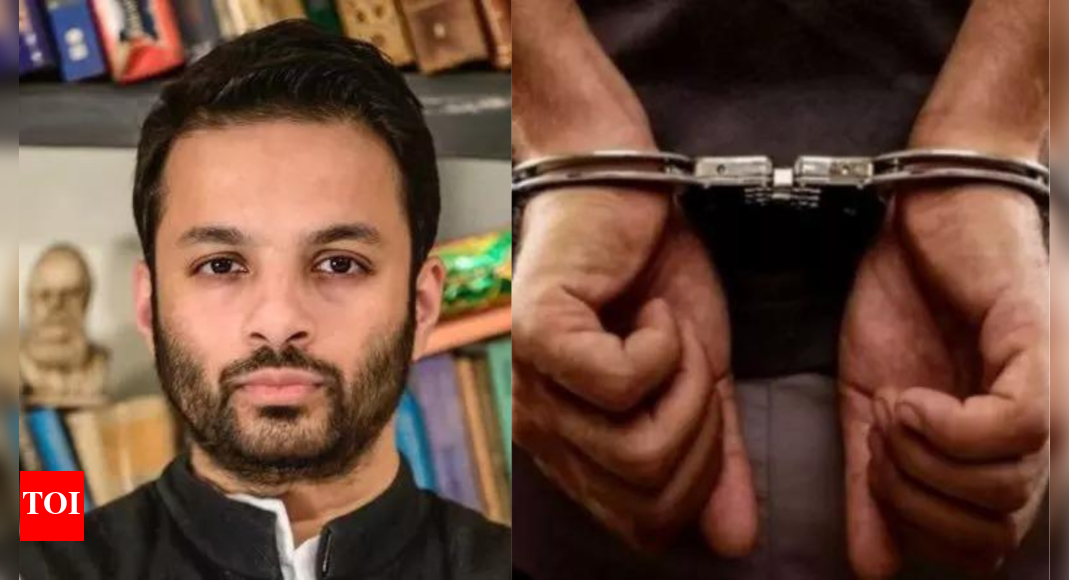
The arrest of Ashoka University professor Ali Khan Mahmudabad has ignited a political firestorm in India, with the Congress party fiercely criticizing the Modi government's actions as a blatant attack on free speech and intellectual dissent. The controversy stems from Mahmudabad's social media posts, particularly his remarks concerning 'Operation Sindoor' and his broader critique of violence and communalism within Indian society. Congress leaders argue that the professor's arrest represents a dangerous escalation of state power, highlighting what they perceive as a pattern of suppressing dissenting voices while turning a blind eye to inflammatory statements made by members of the ruling Bharatiya Janata Party (BJP). The core of the Congress's argument rests on the principle of equal application of the law and the protection of fundamental rights, including the freedom of expression. They contend that Mahmudabad's comments, while perhaps critical, did not incite violence or pose a threat to national security. Instead, they view his arrest as a politically motivated act designed to silence a prominent academic who has been openly critical of the government's policies and its handling of social and political issues. The Congress party has drawn a stark contrast between the swift action taken against Mahmudabad and the alleged inaction regarding BJP ministers who have made controversial remarks about the armed forces. They cite instances where BJP officials reportedly made disparaging comments about the Indian Army's allegiance and linked terrorists' religion to their actions, suggesting a perceived bias in the government's enforcement of laws and regulations. This perceived double standard has fueled accusations of hypocrisy and political vendettas, further exacerbating the already tense political climate in India. The situation is further complicated by the fact that Mahmudabad comes from a distinguished family, being the grandson of former foreign secretary Jagat S Mehta. This connection adds another layer of significance to the case, raising concerns about whether the government is targeting individuals based on their family history or political affiliations. The Congress party has seized upon this aspect of the case to highlight what they see as a broader trend of stifling dissent and targeting individuals who are perceived as being critical of the government. Furthermore, the controversy surrounding Mahmudabad's arrest has raised important questions about the role of social media in political discourse and the limits of free speech in a democratic society. While proponents of free speech argue that individuals should be allowed to express their opinions without fear of reprisal, others contend that certain types of speech, particularly those that incite violence or promote hatred, should be subject to restrictions. The Mahmudabad case underscores the complexities of balancing these competing interests and the challenges of navigating the increasingly complex landscape of online communication. It also highlights the potential for social media to be used as a tool for political mobilization and dissent, as well as for the spread of misinformation and propaganda. The implications of this case extend beyond the immediate legal and political ramifications. It also raises broader questions about the state of democracy in India and the extent to which the government is committed to protecting fundamental rights and freedoms. Critics of the government argue that the Mahmudabad case is just one example of a growing trend of authoritarianism, while supporters of the government maintain that it is simply taking necessary steps to maintain law and order and protect national security. The debate over the Mahmudabad case is likely to continue to rage in the days and weeks ahead, as both sides attempt to shape the narrative and mobilize public opinion. It is a case that has far-reaching implications for the future of Indian democracy and the protection of fundamental rights and freedoms.
The Congress party's response to the arrest of Professor Ali Khan Mahmudabad is multifaceted, extending beyond mere condemnation to encompass a broader critique of the BJP-led government's alleged authoritarian tendencies. Their strategy involves highlighting what they perceive as a pattern of suppressing dissenting voices, particularly those critical of the government's policies or ideological stance. A key element of their argument is the principle of consistency in the application of the law. They point to instances where BJP ministers and officials have made controversial statements, particularly regarding the armed forces, and argue that these individuals have faced little to no repercussions compared to the swift action taken against Mahmudabad. This perceived double standard forms the bedrock of their accusations of hypocrisy and political vendettas. The Congress contends that Mahmudabad's social media posts, while potentially critical, fall squarely within the bounds of protected free speech. They emphasize that his remarks did not incite violence or pose a direct threat to national security, suggesting that the arrest was a politically motivated attempt to silence a prominent academic. Furthermore, the Congress party is leveraging Mahmudabad's family background, specifically his lineage as the grandson of former foreign secretary Jagat S Mehta, to underscore their claims of targeted repression. They argue that this connection adds another layer of concern, raising questions about whether the government is selectively targeting individuals based on their family history or perceived political affiliations. Mallikarjun Kharge, the Congress chief, has explicitly condemned the arrest and emphasized the party's solidarity with academics, intellectuals, and their families. He has accused the BJP of being fearful of any opinion that contradicts their own, painting a picture of a government intolerant of dissent. The Congress's stance is further reinforced by drawing parallels to other recent incidents, such as the alleged targeting of the grieving widow of a martyred naval officer and disparaging comments made by a BJP minister about a serving colonel in the Indian Army. These examples are presented as evidence of a broader trend of suppressing dissent and targeting individuals who are perceived as being critical of the government. The Congress party aims to position itself as the defender of pluralism and intellectual freedom against what they characterize as the BJP's authoritarian tendencies. Their messaging emphasizes the importance of questioning the government, even while supporting the armed forces and national interests. This nuanced approach seeks to distinguish between legitimate criticism and undermining national unity. The Congress's strategy also involves mobilizing public opinion through social media and traditional media channels. They are actively disseminating information about the case, highlighting the alleged inconsistencies in the government's actions, and framing the issue as a battle for the soul of Indian democracy.
The controversy surrounding Ali Khan Mahmudabad's arrest underscores the delicate balance between freedom of expression and the potential for misuse of social media platforms. While freedom of speech is a fundamental right enshrined in the Indian Constitution, the extent to which this right applies to online communication remains a subject of ongoing debate and legal interpretation. Mahmudabad's social media posts, which critiqued the government's handling of social issues and questioned the treatment of lynching victims, sparked outrage among some segments of the population and ultimately led to his arrest. The Haryana State Commission for Women issued a notice regarding his comments, suggesting that they were perceived as offensive or harmful. This highlights the inherent tension between the right to express one's views, even if they are unpopular or controversial, and the potential for online content to cause harm to individuals or groups. The issue is further complicated by the rapid dissemination of information on social media platforms, which can amplify the reach and impact of even relatively obscure posts. This raises concerns about the potential for misinformation and propaganda to spread rapidly, potentially inciting violence or undermining public trust in institutions. The Mahmudabad case also raises questions about the role of social media companies in regulating online content and ensuring that users adhere to ethical guidelines and legal standards. While social media platforms have implemented measures to combat hate speech and misinformation, these efforts are often criticized as being inadequate or inconsistent. The lack of clear and consistent guidelines for online expression can create a chilling effect on free speech, as individuals may be hesitant to express their views for fear of being targeted or censored. The case also highlights the importance of media literacy and critical thinking skills in navigating the complex landscape of online information. Individuals need to be able to distinguish between credible sources and unreliable sources, and to critically evaluate the information they encounter online. Education and awareness campaigns can play a crucial role in promoting responsible online behavior and countering the spread of misinformation. Ultimately, the challenge lies in striking a balance between protecting freedom of expression and mitigating the potential harms associated with online communication. This requires a multi-faceted approach that involves government regulation, industry self-regulation, education, and individual responsibility. The Mahmudabad case serves as a reminder of the importance of engaging in thoughtful and nuanced discussions about the role of social media in society and the limits of free speech in the digital age. The ongoing legal proceedings and political debates surrounding this case will undoubtedly shape the future of online expression in India and have broader implications for the protection of fundamental rights in the digital world.
Operation Sindoor, mentioned in the context of Mahmudabad's remarks, adds a layer of complexity to the situation. The operation, executed by Indian forces in response to a terror attack, is a sensitive topic with national security implications. Mahmudabad's questioning of the media appearances of female soldiers in the context of Operation Sindoor, and his call for equal protection for all citizens regardless of their background, was interpreted by some as insensitive and potentially undermining the efforts of the armed forces. This highlights the challenges of discussing sensitive topics related to national security and military operations in a public forum. While freedom of expression allows for the scrutiny of government actions and policies, it also carries the responsibility to avoid spreading misinformation or undermining the morale of the armed forces. The potential for misinterpretation and the spread of misinformation is particularly high in the context of social media, where information can be easily taken out of context or manipulated for political purposes. The Mahmudabad case underscores the importance of responsible online behavior and the need for individuals to exercise caution when discussing sensitive topics related to national security. It also highlights the challenges faced by the government and law enforcement agencies in balancing the protection of free speech with the need to maintain law and order and protect national security. The debate over Mahmudabad's remarks and their potential impact on national security is likely to continue, as both sides attempt to shape the narrative and mobilize public opinion. The case serves as a reminder of the complexities of navigating the delicate balance between freedom of expression and the protection of national security in the digital age.