
 |
|
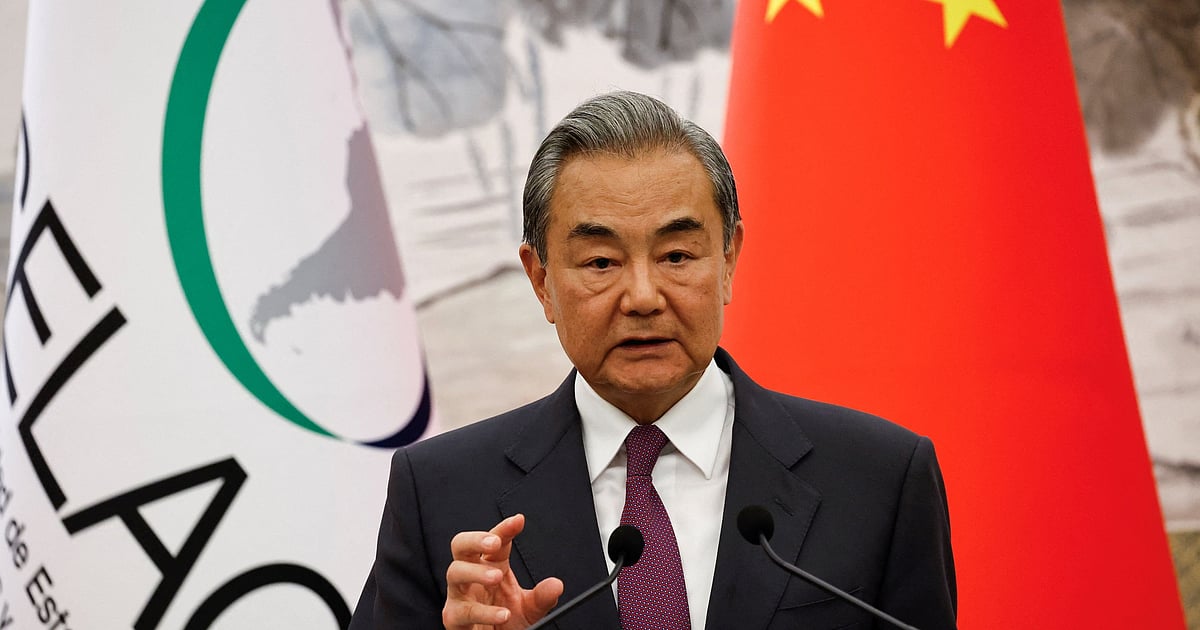
The geopolitical landscape of South Asia is a complex and often volatile one, characterized by historical rivalries, territorial disputes, and the constant interplay of regional and global powers. The relationship between India and Pakistan, in particular, has been marked by periods of intense conflict and fragile peace, with numerous flashpoints that threaten to destabilize the entire region. In this context, the recent announcement by China that it will play a 'constructive' role in achieving a 'lasting ceasefire' between India and Pakistan represents a potentially significant development, one that could have far-reaching implications for regional stability and the broader dynamics of international relations. The arrival of Pakistan's Finance Minister, Muhammad Aurangzeb (referred to as FM Dar in the provided article), in China for talks with Foreign Minister Wang Yi underscores the urgency and importance of the situation. These discussions are expected to cover a range of issues, including India's decision to put the Indus Water Treaty in abeyance, a move that has further strained relations between the two nuclear-armed neighbors. The Indus Water Treaty, signed in 1960, is a landmark agreement that has governed the sharing of water resources from the Indus River system for over six decades. India's recent actions have raised concerns about the future of this treaty and its potential impact on Pakistan's water security. China's involvement in this situation is not entirely unexpected, given its close relationship with Pakistan and its growing strategic interests in the region. China and Pakistan have long maintained a strong economic and military partnership, often described as an 'all-weather' friendship. China has invested heavily in Pakistan's infrastructure through the China-Pakistan Economic Corridor (CPEC), a key component of its Belt and Road Initiative (BRI). This economic partnership has deepened the ties between the two countries and has given China a significant stake in Pakistan's stability and security. However, China's relationship with India is more complex. While China and India are major economic partners and have engaged in extensive diplomatic and trade relations, they also have a long history of border disputes and strategic competition. The two countries fought a brief but bloody war in 1962, and their border remains undemarcated in several areas. In recent years, tensions between China and India have escalated, particularly along their disputed border in the Himalayas. These tensions have raised concerns about the potential for further conflict and have complicated efforts to improve relations between the two countries. China's decision to play a 'constructive' role in mediating between India and Pakistan reflects its desire to promote regional stability and to protect its own strategic interests. A lasting ceasefire between India and Pakistan would not only reduce the risk of further conflict but would also create a more favorable environment for economic development and regional cooperation. However, achieving a lasting ceasefire will not be easy. The underlying causes of the conflict between India and Pakistan are deeply rooted in history and are unlikely to be resolved overnight. Moreover, both countries have strong nationalistic sentiments and are wary of making concessions to the other side. China's role as a mediator will require careful diplomacy and a willingness to address the legitimate concerns of both India and Pakistan. It will also require a commitment to impartiality and a willingness to hold both sides accountable for their actions. The success of China's mediation efforts will depend on a number of factors, including the willingness of India and Pakistan to engage in meaningful dialogue, the ability of China to build trust with both sides, and the broader geopolitical context. The international community also has a role to play in supporting China's efforts and in encouraging India and Pakistan to resolve their differences peacefully.
The statement from China promising a ‘constructive role’ hints at a carefully balanced approach, attempting to alleviate tensions without explicitly siding with either nation. This is crucial for maintaining China's image as a responsible global actor, particularly given its extensive investments in Pakistan through the China-Pakistan Economic Corridor (CPEC). The stability of the region is paramount to the success of CPEC, and escalating conflict between India and Pakistan would undoubtedly jeopardize its progress. Consequently, China's involvement can be viewed as a strategic move to protect its economic interests in the region. Furthermore, China's mediation efforts could be interpreted as an attempt to enhance its influence in South Asia, positioning itself as a key player in regional security. By successfully brokering a ceasefire, China would not only contribute to regional stability but also bolster its diplomatic standing on the global stage. However, the complexities of the India-Pakistan relationship present significant challenges to any mediation effort. The deep-seated mistrust and historical grievances between the two nations make finding common ground exceedingly difficult. The abeyance of the Indus Water Treaty, a relatively successful example of cooperation despite ongoing tensions, further complicates the situation. This decision by India underscores the fragility of existing agreements and highlights the need for renewed dialogue and confidence-building measures. China's capacity to effectively mediate hinges on its ability to convince both India and Pakistan that it is acting in good faith and with the best interests of the region at heart. This requires demonstrating impartiality and a willingness to address the core concerns of both sides. For India, these concerns likely revolve around cross-border terrorism and Pakistan's support for militant groups. For Pakistan, the concerns are centered on water security and the resolution of the Kashmir dispute. China's ability to navigate these complex issues and to propose viable solutions will determine the success of its mediation efforts. Moreover, the international community, particularly the United States and other major powers, must support China's efforts and encourage India and Pakistan to engage constructively in dialogue. A coordinated approach, involving all relevant stakeholders, is essential for achieving a lasting and sustainable resolution to the conflict. The alternative to successful mediation is a continued cycle of tension and conflict, with potentially devastating consequences for the region and the world. Therefore, China's offer to play a 'constructive' role in achieving a lasting ceasefire represents a significant opportunity to de-escalate tensions and to promote peace and stability in South Asia.
The Indus Waters Treaty (IWT) deserves a closer examination. This agreement, brokered by the World Bank in 1960, allocates the waters of the Indus River system between India and Pakistan. The treaty has generally been considered a success, surviving multiple wars and periods of intense hostility between the two nations. It provides a framework for cooperation and dispute resolution, helping to prevent water scarcity from escalating into armed conflict. India's decision to effectively put the IWT in abeyance raises serious concerns about its long-term commitment to the treaty and its potential impact on Pakistan's water security. Pakistan is heavily reliant on the Indus River system for agriculture, industry, and domestic consumption. Any disruption to the flow of water could have severe economic and social consequences. India's stated reasons for its actions may include concerns about Pakistan's alleged support for cross-border terrorism. However, using water as a tool of coercion is a dangerous game that could have unintended consequences. It could further escalate tensions between the two countries and undermine the existing framework for cooperation on water resources. China's involvement in this situation could provide an opportunity to address the concerns of both India and Pakistan and to find a way to ensure the long-term viability of the IWT. China has experience in managing transboundary water resources, and it could share its expertise with both countries. Moreover, China's economic and political influence could be used to encourage India and Pakistan to engage in constructive dialogue and to find mutually acceptable solutions. However, China's own record on transboundary water management is not without controversy. Its construction of dams on rivers that flow into downstream countries, such as the Brahmaputra, has raised concerns about the potential impact on water availability and ecosystem health. Therefore, China's role as a mediator on the Indus Waters Treaty must be approached with caution, ensuring that it respects the rights and interests of all parties involved. Ultimately, the success of any mediation effort will depend on the willingness of India and Pakistan to prioritize cooperation and to find common ground. The Indus Waters Treaty is a valuable asset that should be preserved and strengthened, not undermined. It provides a framework for peaceful cooperation on water resources, which is essential for the stability and prosperity of the region. China can play a constructive role in supporting this process, but it must act impartially and with the best interests of all parties at heart.
The political motivations of all involved parties warrant careful consideration. For China, a stabilized South Asia is intrinsically linked to the success of the Belt and Road Initiative (BRI), and specifically the China-Pakistan Economic Corridor (CPEC). Instability, conflict, and terrorism pose direct threats to infrastructure development, investment security, and regional connectivity. China's growing economic footprint in Pakistan makes it a vested stakeholder in the country's stability. By playing a role in de-escalating tensions between India and Pakistan, China safeguards its investments and promotes a conducive environment for trade and development. However, China's strategic calculations are not solely economic. A more peaceful South Asia reduces the potential for great-power competition and allows China to focus on other geopolitical priorities. It also strengthens China's image as a responsible global actor capable of mediating complex international disputes. For Pakistan, engaging with China provides an opportunity to strengthen its strategic partnership and to gain diplomatic support in its ongoing disputes with India. China's backing is particularly important in light of India's growing international influence and its close ties with the United States. Pakistan also seeks China's assistance in resolving the Indus Waters Treaty issue, which is critical for its water security and economic stability. For India, while initially hesitant to accept third-party mediation, engaging with China in a structured dialogue could be seen as a way to manage tensions and to explore potential areas of cooperation. India also recognizes the importance of maintaining stability in the region, particularly given its own economic and security interests. However, India is wary of any attempts to meddle in its bilateral relations with Pakistan, and it will likely insist on maintaining control over the dialogue process. The geopolitical dynamics of the region are further complicated by the involvement of other external actors, such as the United States, Russia, and the European Union. These powers have their own strategic interests in South Asia, and their actions can either support or undermine efforts to promote peace and stability. The United States, for example, has traditionally maintained close ties with India, but it also recognizes the importance of maintaining a stable relationship with Pakistan. Russia has also been actively engaged in promoting dialogue between India and Pakistan, and it has offered to mediate the Kashmir dispute. The European Union has also expressed its support for regional stability and has called on India and Pakistan to resolve their differences peacefully. In this complex and multi-layered geopolitical landscape, China's efforts to mediate between India and Pakistan face significant challenges. However, its economic and political influence, its close ties with Pakistan, and its growing strategic interests in the region give it a unique opportunity to play a constructive role in promoting peace and stability.
Moving beyond the immediate crisis, long-term solutions are vital for enduring peace. A renewed commitment to dialogue and diplomacy between India and Pakistan is paramount. This dialogue must address the root causes of the conflict, including the Kashmir dispute, cross-border terrorism, and water sharing. Confidence-building measures, such as increased people-to-people contacts and cultural exchanges, can help to reduce mistrust and to foster a more positive relationship. Economic cooperation can also play a significant role in promoting peace and stability. Increased trade and investment between India and Pakistan can create jobs and generate economic benefits, which can help to reduce social unrest and to build support for peace. Regional cooperation, involving all countries in South Asia, is also essential. This cooperation can address common challenges, such as climate change, poverty, and terrorism, and it can help to build a more integrated and prosperous region. International support is also crucial. The international community must continue to encourage India and Pakistan to resolve their differences peacefully, and it must provide financial and technical assistance to support peacebuilding efforts. The United Nations can play a key role in facilitating dialogue and in monitoring the implementation of peace agreements. Civil society organizations also have an important role to play in promoting peace and reconciliation. These organizations can work to build bridges between communities and to promote understanding and tolerance. Education is also essential for promoting long-term peace and stability. Educational curricula should promote critical thinking, empathy, and respect for diversity. History textbooks should be revised to present a more balanced and accurate account of the past. The media also has a responsibility to promote peace and to avoid sensationalizing events that could escalate tensions. Journalists should adhere to ethical standards and should strive to present accurate and unbiased information. Leadership is crucial. Political leaders must demonstrate courage and vision and must be willing to take risks for peace. They must put the interests of their people above their own political ambitions, and they must be willing to compromise in order to reach a peaceful settlement. The path to peace between India and Pakistan is long and arduous, but it is not impossible. By working together, with the support of the international community, the two countries can overcome their differences and build a future of peace, stability, and prosperity.
The role of technology and innovation should not be overlooked in fostering peaceful relations. Digital diplomacy, for example, can facilitate direct communication between citizens of India and Pakistan, bypassing traditional media outlets that may sometimes amplify tensions. Online platforms can be used to promote cultural exchange, educational initiatives, and collaborative projects that foster understanding and build trust. Moreover, technological advancements can contribute to more effective water management and resource allocation, mitigating potential conflicts over water sharing. Smart irrigation systems, drought-resistant crops, and desalination technologies can help to increase water efficiency and reduce the reliance on transboundary water resources. Furthermore, technological innovations in border security can enhance transparency and reduce the risk of accidental escalation. Advanced surveillance systems, unmanned aerial vehicles, and sensor networks can provide real-time monitoring of border areas, allowing for quick detection and response to any potential threats. However, technology can also be used for malicious purposes, such as spreading disinformation and propaganda. Therefore, it is crucial to promote responsible use of technology and to counter the spread of false information. Media literacy campaigns can help citizens to critically evaluate online content and to identify disinformation. Collaboration between cybersecurity experts from India and Pakistan can help to prevent cyberattacks and to protect critical infrastructure. The development of ethical guidelines for the use of artificial intelligence can also help to ensure that AI is used for peaceful purposes and not for harmful activities. In conclusion, China's involvement in mediating tensions between India and Pakistan presents a complex and multifaceted challenge. Its ability to navigate the historical grievances, geopolitical dynamics, and economic interests of all involved parties will determine the success of its efforts. While long-term solutions require a comprehensive approach involving dialogue, diplomacy, confidence-building measures, and regional cooperation, leveraging technology and innovation can also contribute to fostering peaceful relations and building a more prosperous and stable South Asia. The international community must support these efforts and encourage all stakeholders to work together to build a future of peace and prosperity for the region. The stakes are high, and the opportunity to make a positive difference is immense.
Source: China Backs Lasting Ceasefire: FM Wang Meets Pakistan’s Dar Amid India-Pak Tensions