
) |
|
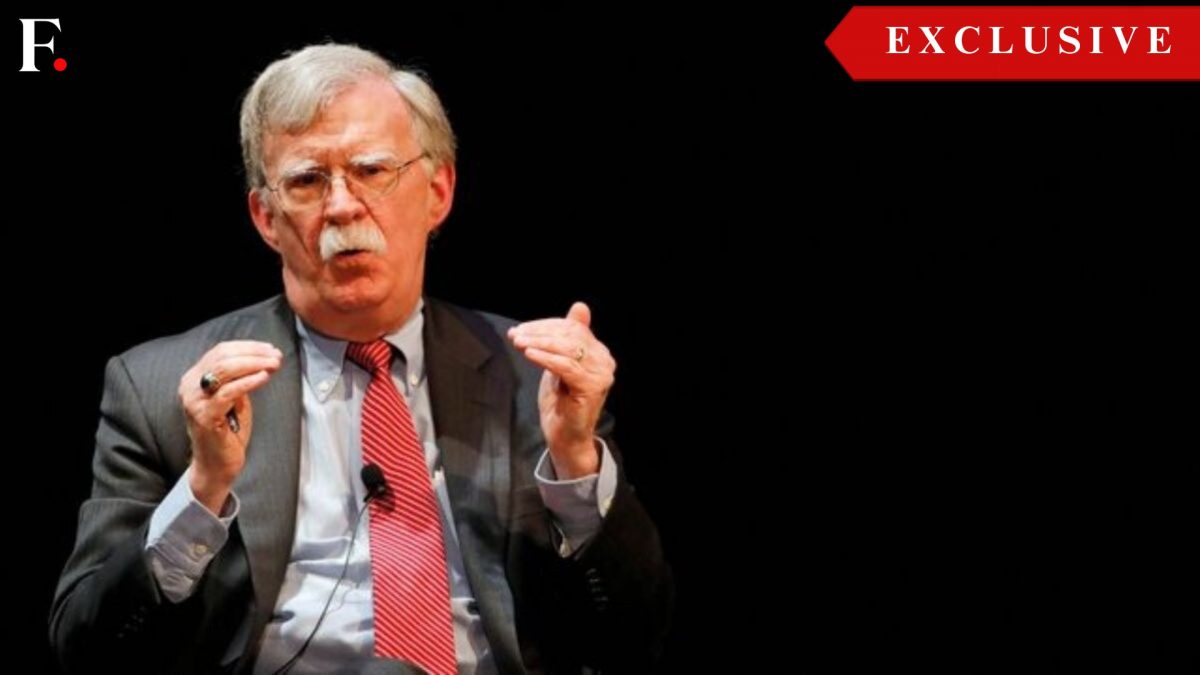
The interview with former US National Security Advisor John Bolton provides valuable insights into the complex geopolitical dynamics between India and Pakistan, particularly concerning terrorism and the roles of the United States and China. Bolton unequivocally states that India has a legitimate right to defend itself against terrorist attacks originating from Pakistan, a stance he held even during his tenure in the Trump administration. He highlights the long-standing issue of elements within the Pakistani military, specifically the ISI, supporting terrorist groups, a problem that has persisted despite international efforts to combat terrorism. Bolton's perspective is rooted in his experience dealing with the Pulwama terror attack in 2019 and the subsequent Balakot strike, where he played a role in facilitating communication between Washington, DC, New Delhi, and Islamabad. He emphasizes the importance of the US being involved in de-escalating tensions between the two nuclear-powered nations, even criticizing Vice President JD Vance's initial comment that the situation was “none of our business.” Bolton argues that the US has a responsibility to assist its friends, like India, and to help prevent dangerous escalations, especially considering its own historical relationship with Pakistan. Bolton's assessment of China's role in the region is equally critical. He expresses concern over China's growing influence in Pakistan, particularly its increasing supply of sophisticated weaponry. This dependence on China, he argues, gives Beijing considerable leverage over Pakistan, especially with the military in control. Bolton views this as a significant concern for both the United States and India, given the historical tensions between India and Pakistan. He also criticizes Trump's trade policies with China, suggesting that they have not effectively addressed the fundamental problems with China's behavior in international trade, such as intellectual property theft and the subsidization of its companies. Bolton's remarks shed light on the internal dynamics of the Trump administration and the contrasting views on foreign policy. He points out Trump's tendency to take credit for diplomatic achievements, even when the details were primarily worked out at the military-to-military level between India and Pakistan. He also notes the mixed signals coming from the US administration, with Trump rushing to announce a ceasefire while other officials initially downplayed the US role. Bolton's analysis underscores the importance of consistent and well-informed foreign policy decision-making, emphasizing the need for the US to be actively engaged in resolving conflicts and promoting stability in the region. Bolton's views on the broader geopolitical landscape also offer valuable context. He discusses the common threat posed by the China-Russia axis and the importance of the Asian security quad of India, Japan, Australia, and the United States in countering this threat. He laments Pakistan's increasing alignment with China, arguing that it is not ultimately in Pakistan's best interest. He also touches on the issue of Pakistan's nuclear weapons program, noting that the designs were obtained from China, further highlighting the complexity of the relationship. Ultimately, Bolton emphasizes that peace on the subcontinent will require an understanding between India and Pakistan, and that the increasing influence of China is making this process more difficult. He underscores the negative impact of this delay on economic growth and the welfare of the people in both countries, particularly Pakistan.
Bolton's interview provides a comprehensive analysis of the multifaceted challenges facing the Indo-Pacific region, with a particular focus on the India-Pakistan relationship. He underscores the persistent threat of terrorism emanating from Pakistan and the importance of India's right to defend itself. He highlights the historical context of the US-Pakistan relationship and the evolving dynamics of China's influence in the region. Bolton's insights are particularly valuable given his experience as a former US National Security Advisor, providing a firsthand perspective on the decision-making processes within the US government and the complexities of international diplomacy. His critical assessment of Trump's foreign policy decisions and his concerns about China's growing power offer important considerations for policymakers and analysts seeking to understand the current geopolitical landscape. Bolton emphasizes the need for a proactive and consistent US foreign policy that prioritizes engagement, cooperation, and the promotion of stability in the region. He argues that the US should work closely with its allies, such as India, to counter the threats posed by terrorism and authoritarian regimes. He also stresses the importance of addressing the underlying issues that contribute to instability, such as economic inequality and political grievances. Bolton's analysis suggests that a comprehensive approach is needed to address the challenges facing the Indo-Pacific region, one that combines diplomatic efforts, economic cooperation, and security partnerships. He argues that the US must remain actively engaged in the region to protect its interests and promote its values. Bolton's perspective is particularly relevant in light of the evolving global landscape and the increasing competition between the US and China. His insights offer valuable guidance for navigating the complexities of international relations and promoting a more peaceful and prosperous world.
The article’s core argument revolves around the legitimacy of India’s self-defense measures against Pakistan-sponsored terrorism, a position firmly supported by John Bolton. The narrative unfolds through a structured interview format, addressing specific events like Operation Sindoor and the Pahalgam terror attack. The analysis extends beyond immediate reactions, delving into the historical context of US-India-Pakistan relations, particularly under the Trump administration. Bolton’s insights are compelling due to his direct involvement in shaping US foreign policy during critical moments, such as the Pulwama attack and its aftermath. He criticizes what he perceives as missteps, like JD Vance’s initial dismissal of the India-Pakistan conflict, and highlights the importance of US engagement in de-escalation efforts. The article also explores the role of China, portraying it as a growing influence in Pakistan and a source of concern for both the US and India. Bolton’s concerns about China’s military support to Pakistan and its leverage over the Pakistani military add another layer of complexity to the regional dynamics. The interview effectively captures the nuances of US foreign policy decision-making, revealing the internal debates and contrasting viewpoints within the Trump administration. Bolton’s analysis highlights the challenges of balancing competing interests and maintaining consistent strategies in a complex geopolitical environment. The article concludes by emphasizing the need for a proactive and well-informed US foreign policy, one that prioritizes engagement, cooperation, and the promotion of stability in the Indo-Pacific region. Bolton’s perspective underscores the importance of strong alliances, effective communication, and a comprehensive understanding of the regional dynamics to navigate the complexities of international relations and promote a more peaceful and prosperous world. In conclusion, the article presents a well-structured and insightful analysis of the India-Pakistan relationship, the role of the US, and the growing influence of China in the region, providing valuable perspectives for policymakers and analysts.