
 |
|
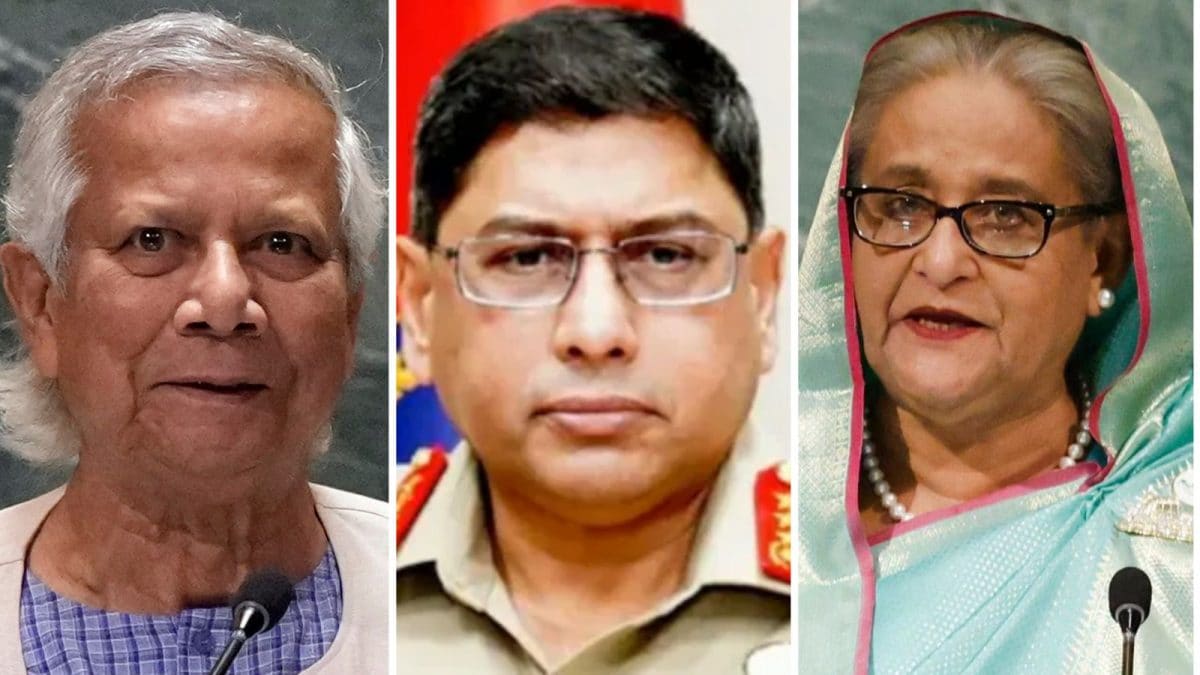
The political landscape of Bangladesh appears to be undergoing significant upheaval, as evidenced by the escalating tensions between the civilian government, nominally led by Nobel laureate Muhammad Yunus, and the military, headed by General Waker-Uz-Zaman. The article paints a picture of deep-seated distrust and potential power struggles, highlighting concerns about the legitimacy of the current administration and the influence of external actors. The situation is further complicated by historical context, including India's prior warnings against Zaman's appointment as Army Chief and the release of convicted mutineers implicated in the 2009 massacre of army officers. These events raise fundamental questions about the stability of Bangladesh's democratic institutions and the potential for future conflict. The reported friction between Yunus and Zaman is not merely a personality clash; it represents a fundamental disagreement over the direction of the country and the balance of power between civilian and military authorities. The release of convicted mutineers, the perceived US intervention in internal affairs, and the historical baggage of Indo-Bangladeshi relations all contribute to a volatile and uncertain environment. The allegations of Zaman's pro-Pakistan leanings, coupled with India's prior attempts to dissuade Hasina from appointing him, underscore the complex geopolitical dynamics at play. The article suggests that India had reservations about Zaman's appointment, not only due to concerns about his health and competence but also due to suspicions about his loyalty and alignment with Pakistan. This highlights the enduring sensitivity of Indo-Pakistani relations and the potential for these dynamics to influence internal affairs in neighboring countries. The article also points to Hasina's decision to disregard India's warnings as a crucial turning point. By choosing to trust her own judgment over the advice of a close ally, Hasina may have inadvertently set the stage for the current crisis. The reasons for Hasina's decision are not entirely clear from the article, but it suggests that Zaman had gained her confidence through his service in the Prime Minister's Office. The article further implies that the student-led uprising that occurred shortly after Zaman's appointment may have been orchestrated to destabilize Hasina's government and pave the way for Yunus's rise to power. The narrative portrays Zaman as a key figure in the change of power, acting in a manner that defied New Delhi's envisioned outcome. His televised address announcing Hasina's resignation and the formation of an interim government is presented as a pivotal moment in the unfolding crisis. This raises serious questions about the legitimacy of the transition and the extent to which the military played a role in shaping the political landscape. The fact that Yunus is now reportedly considering resignation suggests that the interim government is facing significant challenges and internal divisions. The reported frustration over recent developments, coupled with the ongoing demonstrations and the army's grievances, paints a picture of a government struggling to maintain control and legitimacy. The article also highlights the role of external actors, particularly the United States, in the unfolding crisis. The meeting between Yunus's military adviser and the US Chargé d'Affaires is interpreted by Zaman as an attempt to replace him with US support. This perception of foreign interference further fuels the tensions and adds another layer of complexity to the situation. The reference to Hasina's comments about St Martins Island suggests a concern about the erosion of sovereignty and the increasing influence of external powers. This sentiment is likely to resonate with a segment of the population and could be used to rally support against Yunus and his government.
The article's narrative is built upon a series of assertions and allegations, many of which are attributed to unnamed sources within the Awami League and the Bangladeshi media. While this provides a sense of intrigue and urgency, it also raises questions about the reliability and impartiality of the information presented. The lack of concrete evidence to support some of the claims, such as the alleged pro-Pakistan leanings of Zaman and the orchestration of the student-led uprising, makes it difficult to assess the full extent of the situation. Furthermore, the article's focus on the personal relationships and political maneuvering of key figures risks obscuring the broader structural issues that may be contributing to the instability. Issues such as corruption, poverty, and social inequality are not explicitly addressed, but they are likely to be relevant factors in the unfolding crisis. The article's conclusion is tentative, acknowledging that it may be premature to definitively say that Zaman is actively seeking to oust Yunus. However, it asserts that Zaman clearly wants Yunus to leave, implying that the Army Chief is actively working to undermine the interim government and create conditions that would force Yunus's resignation. This assessment is based on the assumption that Zaman's public statements about foreign interference are intended to rally public support against Yunus and strengthen his own position. Overall, the article presents a complex and concerning picture of the political situation in Bangladesh. It highlights the tensions between civilian and military authorities, the influence of external actors, and the potential for further instability. While the article's reliance on unnamed sources and unsubstantiated allegations makes it difficult to draw definitive conclusions, it provides valuable insights into the dynamics at play and the challenges facing the country.
Analyzing the situation requires considering several key factors. First, the historical context of military involvement in Bangladeshi politics is crucial. Bangladesh has experienced periods of military rule and political instability, shaping the current dynamics. The 2009 mutiny, mentioned in the article, is a stark reminder of the potential for internal conflict within the military and its impact on the political landscape. Second, the role of India and other regional powers cannot be ignored. India's concerns about Zaman's appointment and the perceived US intervention highlight the complex geopolitical dynamics at play. The relationship between Bangladesh and its neighbors significantly impacts its internal stability. Third, the legitimacy and effectiveness of the interim government are critical. Yunus's reported consideration of resignation suggests that the government is facing significant challenges in maintaining order and addressing the country's problems. The release of convicted mutineers, a controversial decision, illustrates the government's precarious position and its struggle to balance competing interests. Fourth, the underlying socio-economic conditions contribute to the political instability. Poverty, inequality, and corruption can fuel public discontent and provide fertile ground for political unrest. The article does not directly address these issues, but they are likely to be important factors shaping the current situation. Fifth, the role of the media and public opinion is significant. The Daily Star's reporting on Yunus's potential resignation and the public demonstrations indicate the power of the media and public sentiment in influencing the course of events. The article's focus on Zaman's public statements suggests that he is attempting to shape public opinion in his favor. The future of Bangladesh depends on the ability of its political leaders and institutions to address these challenges and build a stable and democratic society. The tensions between the civilian government and the military, the influence of external actors, and the underlying socio-economic conditions all pose significant obstacles. The unfolding events warrant close attention from the international community, as the stability of Bangladesh is crucial for the region's overall security and development.
Source: Who Is Bangladesh Army Chief Zaman Going After Yunus? Hasina’s Kin Who Delhi Had Warned Her Against