
 |
|
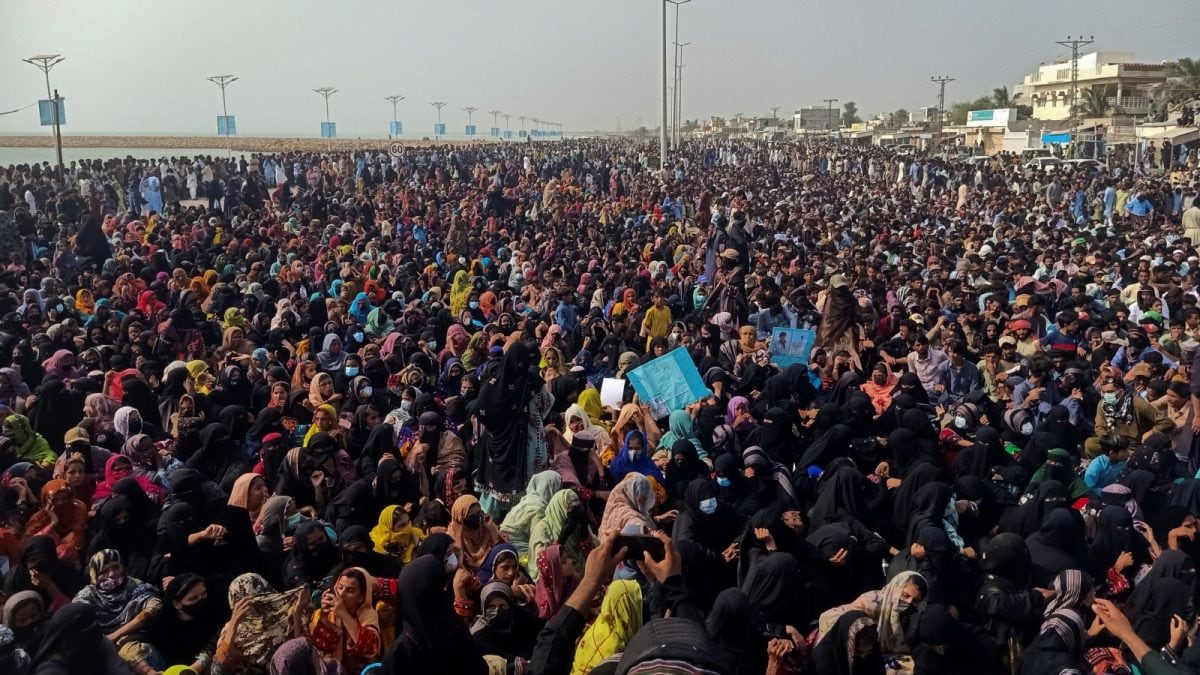
The article paints a picture of rising hopes among Baloch rebels seeking independence from Pakistan following a hypothetical Indian military victory in “Operation Sindoor.” This operation, which is presented as a successful endeavor by India against Pakistan, has seemingly emboldened the Baloch liberation movement, fueling their aspirations for self-determination. The Baloch groups view India as a crucial strategic ally and a counterweight to Pakistan, particularly in the context of their struggle for independence. The article highlights the Baloch Liberation Army's (BLA) appeal to India for diplomatic and material support, underscoring their desire to combat what they perceive as state-sponsored terrorism by Pakistan. The public declaration of Balochistan's independence by Baloch leaders like Mir Yar Baloch further emphasizes the seriousness and determination of this movement. The assertion that an Indian victory is a victory against both Pakistan and China suggests a broader geopolitical dimension to the conflict, potentially involving regional power dynamics and strategic interests. Pakistan's internal vulnerabilities, including economic instability, political turmoil, and threats from various militant groups such as the Tehreek-e-Taliban Pakistan (TTP), Lashkar-e-Taiba (LeT), and Jaish-e-Mohammed (JeM), are presented as factors contributing to the Baloch rebels' optimism. These internal crises have reportedly led to backlash in provinces like Khyber Pakhtunkhwa and Sindh, potentially weakening Pakistan's ability to effectively control the Balochistan region. The Baloch leadership expresses hope that India, with its growing military power and global stature, will advocate for their cause within the international human rights community and raise awareness about alleged human rights violations, including enforced disappearances and killings, perpetrated by Pakistani forces in Balochistan. The article also emphasizes the Baloch people's perceived expertise in guerrilla warfare, which they believe surpasses the capabilities of Pakistani forces. The BLA and Baloch Raji Ajoi Sangar (BRAS) are described as skilled in ambush tactics, IED attacks, and sabotage operations, specifically targeting military convoys and infrastructure projects related to the China-Pakistan Economic Corridor (CPEC). The BLA fighter's assertion that they have survived brutal crackdowns by the Pakistani army underscores their resilience and determination. The claim of 71 coordinated attacks across 51 locations in Balochistan in May 2025 suggests a significant escalation in their operational sophistication and a growing challenge to Pakistani control. This fighting is framed as a struggle for their homeland, which they allege is being sold to China by the Pakistani army and Punjabi leaders, highlighting the economic and ethnic dimensions of the conflict. The targeting of CPEC infrastructure, including Gwadar Port, is presented as a strategy to attract international attention and potentially garner support from countries opposed to China, such as the United States. The BLA fighter's concluding statement expresses hope that these attacks will disrupt Chinese investments and undermine Pakistan's economic stability, furthering their cause for independence.
The geopolitical implications of a potential independent Balochistan are significant. The region's strategic location, bordering Iran and Afghanistan in addition to Pakistan, makes it a crucial area for regional stability and international trade routes. Control of Gwadar Port, a key component of the CPEC, is a major point of contention. If Balochistan were to achieve independence, the future of the CPEC would be uncertain, potentially impacting China's Belt and Road Initiative. The involvement of external actors, such as India and potentially the United States, adds another layer of complexity to the situation. India's perceived support for the Baloch movement is likely to further strain relations with Pakistan, while any potential involvement of the United States could trigger a response from China. The Balochistan issue is not simply a regional conflict but a multifaceted geopolitical challenge with far-reaching consequences. The article hints at the deep-seated grievances of the Baloch people against the Pakistani government, including allegations of human rights abuses, economic exploitation, and political marginalization. These grievances have fueled the separatist movement and created a fertile ground for insurgency. The narrative of the Baloch rebels as freedom fighters resisting oppression resonates with some segments of the international community, which could potentially lead to increased pressure on Pakistan to address the underlying issues. However, Pakistan views the Baloch insurgents as terrorists and accuses them of being supported by foreign powers, further complicating the situation. The potential for regional destabilization is a major concern. An independent Balochistan could inspire other separatist movements in the region, leading to further conflicts and instability. The porous borders and presence of various militant groups in the region make it difficult to control the flow of arms and fighters, potentially exacerbating the security situation. The humanitarian consequences of the conflict are also a serious concern. The ongoing violence has displaced thousands of people and disrupted essential services. The lack of access for humanitarian organizations makes it difficult to assess the full extent of the suffering, but it is clear that the civilian population is bearing the brunt of the conflict.
The long-term prospects for the Balochistan independence movement remain uncertain. While the Baloch rebels have demonstrated resilience and determination, they face significant challenges. The Pakistani military maintains a strong presence in the region and has vowed to crush the insurgency. The lack of international recognition and support for the Baloch movement also limits their ability to achieve their goals. The internal divisions within the Baloch community could also undermine their efforts. Different factions have different priorities and strategies, which could weaken their overall effectiveness. A peaceful resolution to the conflict requires a comprehensive approach that addresses the underlying grievances of the Baloch people and promotes political and economic inclusion. Dialogue between the Pakistani government and Baloch representatives is essential to finding a mutually acceptable solution. International mediation could also play a role in facilitating negotiations and ensuring that the rights of the Baloch people are protected. Investing in economic development and infrastructure projects in Balochistan is crucial to creating opportunities and improving the living standards of the local population. This would help to address the economic grievances that have fueled the separatist movement. Promoting human rights and ensuring accountability for human rights violations is essential to building trust and confidence between the Pakistani government and the Baloch community. This includes investigating allegations of enforced disappearances, killings, and torture and bringing perpetrators to justice. The hypothetical scenario presented in the article, with India's successful Operation Sindoor, serves as a catalyst for exploring the complex dynamics of the Balochistan conflict and its broader geopolitical implications. While the likelihood of such an operation is uncertain, the article provides a valuable framework for understanding the aspirations, challenges, and potential consequences of the Baloch independence movement.
The article's reliance on unnamed 'sources' raises questions about the veracity and objectivity of the information presented. While it is common for journalists to protect their sources, the lack of specific attribution makes it difficult to verify the claims made in the article. The strong pro-Baloch bias is also evident throughout the article. The Pakistani government's perspective is largely absent, and the allegations against Pakistani forces are presented without any critical analysis. This lack of balance undermines the credibility of the article and makes it difficult to form an objective assessment of the situation. The article's portrayal of India as a benevolent actor supporting the Baloch cause is also questionable. India has its own strategic interests in the region, and its support for the Baloch movement may be driven by geopolitical considerations rather than purely humanitarian concerns. It is important to recognize that all actors involved in the Balochistan conflict have their own agendas, and their actions should be viewed with a critical eye. The article's focus on military aspects of the conflict overlooks the underlying social, economic, and political issues that are driving the insurgency. Addressing these issues is crucial to finding a sustainable solution to the conflict. The Pakistani government needs to engage in meaningful dialogue with Baloch representatives and address their grievances in a fair and transparent manner. International community can play a constructive role by providing financial and technical assistance for economic development and promoting human rights and good governance in Balochistan. The complexities of the Balochistan conflict require a nuanced and comprehensive understanding. The article provides a starting point for exploring this complex issue, but it is important to consult a variety of sources and perspectives to form a complete and objective picture. Future reporting on this issue should strive for greater balance, transparency, and accuracy, and should focus on the underlying issues that are driving the conflict rather than simply sensationalizing the military aspects.
The situation in Balochistan is further complicated by the presence of various external actors with competing interests. Iran, for example, shares a long border with Balochistan and has its own Baloch minority population. Tehran is wary of separatist movements that could potentially destabilize its own border regions and has therefore maintained a cautious approach towards the Balochistan issue. However, Iran has also expressed concerns about the treatment of Baloch people by the Pakistani government and has called for greater respect for their rights. Afghanistan, which also borders Balochistan, has historically been a source of support for Baloch insurgents. The Afghan government has provided safe haven and training to Baloch fighters, although this support has diminished in recent years due to the ongoing conflict in Afghanistan. The United States has also been involved in Balochistan, albeit indirectly. Washington has provided military and economic assistance to Pakistan, but it has also expressed concerns about human rights abuses in Balochistan. The US government has also been accused of supporting Baloch insurgents in the past, although these allegations have never been substantiated. The China-Pakistan Economic Corridor (CPEC) has further intensified the geopolitical competition in Balochistan. The CPEC is a massive infrastructure project that aims to connect China with Pakistan and provide China with access to the Indian Ocean. The project has been met with resistance from Baloch insurgents, who view it as an attempt by Pakistan and China to exploit their resources and further marginalize the Baloch population. The security of the CPEC is a major concern for both China and Pakistan, and they have deployed significant military forces to protect the project. The Balochistan issue is a complex and multifaceted conflict with no easy solutions. A lasting resolution requires a comprehensive approach that addresses the underlying grievances of the Baloch people, promotes political and economic inclusion, and involves all relevant stakeholders. The international community has a responsibility to support these efforts and to ensure that the rights of the Baloch people are protected.
Source: Baloch Rebels Hopeful Of 'Independence' After India's Operation Sindoor Success Over Pakistan