
 |
|
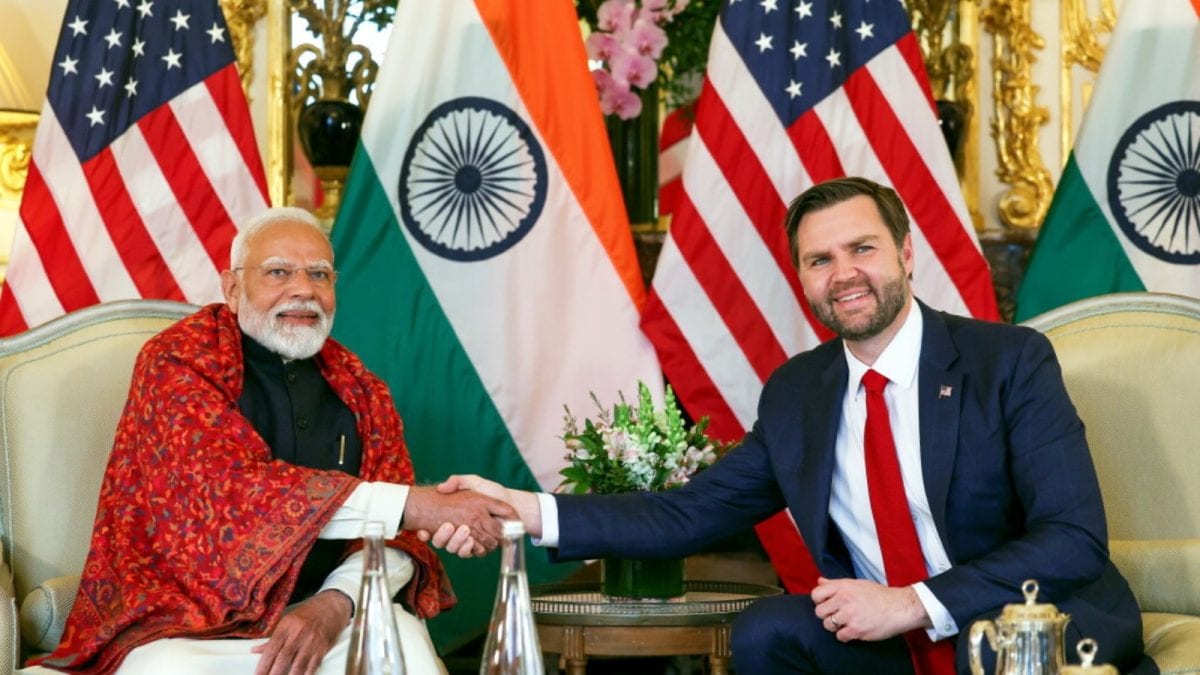
The article highlights a significant upswing in India-US relations, catalyzed by the visit of US Vice President JD Vance to India. This visit is portrayed as more than just a diplomatic courtesy; it signifies a strategic alignment between the two nations, particularly in the context of evolving global geopolitics and trade dynamics. The author emphasizes the timely nature of Vance's visit, framing it within the first hundred days of the 'Trump administration 2.0,' where Vance is described as a key figure, a 'wingman' to President Trump, involved in various initiatives. The warm reception Vance received in India, including being met by a Union Minister and receiving a ceremonial guard of honor, underscores the seriousness with which India views this relationship and Vance's role within the US administration. This warm reception further underscores the strong possibility of a fast-tracked trade agreement. The article delves into the broader context of global trade, noting the shift away from the World Trade Organization (WTO)-based system towards bilateral agreements. It points out that the US, under the Trump administration, is actively reshaping trade rules and agreements, primarily driven by the desire to counter China's trade dominance. The author suggests that the US, historically a proponent of free trade, is now employing tariffs as a tool to redress trade imbalances, particularly its substantial trade deficit with China. This strategic shift has significant implications for other countries, including India, as they navigate the evolving trade landscape. The article draws a historical parallel to President Richard Nixon's opening to China, which was initially aimed at undermining the Soviet Union. However, the author argues that the situation has changed dramatically, with China becoming the world's factory and establishing significant trade relationships with various countries, including the US and European nations. The current tariff wars initiated by the Trump administration have prompted China to issue warnings against countries that comply with US demands for tariff reductions. In response to these tariff pressures, some countries have swiftly lowered their tariffs on US goods, while others, like the EU, have announced retaliatory measures. The situation is further complicated by the fact that some countries, such as Japan, have significant economic ties with both the US and China, requiring a careful balancing act. The article emphasizes that India is in a unique position, as it shares America's concerns regarding its trade deficit with China. Both President Trump and Prime Minister Modi are reportedly eager to strengthen the Indo-American strategic and military partnership, with the aim of boosting bilateral trade to $500 billion annually. This partnership is seen as a crucial element in America's strategy to isolate and reduce China's global trade influence. During Vance's visit, discussions were held with Prime Minister Modi on a range of issues, including the forthcoming trade agreement, cooperation in defense, strategic technologies, energy (including nuclear energy), the upcoming QUAD Summit, and tariffs on agricultural produce. The negotiations are described as progressing amicably and rapidly, with India showing willingness to lower its tariffs in several areas. The Modi administration's successful hosting of the G20 summit and its adept navigation of the previous Biden administration are also highlighted, emphasizing the strength and resilience of the Indo-American strategic relationship. The author suggests that the return of President Trump for a second term presents a 'stellar opportunity' to elevate the Indo-American relationship to new heights. The article notes that Prime Minister Modi was among the first heads of government invited for a state visit to the US after Trump's inauguration, signaling the importance that the US places on its relationship with India. The author highlights the personal chemistry between Modi and Trump, which has been established previously, and is now playing a significant role in strengthening the ties between the two countries. The article concludes by emphasizing the unique opportunity for India to step into the trade void created by the strained US-China relationship. It suggests that securing a trade agreement with the US within the 90-day window would be a significant achievement, paving the way for a more comprehensive Free Trade Agreement (FTA). The author stresses the importance of India seizing this opportunity to bolster its economic and strategic standing on the global stage.
The geopolitical landscape, as portrayed in the article, is one of significant realignment. The long-standing dominance of the WTO framework is being challenged by a resurgence of bilateral agreements, spearheaded by the United States under President Trump's leadership. This shift is primarily driven by a desire to address trade imbalances and counter the economic influence of China, which has emerged as a global manufacturing powerhouse over the past three decades. The article implicitly critiques the previous US policy of 'aiding and abetting' China's rise, acknowledging that while it initially served strategic purposes (undermining the USSR), it has ultimately led to an imbalance that now requires correction. The use of tariffs as a strategic tool by the US is presented as a departure from its traditional advocacy for free trade, highlighting the urgency and determination with which the Trump administration is pursuing its trade agenda. The article also underscores the complexity of navigating these shifting alliances. Countries like Japan, with significant economic ties to both the US and China, face the challenge of balancing their relationships and avoiding potential repercussions from either side. India, on the other hand, is positioned as a natural partner for the US in this endeavor, due to its shared concerns about trade deficits with China and its willingness to strengthen its strategic alliance with the US. The discussions between Vice President Vance and Prime Minister Modi are depicted as highly productive, with both sides demonstrating a commitment to resolving trade issues and expanding cooperation in various sectors, including defense, technology, and energy. The article suggests that the Modi administration has skillfully navigated the complexities of international relations, maintaining a strong relationship with the US across different administrations, despite internal and external challenges. The potential for President Trump to seek a third term, though controversial, is presented as a factor that could further solidify the Indo-American partnership. The author emphasizes that the strong personal rapport between Modi and Trump is a key asset in fostering deeper ties between the two countries. Overall, the article paints a picture of a rapidly evolving global order, where trade and strategic alliances are being reshaped in response to the rise of China and the assertive policies of the Trump administration. India is positioned as a key player in this new order, with the potential to benefit significantly from its growing partnership with the US.
The underlying argument of the article revolves around the idea that the current moment represents a unique opportunity for India to enhance its economic and strategic position on the global stage. The author suggests that the strained relationship between the US and China has created a vacuum that India can fill, by strengthening its ties with the US and becoming a more prominent player in international trade. This argument is supported by several key points. First, the article highlights the willingness of the US to engage in bilateral trade agreements, offering India the chance to negotiate favorable terms and reduce its trade deficit with China. Second, it emphasizes the shared strategic interests between India and the US, particularly in countering China's growing influence in the region. Third, it points to the strong personal relationship between Prime Minister Modi and President Trump, which is seen as a catalyst for deeper cooperation between the two countries. The author also acknowledges the potential challenges that India faces in navigating this complex environment. The article mentions the pressure from China on countries that comply with US tariff demands, and the need for India to carefully balance its relationships with other nations. However, it ultimately concludes that the potential benefits of a stronger Indo-American partnership outweigh the risks. The article's perspective is clearly aligned with the Indian government's policy of strengthening its relationship with the US. The author portrays President Trump in a positive light, emphasizing his commitment to addressing trade imbalances and countering China's dominance. The article also praises Prime Minister Modi for his skillful diplomacy and his ability to maintain a strong relationship with the US across different administrations. This perspective is not without potential biases. The article's focus on the positive aspects of the Indo-American relationship may overlook potential downsides or areas of disagreement. Additionally, its portrayal of President Trump as a strong and decisive leader may be seen as controversial by some readers. However, the article provides valuable insights into the evolving dynamics of global trade and the strategic importance of the Indo-American partnership. It offers a compelling argument for India to seize the current opportunity to enhance its economic and strategic position on the world stage.
Furthermore, the emphasis on the 'Trump administration 2.0' introduces an element of speculation and uncertainty. The article assumes a continuation of Trump's policies and priorities, which may not necessarily be the case. Future administrations could adopt different approaches to trade and foreign policy, potentially altering the dynamics of the Indo-American relationship. The article also mentions the possibility of Trump seeking a third term, which would require amending the US Constitution. This is a highly controversial and unlikely scenario, and its inclusion in the article may detract from the overall credibility of the analysis. Despite these potential limitations, the article offers a valuable contribution to the understanding of the evolving geopolitical landscape. It highlights the importance of trade and strategic alliances in shaping the global order, and it positions India as a key player in this new environment. The article's focus on the Indo-American relationship underscores the potential for these two countries to cooperate in addressing shared challenges and promoting their mutual interests. In conclusion, the article presents a compelling argument for a closer Indo-American partnership, emphasizing the unique opportunity that currently exists for India to enhance its economic and strategic position on the global stage. While the article's perspective may be somewhat biased and its reliance on speculation may detract from its overall credibility, it provides valuable insights into the evolving dynamics of global trade and the strategic importance of the Indo-American relationship. The article's analysis is particularly relevant in the current context, as the world grapples with the challenges of trade imbalances, geopolitical tensions, and the rise of new economic powers. The article serves as a reminder of the importance of strategic alliances and the need for countries to adapt to the changing global order in order to secure their long-term interests.
Finally, the article's structure and tone contribute to its overall impact. The clear and concise writing style makes the complex geopolitical issues accessible to a broad audience. The use of historical context and analogies helps to illustrate the significance of the current moment and the potential consequences of different policy choices. The author's confident and optimistic tone conveys a sense of hope and opportunity for India, suggesting that the country is well-positioned to navigate the challenges and capitalize on the opportunities presented by the evolving global order. The inclusion of specific details, such as the meeting between Vice President Vance and Prime Minister Modi, the discussions on various areas of cooperation, and the mention of the G20 summit, adds credibility to the article's analysis. The article's conclusion, which emphasizes the unique opportunity for India to step into the trade void created by the strained US-China relationship, provides a clear and compelling call to action. Overall, the article is well-written, informative, and persuasive, making it a valuable contribution to the ongoing debate about the future of global trade and the role of India in the world.
The analysis in this article is based on several assumptions. One key assumption is that the trends described, such as the US shift towards bilateral trade agreements and the ongoing trade tensions between the US and China, will persist into the future. This may not necessarily be the case. Changes in political leadership or economic conditions could lead to a reversal of these trends. Another assumption is that India will be able to successfully navigate the complex geopolitical landscape and capitalize on the opportunities presented by the evolving global order. This will require skillful diplomacy, effective policy-making, and a willingness to adapt to changing circumstances. The article also assumes that the Indo-American relationship will continue to strengthen, despite potential disagreements or challenges. This will require a continued commitment from both sides to fostering closer ties and addressing shared concerns. Finally, the analysis assumes that the economic benefits of a closer Indo-American partnership will outweigh the potential risks or downsides. This will depend on a variety of factors, including the terms of any trade agreements, the effectiveness of cooperation in other areas, and the overall stability of the global economy. Readers should be aware of these assumptions when interpreting the article's analysis and drawing their own conclusions about the future of the Indo-American relationship.
Source: Vance Visit: Major Upswing In India-US Relations - News18