
 |
|
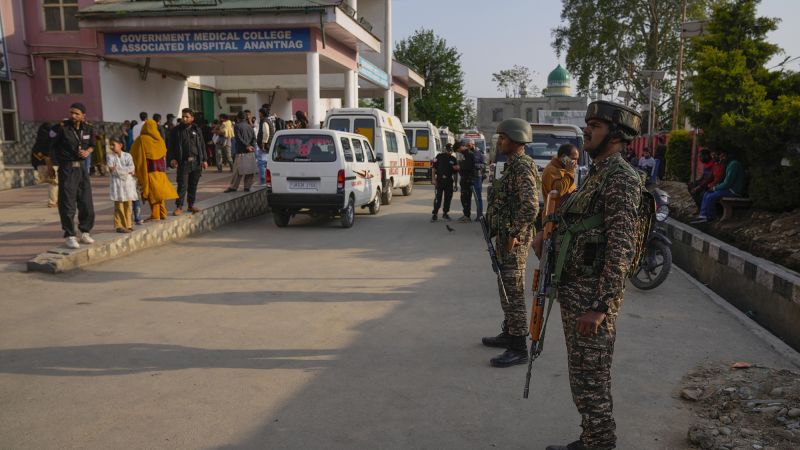
The recent attack in Pahalgam, India, resulting in the deaths of at least 26 tourists and injuries to a dozen others, underscores the persistent instability and the fragility of peace in the disputed Himalayan region of Jammu and Kashmir. This act of violence, a rare assault on tourists, serves as a stark reminder of the decades-long insurgency and the ongoing opposition to India's rule in the area. The massacre, which targeted sightseers in a popular tourist destination within the Anantnag district, represents the worst assault on civilians witnessed in the region in recent years, raising significant concerns about the security situation and the vulnerability of both local residents and visitors. The victims of this tragic event included a Nepali national and an individual of Indian origin who was working in the Middle East, highlighting the diverse backgrounds of those impacted by the violence. The attack occurred in the Baisaran Valley, a remote area accessible only by foot or horseback, further complicating rescue and relief efforts. The meadow where the assault unfolded, surrounded by mountainous ridges and lacking car roads, presented significant logistical challenges for first responders and those attempting to provide assistance to the injured. Survivors recounted the horror of the attack, describing a scene of devastation wrought by the gunmen. One eyewitness reported that unidentified gunmen opened fire on the tourists from close range, while another survivor, Asavari Jagdale, shared a harrowing account of the attackers targeting her family, accusing them of supporting Indian Prime Minister Narendra Modi before shooting her male relatives. The attack highlights the complex and deeply rooted political tensions that fuel the conflict in the region. The claim of responsibility by The Resistance Front, a relatively unknown militant group, adds another layer of complexity to the situation. The group's stated motive, discontent at "outsiders" who have settled in the region and caused a "demographic change," reflects the underlying concerns about identity, land ownership, and the potential alteration of the region's cultural and ethnic composition. While the authenticity of the group's claim remains unverified, it underscores the potential for diverse and often conflicting motivations to drive acts of violence in the region. The attack has prompted widespread condemnation both domestically and internationally. Prime Minister Modi has condemned the attack and vowed to bring the perpetrators to justice. Outraged residents have gathered in the region to protest, chanting slogans and holding signs that read "Stop terrorism," reflecting the deep-seated desire for peace and security. The attack has also led to calls for the resignation of Indian Home Affairs Minister Amit Shah, indicating a level of public dissatisfaction with the government's handling of the security situation. The incident has also had significant diplomatic repercussions. Modi cut short his visit to Saudi Arabia following the attack, highlighting the urgency and severity of the situation. The Indian Army has launched a search operation to apprehend the attackers, while Shah has arrived in the region to chair a high-level security meeting, demonstrating the government's commitment to addressing the crisis and restoring order. The attack has also reignited the long-standing tensions between India and Pakistan. India has long accused Pakistan of harboring Islamist militant groups that target Kashmir, while Pakistan denies these allegations. The exchange of accusations and condemnations following the attack underscores the deeply entrenched mistrust and the potential for further escalation of tensions between the two nuclear-armed neighbors. The attack also occurred shortly after US Vice President JD Vance's visit to India, prompting him to express his condolences and solidarity with the Indian people. US President Donald Trump also condemned the attack and conveyed his condolences to Modi, further emphasizing the international concern over the situation. Leaders from Russia, Ukraine, Israel, Iran, France, Italy, and the UAE have also expressed their condemnation, reflecting the global recognition of the threat posed by terrorism and the need for international cooperation to address it.
The broader context of the attack is rooted in the long-standing territorial dispute between India and Pakistan over the Kashmir region. The mountainous region, claimed in its entirety by both countries, has been at the epicenter of a violent struggle for more than 70 years. The region is one of the world's most dangerous flashpoints, with a de facto border called the Line of Control dividing the areas overseen by New Delhi and Islamabad. Throughout the past two decades, numerous domestic militant groups, demanding either independence for Kashmir or its integration with Pakistan, have engaged in armed conflict with Indian security forces. This violence has resulted in the deaths of tens of thousands of people, highlighting the devastating human cost of the conflict. While the Indian government has asserted that militancy has been reduced in recent years, attacks continue to occur, underscoring the persistent challenges in achieving lasting peace and stability. The attack on tourists in Pahalgam highlights the vulnerability of civilians in the region and the potential for violence to erupt at any time. The incident also raises questions about the effectiveness of security measures in place to protect tourists and local residents. The fact that the attack occurred in a popular tourist destination, despite the heavy military presence in the region, suggests that more needs to be done to enhance security and prevent future attacks. The incident also has implications for the tourism industry in Kashmir. The region has long been a popular destination for tourists, drawn by its scenic beauty and cultural attractions. However, the recent attack is likely to deter tourists from visiting the region, potentially damaging the local economy and undermining efforts to promote tourism. In response to the attack, the Indian government has vowed to take strong action against the perpetrators and to strengthen security measures in the region. However, it remains to be seen whether these measures will be sufficient to prevent future attacks and to restore confidence in the safety and security of Kashmir. The attack also underscores the need for a comprehensive and sustainable solution to the Kashmir conflict. The long-standing territorial dispute between India and Pakistan is a major source of instability in the region, and until a resolution is reached, the potential for violence will remain high. A peaceful and lasting solution to the conflict will require a willingness from both sides to engage in meaningful dialogue and to address the underlying grievances of the Kashmiri people. It will also require the international community to play a constructive role in facilitating negotiations and promoting peace.
Beyond the immediate security implications, the Pahalgam attack raises profound questions about the socio-political dynamics at play in Jammu and Kashmir. The claim of responsibility by The Resistance Front, citing concerns about demographic change and the influx of "outsiders," hints at deeper anxieties within certain segments of the Kashmiri population. These anxieties, whether justified or not, must be addressed through inclusive dialogue and transparent governance. Simply relying on military solutions will not suffice. The Indian government's policies in Kashmir, particularly since the revocation of Article 370 in 2019, have been a source of considerable controversy. While the government argues that these policies are aimed at promoting development and integration, critics contend that they have further alienated the local population and fueled resentment. The Pahalgam attack serves as a grim reminder that lasting peace in Kashmir cannot be achieved without addressing the underlying political and social grievances of the Kashmiri people. A purely security-focused approach will only serve to perpetuate the cycle of violence. Furthermore, the international community has a crucial role to play in promoting a peaceful resolution to the Kashmir conflict. The United Nations, along with influential nations, should encourage India and Pakistan to engage in meaningful dialogue and to address the root causes of the conflict. A long-term solution must involve addressing the aspirations of the Kashmiri people and ensuring that their human rights are respected. The Pahalgam attack is a tragedy that should serve as a wake-up call to all stakeholders. It is a reminder that the status quo in Kashmir is unsustainable and that a new approach is needed to achieve lasting peace and stability. This approach must prioritize dialogue, inclusivity, and respect for human rights. Only then can the cycle of violence be broken and the people of Kashmir be allowed to live in peace and security. The attack also highlights the importance of countering extremist ideologies and narratives that fuel violence and hatred. The Resistance Front's claim of responsibility, with its xenophobic rhetoric, underscores the need to address the underlying drivers of radicalization. This requires a multi-pronged approach that includes promoting education, fostering interfaith dialogue, and countering online propaganda. The government, civil society organizations, and religious leaders all have a role to play in countering extremism and promoting tolerance and understanding. Finally, the Pahalgam attack underscores the importance of accountability for human rights violations. All allegations of abuse, whether committed by security forces or militants, must be thoroughly investigated and perpetrators must be brought to justice. Impunity only serves to perpetuate the cycle of violence and undermines trust in the rule of law. The Pahalgam attack is a tragedy that should not be forgotten. It is a reminder of the human cost of the Kashmir conflict and the urgent need for a peaceful and lasting solution.