
 |
|
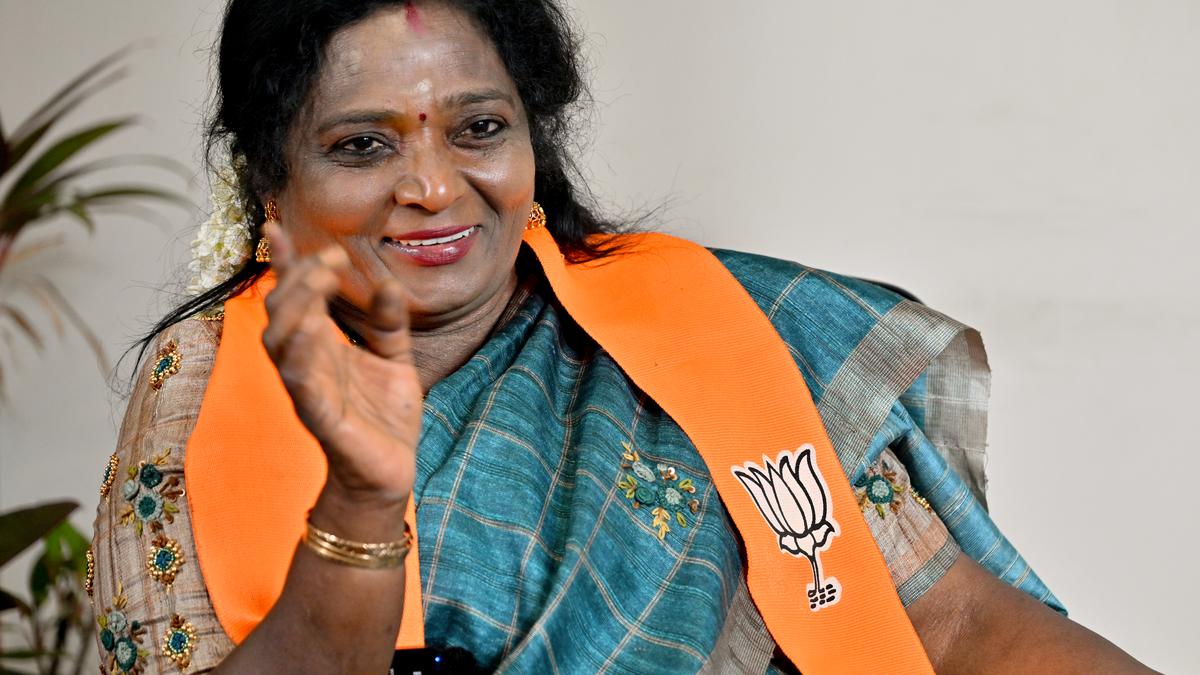
The political landscape of Tamil Nadu is once again witnessing heightened activity and verbal sparring between prominent figures, particularly in the aftermath of the announcement of the alliance between the All India Anna Dravida Munnetra Kazhagam (AIADMK) and the Bharatiya Janata Party (BJP). This alliance, seen by many as a significant development in the state's political dynamics, has triggered a series of reactions and counter-reactions, with the latest salvo coming from BJP leader and former Telangana Governor Tamilisai Soundararajan. Her remarks, specifically targeting Chief Minister M.K. Stalin, underscore the intensity of the political competition and the strategic importance of alliances in shaping electoral outcomes. Soundararajan's assertion that Stalin is exhibiting signs of frustration following the alliance announcement is not merely a casual observation but a calculated political statement intended to project confidence and highlight perceived vulnerabilities within the opposition camp. By framing Stalin's reactions as stemming from frustration, she aims to undermine his credibility and portray the AIADMK-BJP alliance as a force to be reckoned with. This narrative is crucial for the BJP, which seeks to expand its footprint in Tamil Nadu, a state where it has historically struggled to gain significant traction. The alliance with the AIADMK provides the BJP with a valuable platform to amplify its message and leverage the established support base of its regional partner. However, the alliance is not without its challenges. The AIADMK, a party rooted in Dravidian ideology, has traditionally maintained a distance from the BJP's Hindutva-oriented politics. The alliance, therefore, requires careful navigation to avoid alienating core AIADMK voters who may be wary of the BJP's agenda. For Stalin and the Dravida Munnetra Kazhagam (DMK), the AIADMK-BJP alliance presents a formidable challenge. The DMK, which has long been the dominant force in Tamil Nadu politics, must now contend with a united opposition that possesses both regional strength and national backing. This necessitates a recalibration of the DMK's strategies, including a more aggressive outreach to its traditional support base and a concerted effort to highlight the perceived shortcomings of the AIADMK-BJP alliance. The success of the DMK in countering the alliance will depend on its ability to effectively communicate its message, mobilize its cadres, and forge strategic alliances with other like-minded parties. The political discourse surrounding the AIADMK-BJP alliance is not limited to mere electoral calculations. It also touches upon fundamental issues of state autonomy, federalism, and the relationship between Tamil Nadu and the central government. These issues have long been central to Tamil Nadu politics, and they continue to resonate deeply with the state's electorate. Soundararajan's criticism of Stalin's remarks on state autonomy and the need to move education back to the State List from the Concurrent List is a direct attempt to challenge the DMK's narrative and portray the party as hypocritical. By pointing out that the DMK was part of the ruling coalition at the Centre for nearly 16 years but remained silent on these issues, she seeks to undermine the party's credibility and expose what she perceives as a lack of genuine commitment to state autonomy. This line of attack is particularly potent because it taps into long-standing sentiments of regional pride and resentment towards perceived central government overreach. The DMK, in its defense, is likely to argue that it has consistently advocated for state autonomy and that its silence on certain issues during its time in the central government was a matter of political expediency or strategic compromise. However, convincing the electorate of this narrative will require a nuanced and persuasive communication strategy. The debate over state autonomy and federalism is not merely a theoretical exercise. It has real-world implications for the allocation of resources, the implementation of policies, and the overall balance of power between the state and the center. The DMK has long argued that Tamil Nadu is being unfairly treated by the central government and that the state's rights are being eroded. This argument resonates with many voters who feel that Tamil Nadu's unique cultural identity and economic contributions are not adequately recognized or rewarded. The BJP, on the other hand, tends to emphasize the importance of national unity and integration, arguing that excessive emphasis on state autonomy can undermine the country's overall strength and stability. This message appeals to voters who prioritize national interests over regional concerns. The three-language policy is another contentious issue that has been at the forefront of Tamil Nadu politics for decades. The DMK has consistently opposed the imposition of Hindi as a compulsory language in the state, arguing that it discriminates against non-Hindi speakers and undermines Tamil language and culture. This opposition has been a key element of the DMK's identity and has helped the party to mobilize support among Tamil speakers. The BJP, on the other hand, has generally supported the promotion of Hindi as a national language, arguing that it is essential for fostering national unity and communication. This stance has been met with resistance in Tamil Nadu, where many view it as an attempt to impose a North Indian cultural hegemony. Soundararajan's assertion that Union Home Minister Amit Shah and Union Education Minister Dharmendra Pradhan have already clarified matters concerning delimitation and the three-language policy is unlikely to quell the controversy. These issues are deeply ingrained in Tamil Nadu's political psyche, and any attempt to impose a central government solution is likely to be met with resistance. The political landscape of Tamil Nadu is therefore characterized by a complex interplay of regional and national forces, ideological differences, and personal rivalries. The announcement of the AIADMK-BJP alliance has further complicated this landscape, setting the stage for a fierce political battle in the upcoming elections. The outcome of this battle will have significant implications for the future of Tamil Nadu and for the balance of power in Indian politics.
Soundararajan's counter-attack extended beyond the immediate issue of the AIADMK-BJP alliance, delving into historical grievances and accusations of inaction on the part of Stalin's government during critical moments. Her reference to the alleged 'massacre' of Tamils in Sri Lanka, coupled with the assertion that Stalin's failure to act was a result of 'submitting to Delhi,' is a powerful and provocative statement. This accusation carries significant weight in Tamil Nadu, where the plight of Sri Lankan Tamils has long been a sensitive and emotionally charged issue. The DMK has historically positioned itself as a champion of Tamil rights both within India and abroad, and any perceived failure to protect the interests of Sri Lankan Tamils can be politically damaging. Soundararajan's statement is designed to exploit this vulnerability and portray Stalin as having betrayed the Tamil cause for political expediency. The use of the term 'massacre' is particularly significant. While the events in Sri Lanka are undoubtedly a tragedy with significant loss of life, the use of the term 'massacre' carries connotations of intentional and systematic extermination, which is a highly emotive and politically charged accusation. By framing the situation in this way, Soundararajan aims to elicit strong emotions and outrage among Tamil voters, potentially undermining their support for the DMK. The accusation that Stalin's inaction was a result of 'submitting to Delhi' is also a calculated move. It plays into long-standing anxieties about the central government's perceived dominance over Tamil Nadu and the erosion of state autonomy. By suggesting that Stalin prioritized the interests of the central government over the welfare of Sri Lankan Tamils, Soundararajan aims to portray him as a puppet of Delhi, lacking the courage to stand up for the rights of his people. This narrative is particularly potent in Tamil Nadu, where regional pride and resistance to central government overreach are deeply ingrained in the political culture. The DMK, in its defense, is likely to argue that it has consistently advocated for the rights of Sri Lankan Tamils and that its actions were constrained by the complex political realities of the time. The party may also point to its efforts to provide humanitarian assistance to Sri Lankan Tamils and to raise awareness of their plight on the international stage. However, convincing the electorate of this narrative will require a nuanced and persuasive communication strategy. The issue of Sri Lankan Tamils is not simply a matter of historical facts and political calculations. It is also deeply intertwined with issues of identity, nationalism, and human rights. Many Tamils in Tamil Nadu feel a strong sense of kinship with their counterparts in Sri Lanka and are deeply affected by their suffering. Any perceived failure to protect the interests of Sri Lankan Tamils can therefore be interpreted as a betrayal of the Tamil identity and a violation of fundamental human rights. Soundararajan's attack on Stalin's silence on state autonomy during his party's time in the central coalition is another critical point. This accusation highlights the inherent tension between regional interests and national politics. While the DMK has historically championed state autonomy, its participation in central coalitions has often required compromises that may have appeared to contradict its stated principles. Soundararajan's criticism capitalizes on this perceived inconsistency, questioning the DMK's commitment to its core values. The concept of state autonomy is multifaceted, encompassing legislative, financial, and administrative powers. The DMK has consistently argued for greater devolution of powers to the states, asserting that it is essential for effective governance and for protecting regional identities. However, the central government has often resisted such demands, arguing that they could undermine national unity and weaken the country's overall strength. The debate over state autonomy is therefore a recurring theme in Indian politics, and it is particularly salient in states like Tamil Nadu with a strong sense of regional identity. Soundararajan's statement also touches upon the issue of the Concurrent List in the Indian Constitution. The Concurrent List includes subjects on which both the central and state governments can legislate. However, in the event of a conflict between central and state laws, the central law prevails. The DMK has long argued that the Concurrent List gives the central government too much power and that it should be reduced in scope. The party has specifically called for education to be moved from the Concurrent List to the State List, arguing that education policy should be determined by the states to reflect their unique cultural and linguistic identities.
The implications of the AIADMK-BJP alliance extend beyond the immediate political sphere, potentially reshaping the socio-economic landscape of Tamil Nadu. The alliance represents a convergence of two distinct ideologies and political agendas, each with its own set of priorities and policy prescriptions. The AIADMK, with its roots in Dravidian populism, has traditionally focused on social welfare programs and affirmative action policies aimed at uplifting marginalized communities. The party has also been a strong advocate for industrial development and job creation, particularly in the manufacturing sector. The BJP, on the other hand, tends to emphasize economic liberalization, privatization, and deregulation. The party has also prioritized infrastructure development and investment in key sectors such as agriculture and technology. The alliance between these two parties raises questions about the future direction of Tamil Nadu's socio-economic policies. Will the AIADMK be able to maintain its commitment to social welfare and affirmative action in the face of the BJP's pro-market policies? Will the BJP be able to temper its ideological preferences to accommodate the AIADMK's populist leanings? The answers to these questions will have a significant impact on the lives of ordinary citizens in Tamil Nadu. The alliance could lead to a shift in priorities, with greater emphasis on economic growth and less on social equity. This could benefit businesses and investors, but it could also exacerbate existing inequalities and leave marginalized communities behind. Alternatively, the alliance could result in a compromise, with the AIADMK and BJP finding common ground on certain issues while maintaining their distinct approaches on others. This could lead to a more balanced approach to socio-economic development, with both economic growth and social welfare receiving due attention. The success of the alliance will depend on the ability of the AIADMK and BJP to overcome their ideological differences and to work together in a spirit of mutual respect and cooperation. This will require a willingness to compromise and to prioritize the interests of the state over narrow party interests. The announcement of the AIADMK-BJP alliance has also raised concerns about the future of secularism and social harmony in Tamil Nadu. The BJP's Hindutva ideology has been a source of controversy in the state, where many view it as a threat to religious pluralism and social cohesion. The AIADMK, with its roots in Dravidian nationalism, has traditionally been a champion of secularism and social justice. The party has also been a vocal critic of religious extremism and communal violence. The alliance between these two parties raises questions about the future of secularism in Tamil Nadu. Will the AIADMK be able to resist the BJP's attempts to promote its Hindutva agenda? Will the BJP be able to moderate its ideological preferences to accommodate the AIADMK's secular leanings? The answers to these questions will have a significant impact on the social fabric of Tamil Nadu. The alliance could lead to increased religious polarization and communal tensions. This could undermine social harmony and create divisions within the state. Alternatively, the alliance could result in a reaffirmation of secular values and a commitment to protecting the rights of all citizens, regardless of their religion or caste. This would require a conscious effort on the part of both the AIADMK and BJP to promote tolerance, understanding, and mutual respect. The political discourse surrounding the AIADMK-BJP alliance is therefore not limited to mere electoral calculations and policy debates. It also touches upon fundamental issues of identity, values, and the future of Tamil Nadu as a secular, democratic, and socially just society. The choices that the AIADMK and BJP make in the coming months and years will have a profound impact on the lives of millions of people in Tamil Nadu.
Beyond the specific pronouncements and counter-pronouncements, the dynamic between Tamilisai Soundararajan and M.K. Stalin reflects a broader trend in Indian politics: the increasing polarization of political discourse and the erosion of civility in public debate. The tone of the exchange, characterized by accusations, rebuttals, and a focus on historical grievances, is indicative of a political climate in which constructive dialogue and compromise are increasingly rare. This polarization has several contributing factors. First, the rise of social media has amplified the voices of extremist elements and made it easier for political actors to engage in personal attacks and inflammatory rhetoric. Second, the increasing dominance of identity politics has led to a focus on divisive issues and a hardening of political positions. Third, the decline of traditional media outlets and the rise of partisan news sources have created echo chambers in which people are exposed only to information that confirms their existing beliefs. The consequences of this polarization are far-reaching. It makes it more difficult to address pressing social and economic problems, as political actors are less willing to compromise and work together. It undermines public trust in government and institutions, as people become cynical about the motives and intentions of political leaders. And it creates a climate of fear and intimidation, in which people are afraid to express their views for fear of being attacked or ostracized. The erosion of civility in public debate is particularly concerning. In a healthy democracy, it is essential for political actors to be able to engage in respectful dialogue and to listen to opposing viewpoints. When political discourse descends into personal attacks and name-calling, it becomes impossible to find common ground and to build consensus. The exchange between Tamilisai Soundararajan and M.K. Stalin is a reminder of the challenges facing Indian democracy. The country needs leaders who are willing to rise above the fray and to engage in constructive dialogue, even with those with whom they disagree. It also needs citizens who are willing to listen to opposing viewpoints and to engage in respectful debate. Only then can India overcome the challenges of polarization and build a more united and prosperous future. Furthermore, the comments made by Tamilisai highlight the complexities of the relationship between the state of Tamil Nadu and the central government in India. The historical context of this relationship is fraught with issues of autonomy, linguistic identity, and economic disparity. Tamil Nadu has often positioned itself as a defender of its unique cultural and political identity, resisting what it perceives as attempts by the central government to impose a homogenous national identity. This tension is evident in the ongoing debates surrounding the three-language policy, the allocation of resources, and the devolution of powers to the states. The three-language policy, which mandates the teaching of Hindi in non-Hindi speaking states, has been a particularly contentious issue in Tamil Nadu. Many Tamils view it as an attempt to impose Hindi as a national language and to undermine Tamil language and culture. The DMK has consistently opposed the policy, arguing that it discriminates against non-Hindi speakers and violates the principles of linguistic equality. The allocation of resources is another area of contention. Tamil Nadu has long argued that it is being unfairly treated by the central government and that it is not receiving its fair share of revenue. The state's leaders point to its strong economic performance and its contributions to the national economy, arguing that it deserves a greater share of resources to fund its development programs. The devolution of powers to the states is also a key demand of Tamil Nadu. The state's leaders argue that greater autonomy is essential for effective governance and for addressing the unique needs and challenges of the state. They have called for greater devolution of legislative, financial, and administrative powers, arguing that it would empower the state to make decisions that are in the best interests of its people. The comments made by Tamilisai Soundararajan must be understood in this historical and political context. They reflect the ongoing tension between Tamil Nadu and the central government, as well as the broader debates surrounding identity, autonomy, and economic justice in India.
Source: Stalin showing signs of frustration after announcement of AIADMK-BJP alliance: Tamilisai