
 |
|
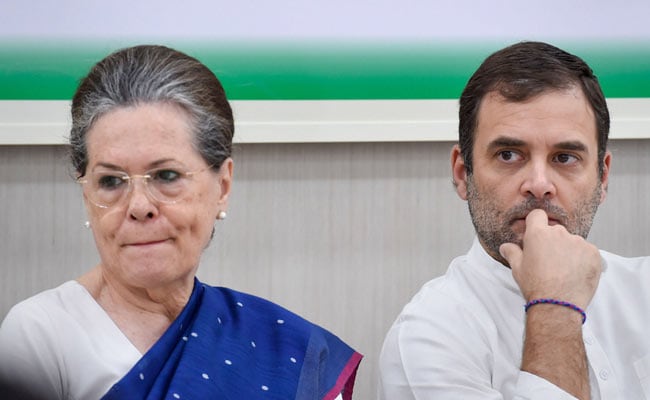
The Enforcement Directorate (ED) has escalated the ongoing investigation into the National Herald case by filing a chargesheet against prominent Congress leaders Sonia Gandhi and Rahul Gandhi, along with Sam Pitroda. This marks a significant development in the case, as it is the first time that a chargesheet has been filed against Sonia Gandhi and Rahul Gandhi. The special court has scheduled a hearing for April 25 to consider the chargesheet. This move by the ED underscores the government's commitment to pursuing cases of alleged financial impropriety, regardless of the political affiliations of those involved. The timing of the chargesheet, preceding the upcoming elections, is particularly noteworthy and could have significant political ramifications. The Congress party, facing increasing scrutiny, will likely mount a robust defense, challenging the ED's allegations and questioning the motives behind the investigation. This case highlights the complexities and sensitivities surrounding investigations involving political figures and the potential impact on the broader political landscape. The National Herald case, with its roots in a private complaint filed by BJP leader Subramanian Swamy, has been a persistent thorn in the side of the Congress party. The allegations of money laundering and fraudulent takeover of properties have cast a shadow over the party's leadership and raised questions about its financial dealings. The ED's investigation, initiated in 2021, has gradually intensified, culminating in the filing of this chargesheet. The case underscores the importance of transparency and accountability in political finance and the potential consequences of alleged financial misconduct. The Gandhis, as majority shareholders in Young Indian Pvt Ltd, the company that owns the National Herald newspaper, are at the center of the controversy. The chargesheet against them signals a new phase in the legal proceedings, requiring them to defend themselves against serious allegations. The legal battle is expected to be protracted and complex, involving intricate financial details and legal arguments. The outcome of the case will have far-reaching implications for the Congress party and the Gandhis' political future. The ED's actions are consistent with its mandate to investigate and prosecute financial crimes, but the timing and the high-profile nature of the case have inevitably led to accusations of political bias. The Congress party has vehemently denied any wrongdoing and has accused the government of using investigative agencies to target its political opponents. These accusations are part of a broader narrative of political vendetta, which has become increasingly prevalent in Indian politics. The ED's investigation has also focused on the assets of Associated Journals Limited (AJL), the company that publishes the National Herald newspaper. The agency has attached properties worth Rs 661 crore and has issued notices to take possession of these assets. This move has further intensified the legal and political battle, as the Congress party fights to retain control of its assets. The attachment of properties highlights the scale of the alleged financial impropriety and the potential consequences for the Congress party's financial stability. The case also involves allegations against Robert Vadra, the husband of Congress MP Priyanka Gandhi Vadra. Vadra was questioned by the ED over money laundering allegations linked to a real estate deal in Haryana. He dismissed the allegations as political vendetta, echoing the Congress party's broader narrative of political persecution. The questioning of Vadra adds another layer of complexity to the case and further intensifies the political pressure on the Congress party. Vadra's involvement in the real estate deal, which involved the purchase of land at a low price and its subsequent sale for a much higher price, has raised questions about his financial dealings and his relationship with the Congress government in Haryana at the time. The case against Vadra is separate from the National Herald case, but both cases are seen as part of a broader pattern of alleged financial impropriety involving Congress leaders and their associates. The allegations against Vadra and the Gandhis have provided ammunition to the BJP and other opposition parties, who have used these cases to attack the Congress party's credibility and to portray it as a corrupt and untrustworthy organization. The cases have also fueled public debate about the role of investigative agencies in Indian politics and the potential for these agencies to be used for political purposes. The Congress party, while denying any wrongdoing, has struggled to effectively counter the allegations and to regain public trust. The party's leadership has been criticized for its handling of the cases and for its perceived lack of transparency. The National Herald case and the allegations against Vadra represent a significant challenge for the Congress party, as it seeks to rebuild its political fortunes and to challenge the dominance of the BJP. The outcome of these cases will have a significant impact on the party's future and on the broader political landscape of India. The complexity of the cases, the high-profile nature of the individuals involved, and the political sensitivities surrounding the investigations make them a crucial test of the Indian legal system and the principles of accountability and transparency in political finance.
The legal intricacies surrounding the National Herald case stem from a complex web of financial transactions and corporate restructuring. At its core, the allegations revolve around the transfer of Associated Journals Limited's (AJL) assets to Young Indian Private Limited, a company in which Sonia Gandhi and Rahul Gandhi hold a majority stake. Subramanian Swamy's initial complaint alleged that this transfer constituted a fraudulent takeover of AJL's properties, valued at over Rs 2,000 crore. The Enforcement Directorate's (ED) investigation seeks to determine whether these transactions involved money laundering, and whether the Gandhis and other Congress leaders benefited improperly from the transfer. The defense, on the other hand, contends that the transactions were legitimate and aimed at reviving the struggling National Herald newspaper. They argue that there was no personal enrichment and that the transactions were conducted in accordance with the law. The legal battle hinges on the interpretation of the relevant laws and regulations, and on the evidence presented by both sides. The ED's chargesheet will likely detail the alleged financial irregularities and provide evidence to support its claim of money laundering. The Gandhis and other accused will have the opportunity to challenge the evidence and to present their own defense. The court will then have to weigh the evidence and arguments presented by both sides and to determine whether there is sufficient evidence to proceed with the trial. The case also raises important questions about the role of investigative agencies in Indian politics. The Congress party has accused the ED of acting on behalf of the government and of targeting its political opponents. The government, on the other hand, maintains that the ED is acting independently and is simply carrying out its duty to investigate financial crimes. The independence and impartiality of investigative agencies are crucial for maintaining public trust in the legal system. If these agencies are perceived as being politically motivated, it can undermine their credibility and erode public confidence in the rule of law. The National Herald case is not an isolated incident. In recent years, there have been several high-profile cases involving allegations of corruption and financial impropriety against political figures. These cases have raised concerns about the integrity of the Indian political system and the need for greater transparency and accountability. The outcome of the National Herald case will have significant implications for the future of Indian politics. If the Gandhis and other Congress leaders are convicted, it could severely damage the party's reputation and weaken its political prospects. Conversely, if they are acquitted, it could boost the party's morale and strengthen its position in the political arena. The case also serves as a reminder of the importance of ethical conduct and financial responsibility in public life. Political leaders are expected to uphold the highest standards of integrity and to avoid any appearance of impropriety. Failure to do so can undermine public trust and erode the legitimacy of the political system. The National Herald case is a complex and multifaceted legal and political drama that is likely to continue to unfold for months or even years to come. The outcome of the case will have far-reaching consequences for the Congress party, the Indian political system, and the principles of accountability and transparency in political finance.
Furthermore, the questioning of Robert Vadra in connection with a separate land deal adds another layer of complexity and scrutiny to the Congress party's predicament. Vadra, who is married to Priyanka Gandhi Vadra, has been under investigation for several years regarding his involvement in a land deal in Haryana. The allegations center on the purchase of land by his company, Skylight Hospitality, in 2008 for Rs 7.5 crore. It is alleged that Vadra obtained a permit to develop a housing society on the land, which significantly increased its value. He then sold the land to real estate developers DLF for Rs 58 crore, allegedly profiting substantially from the transaction. The Congress party, which was in power in Haryana at the time, has denied any wrongdoing and has defended Vadra's actions. However, the case has remained a persistent source of controversy and has been used by the BJP and other opposition parties to attack the Congress party's credibility. Vadra has consistently maintained his innocence and has accused the government of pursuing a political vendetta against him. He has cooperated with the investigation, appearing before the ED for questioning on multiple occasions. The timing of Vadra's questioning, coinciding with the filing of the chargesheet against Sonia Gandhi and Rahul Gandhi in the National Herald case, has raised eyebrows and fueled speculation about the government's motives. The Congress party has accused the government of deliberately targeting its leaders and their families in an attempt to weaken the party's political prospects. The government, on the other hand, maintains that the investigations are being conducted independently and are based on credible evidence. The cases against Vadra and the Gandhis have highlighted the need for greater transparency and accountability in land deals and financial transactions. The allegations of corruption and impropriety have raised questions about the role of political influence and patronage in facilitating such deals. The cases have also underscored the importance of strengthening regulatory mechanisms and oversight bodies to prevent such abuses from occurring in the future. The public perception of these cases is crucial. If the public believes that the investigations are being conducted fairly and impartially, it can strengthen trust in the legal system. However, if the public perceives that the investigations are being politically motivated, it can erode trust in the government and the investigative agencies. The onus is on the government to ensure that the investigations are conducted in a transparent and unbiased manner and that the findings are based on solid evidence. The outcome of the cases against Vadra and the Gandhis will have significant implications for their personal and political futures, as well as for the future of the Congress party. The cases serve as a reminder of the importance of ethical conduct and financial responsibility in public life and the potential consequences of engaging in corrupt or illegal activities. The Indian public demands accountability from its leaders and expects them to uphold the highest standards of integrity. The legal battles surrounding these cases are likely to continue for some time, and the ultimate outcome will depend on the evidence presented, the arguments made, and the decisions of the courts. In the meantime, the cases will continue to shape the political landscape of India and to influence public opinion about the Congress party and its leadership. The broader context of these cases is the ongoing struggle for power between the Congress party and the BJP. The BJP, under the leadership of Prime Minister Narendra Modi, has been dominant in Indian politics for the past several years. The Congress party, which once ruled India for decades, has been weakened by internal divisions and a series of electoral defeats. The cases against Vadra and the Gandhis are seen by some as an attempt by the BJP to further weaken the Congress party and to consolidate its hold on power. The Congress party, on the other hand, accuses the BJP of using these cases as a tool to silence its political opponents and to stifle dissent.
In conclusion, the National Herald case and the investigations surrounding Robert Vadra represent a complex and multifaceted challenge for the Congress party and the Indian political system. The allegations of money laundering, fraudulent takeover of properties, and land deal impropriety have raised serious questions about the ethical conduct and financial responsibility of political leaders. The timing of these investigations, coinciding with upcoming elections, has fueled accusations of political vendetta and has intensified the political pressure on the Congress party. The legal battles surrounding these cases are likely to continue for some time, and the ultimate outcome will depend on the evidence presented, the arguments made, and the decisions of the courts. The broader context of these cases is the ongoing struggle for power between the Congress party and the BJP, and the outcome will have significant implications for the future of Indian politics. The public perception of these cases is crucial, and it is essential that the investigations are conducted in a transparent and unbiased manner to maintain public trust in the legal system. The cases serve as a reminder of the importance of ethical conduct and financial responsibility in public life and the potential consequences of engaging in corrupt or illegal activities. The Indian public demands accountability from its leaders and expects them to uphold the highest standards of integrity. As the legal proceedings unfold, it is imperative that all parties involved adhere to the principles of due process and fairness, and that the pursuit of justice is not compromised by political considerations. The National Herald case and the investigations surrounding Robert Vadra are a crucial test of the Indian legal system and the principles of accountability and transparency in political finance. The outcome will have far-reaching consequences for the Congress party, the Indian political system, and the broader society. The challenges posed by these cases underscore the need for continuous efforts to strengthen regulatory mechanisms, oversight bodies, and ethical standards in public life, to ensure that the principles of good governance and the rule of law are upheld. The future of Indian democracy depends on the ability of its institutions and its leaders to act with integrity and to uphold the highest standards of ethical conduct. The National Herald case and the investigations surrounding Robert Vadra will undoubtedly shape the political landscape of India for years to come, and their resolution will have a profound impact on the country's future.
Source: Sonia, Rahul Gandhi Named In Probe Agency Chargesheet In National Herald Case