
 |
|
The narrative of the IPL can often be a tale of stark contrasts, where past glories offer little guarantee against present struggles. This was vividly illustrated in the recent encounter between Sunrisers Hyderabad (SRH) and Mumbai Indians (MI) at the Rajiv Gandhi International Stadium. A little over a year after SRH etched their name into the IPL record books with a monumental 277 for three against the same opposition, they found themselves on the receiving end, humbled by a clinical MI performance. The script had flipped dramatically, painting a picture of MI's resurgence and SRH's faltering form. Mumbai's victory, achieved with seven wickets and 26 balls to spare, wasn't just a win; it was a statement of intent, a testament to their growing momentum as they ascended to third place in the league standings. Conversely, SRH's defeat underscored their precarious position near the bottom of the table, a stark reminder of the volatility inherent in the T20 format. The game serves as a microcosm of the IPL season, characterized by unpredictable results, individual brilliance, and the constant pressure to perform under the unforgiving spotlight of a passionate cricketing nation. The contrast between the two teams highlighted the importance of consistency and adaptability in the face of changing conditions and evolving strategies. Mumbai, having found their rhythm, executed their plans flawlessly, while Sunrisers, burdened by early setbacks, struggled to recover and mount a credible challenge. The game was a reminder that in the IPL, past achievements are mere footnotes in the ongoing saga, and the only currency that matters is the ability to perform consistently and deliver under pressure.
The Sunrisers Hyderabad innings got off to a disastrous start, immediately placing them on the back foot. Travis Head's early dismissal for a four-ball duck set the tone for a PowerPlay that can only be described as calamitous. The left-handed trio at the top of the order, including Abhishek Sharma and Ishan Kishan, failed to fire, contributing to a meager score of 24 for four by the end of the first six overs. This was the lowest PowerPlay score recorded by any team this season, underscoring the extent of SRH's struggles. The Mumbai Indians bowlers, disciplined and accurate, exploited the conditions effectively, preventing the SRH batsmen from finding their rhythm. Early wickets are always crucial in T20 cricket, and Mumbai's ability to strike early put immense pressure on the middle order. Heinrich Klaasen emerged as the lone warrior for SRH, attempting to salvage the innings with a display of aggressive hitting mixed with careful accumulation. His innings was a blend of power and precision, as he dispatched Vignesh Puthur into the second tier beyond deep mid-wicket, providing a glimmer of hope for the home fans. Klaasen's ability to find the boundaries helped SRH inch past the 50-run mark, but the team desperately needed a substantial partnership to gain some momentum. His attack on Hardik Pandya, punctuated by three boundaries, injected some much-needed energy into the innings, lifting the spirits of the team and the spectators alike. The partnership between Klaasen and Abhinav Manohar was pivotal in rescuing the SRH innings from complete collapse. Their 99-run stand provided stability and allowed SRH to post a respectable, albeit moderate, total. Klaasen's half-century was a testament to his resilience and ability to perform under pressure, but ultimately, it wasn't enough to propel SRH to a truly competitive score. The fall of both Klaasen and Manohar towards the end of the innings stifled any hopes of a late surge, leaving SRH with a total that seemed well below par.
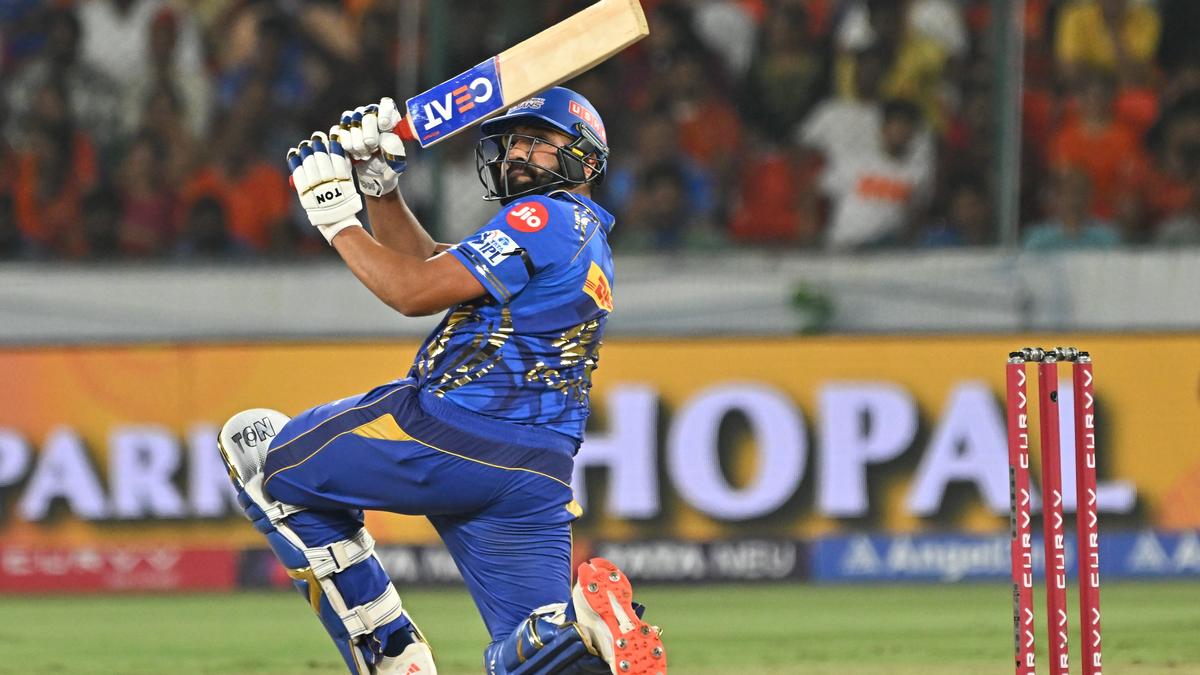
Mumbai Indians faced an early setback in their chase when Ricketon fell victim to a spectacular catch by Jaydev Unadkat. Unadkat, with momentum carrying him in the opposite direction, stuck out his left hand to pluck a leading edge, showcasing remarkable athleticism and awareness. However, Rohit Sharma, a seasoned campaigner, ensured that the early loss didn't derail the MI innings. His presence at the crease provided stability and confidence to the rest of the batting lineup. Rohit's early six over deep extra cover off Unadkat underscored his comfort and familiarity with the venue, a place he once considered his IPL home. He continued his rich vein of form from the previous match against Chennai Super Kings, registering his second half-century in as many games, a feat he hadn't achieved since 2016. This consistent run of form is a positive sign for MI, as Rohit's experience and leadership are invaluable assets to the team. With the Net Run Rate (NRR) seemingly at the forefront of his mind, Rohit switched gears, accelerating the scoring rate and putting pressure on the SRH bowlers. His onslaught against Harshal Patel in the 14th over, which yielded three boundaries, exemplified his aggressive intent and desire to finish the chase quickly. Rohit's dismissal, after chipping a yorker from Eshan Malinga to Abhishek Sharma at midwicket, came with the win all but secured. His contribution set the platform for Suryakumar Yadav to tie up the innings neatly with a boundary over deep square leg. The victory propelled MI to a higher position on the league table, while simultaneously pushing SRH further down the ranks. This win demonstrates MI's ability to execute their game plan effectively and maintain composure under pressure. The difference in performance between the two teams on the day highlights the importance of adaptability and consistency in the highly competitive environment of the IPL.
The victory for Mumbai Indians was comprehensive, demonstrating their growing confidence and momentum as the tournament progresses. Their ability to chase down the target with ease, despite an early setback, reflects the depth and resilience of their batting lineup. Rohit Sharma's consistent form at the top of the order is a significant boost for MI, providing a solid foundation for the rest of the batsmen to build upon. The disciplined performance of the MI bowlers, particularly in the PowerPlay, was crucial in restricting SRH to a below-par total. Their ability to take early wickets and maintain pressure throughout the innings prevented SRH from building any significant partnerships. In contrast, Sunrisers Hyderabad will need to address their batting woes, particularly at the top of the order. The failure of the top three batsmen to fire put immense pressure on the middle order, and the team struggled to recover from the early setbacks. Heinrich Klaasen's valiant effort was commendable, but he lacked the support needed to propel SRH to a competitive score. The Sunrisers also need to improve their bowling performance, as they struggled to contain the MI batsmen and prevent them from scoring freely. The loss leaves SRH languishing near the bottom of the table, and they will need to regroup quickly if they are to turn their season around. The IPL is a highly competitive league, and every game is crucial. Sunrisers need to focus on improving their consistency and execution if they are to compete with the top teams. Mumbai Indians have demonstrated their ability to bounce back from setbacks and perform consistently. Their recent run of form has propelled them up the table, and they will be looking to continue their momentum in the upcoming matches. They need to maintain their focus and continue to execute their game plan effectively. The IPL is a marathon, not a sprint, and the teams that can maintain their consistency and adapt to changing conditions are the ones that will ultimately succeed. The game between MI and SRH was a reminder of the unpredictable nature of the IPL, and the importance of performing consistently under pressure. Both teams will have learned valuable lessons from this encounter, and they will be looking to apply those lessons in their upcoming matches.
Source: Sunrisers fail to shine as a rampant Mumbai makes it four on the trot