
 |
|
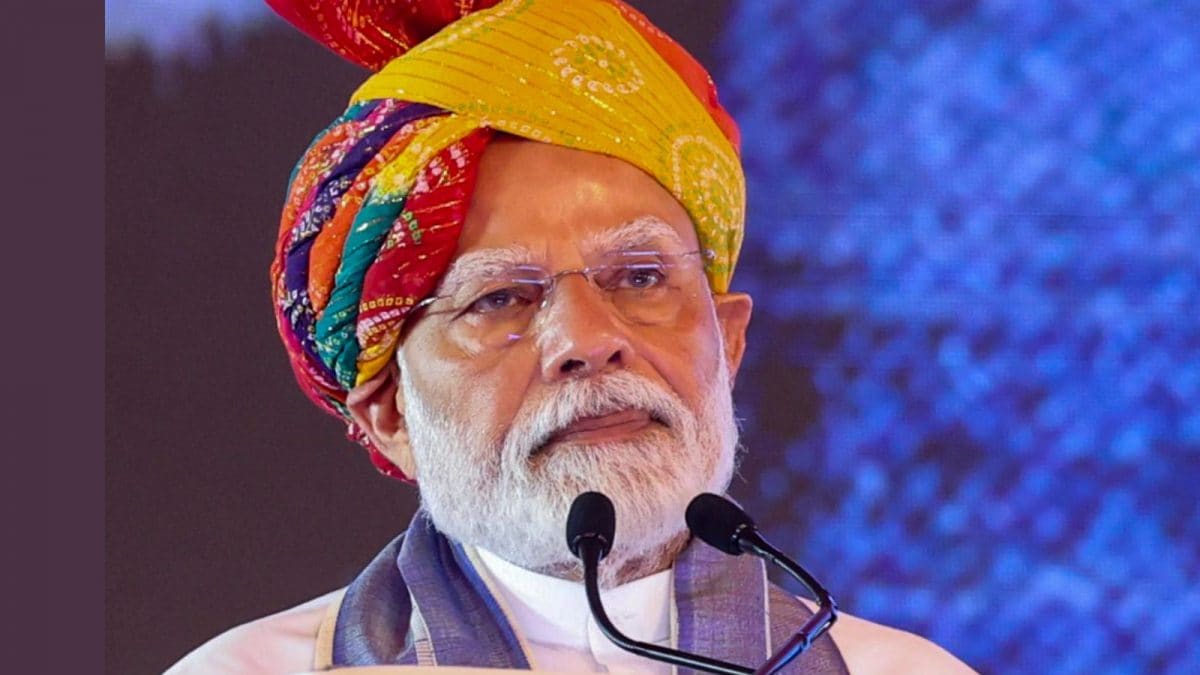
Prime Minister Narendra Modi launched a multifaceted attack on the Congress party, focusing on issues ranging from the Waqf law and Muslim appeasement to price hikes in Karnataka and deforestation in Telangana. His remarks, delivered during speeches on Ambedkar Jayanti in Haryana, were strategically aimed at discrediting the Congress and highlighting what he portrayed as its failures and hypocrisies. Modi's comprehensive critique sought to resonate with various segments of the population, including Muslims, Dalits, backward classes, and voters concerned about economic mismanagement and environmental degradation. The timing of his statements, preceding a Supreme Court hearing on petitions against the new Waqf law, suggests a calculated effort to influence public opinion and potentially sway the court's decision. The prime minister presented a detailed defense of the amended Waqf law, framing it as a crucial step towards achieving real social justice for marginalized Muslim communities, particularly the Pasmanda families, widows, and children. He contrasted the new law with the 2013 version passed by the UPA government, which he accused of benefiting only a handful of land mafia and enabling the exploitation of vulnerable groups. Modi emphasized that the revised law includes a provision to protect tribal lands, houses, and properties from being touched by the Waqf Board, directly addressing concerns about the potential displacement of tribal communities. He criticized the UPA's 2013 amendments for placing the old law above the Constitution of India, implying that his government's changes were necessary to restore constitutional principles. Modi also took aim at the Congress's track record on Muslim representation within the party, challenging them to appoint a Muslim as party president. He accused the Congress of using Muslims as a mere vote bank, neglecting their educational and economic well-being while appeasing fundamentalists. This line of attack aimed to expose what Modi characterized as the Congress's hypocrisy and lack of genuine concern for the Muslim community. He argued that the Congress's appeasement policies had ultimately harmed Muslims, leaving them uneducated and impoverished. The prime minister further criticized the Karnataka government, led by the Congress, for introducing reservation based on religion, asserting that it violated the ideals of Dr. Babasaheb Ambedkar and the principles enshrined in the Constitution. He highlighted that the Constitution provides for reservation for Scheduled Castes (SC), Scheduled Tribes (ST), and Other Backward Classes (OBC), but explicitly prohibits reservation based on religion. Modi accused the Congress of betraying Ambedkar's vision and using the provision for social justice as a tool for political appeasement. He cited reports of the Karnataka government snatching the rights of SC, ST, and OBC communities in tenders and allocating reservation based on religion, directly contradicting the constitutional ban. The prime minister also addressed the issue of rising prices in Karnataka, attributing it to the Congress government's policies and highlighting the contrast with BJP-ruled states. He claimed that the Congress government had imposed multiple taxes on the people, increasing their financial burden and leading to widespread corruption. Modi pointed to admissions by ministers within the Karnataka government that the state had become number one in corruption under Congress rule. This attack aimed to capitalize on public discontent over rising costs and portray the Congress as economically incompetent and corrupt. In addition to economic issues, Modi criticized the Congress government in Telangana for destroying forest lands through bulldozing operations, disregarding environmental protection and breaking promises made to the public. He highlighted the Supreme Court's intervention to halt such actions, indicating the severity of the environmental damage caused by the Telangana government. Modi's criticism focused on the Revanth Reddy government's apparent disregard for nature and its failure to uphold its commitments to the people of Telangana. Overall, Prime Minister Modi's speeches represented a coordinated and comprehensive attack on the Congress party, leveraging a range of issues to undermine its credibility and appeal to various voter segments. His focus on the Waqf law, Muslim representation, reservation policies, economic management, and environmental protection demonstrates a strategic effort to exploit perceived weaknesses in the Congress's record and position the BJP as the more responsible and effective governing party. The timing of his remarks, particularly in relation to the Supreme Court hearing on the Waqf law, suggests a deliberate attempt to influence public opinion and shape the legal landscape.
The Prime Minister's strategy hinges on several key narratives. First, he attempts to portray the Congress as a party that prioritizes appeasement over genuine empowerment, particularly concerning the Muslim community. By highlighting issues such as the Waqf law and the lack of Muslim leadership within the Congress, Modi seeks to create a perception that the party is more interested in exploiting Muslims for political gain than in addressing their real needs. This narrative is designed to appeal to both Hindu voters, who may perceive appeasement as unfair, and to moderate Muslims who may feel that the Congress has taken their support for granted. Second, Modi aims to position his government as the champion of social justice, particularly for marginalized communities. His defense of the amended Waqf law as a means of protecting the rights of Pasmanda Muslims and preventing the exploitation of vulnerable groups is a key component of this narrative. By invoking the legacy of Babasaheb Ambedkar and framing his policies as aligned with the Constitution, Modi seeks to portray himself as a defender of the rights of all citizens, regardless of their religion or caste. Third, the Prime Minister seeks to exploit regional grievances and economic anxieties by attacking the Congress governments in Karnataka and Telangana. By highlighting issues such as price hikes, corruption, and environmental destruction, Modi aims to create a perception that the Congress is incompetent and out of touch with the needs of the people. This narrative is designed to appeal to voters who are struggling with the rising cost of living and who are concerned about the environment. The effectiveness of Modi's strategy remains to be seen, but it is clear that he is employing a multi-pronged approach to weaken the Congress and consolidate his party's power. By focusing on issues that resonate with different segments of the population and by framing his policies as aligned with the Constitution and the legacy of Babasaheb Ambedkar, Modi hopes to create a narrative that will resonate with voters and lead to electoral success.
Furthermore, the Prime Minister's attacks on the Congress are not simply about winning votes in the short term. They also serve to reinforce a broader ideological agenda that seeks to redefine Indian identity and politics. By consistently criticizing the Congress's policies of secularism and social justice, Modi is challenging the party's historical dominance and promoting a different vision of India based on Hindu nationalism and economic liberalization. This ideological project is not without its critics, who argue that it is divisive and exclusionary. However, it has proven to be highly effective in mobilizing support for the BJP and in reshaping the political landscape of India. The Prime Minister's rhetoric also relies heavily on simplification and polarization. Complex issues are often reduced to simple binaries, such as 'appeasement vs. empowerment' or 'social justice vs. political games.' This simplification makes it easier for voters to understand and respond to his message, but it also risks distorting reality and exacerbating social divisions. The use of emotionally charged language and personal attacks further contributes to the polarization of the political debate. The long-term consequences of this strategy are uncertain, but it is clear that it is having a significant impact on Indian democracy. The erosion of trust in institutions, the rise of intolerance, and the increasing polarization of society are all worrying trends that are partly attributable to the kind of political rhetoric employed by Prime Minister Modi. In conclusion, the Prime Minister's attacks on the Congress are a complex and multifaceted phenomenon. They are driven by a combination of political calculation, ideological conviction, and personal ambition. While they may be effective in achieving short-term electoral gains, they also carry significant risks for Indian democracy and society. It is essential for citizens to critically evaluate these attacks and to demand a more nuanced and responsible political discourse.
The context surrounding these pronouncements is crucial to understanding their potential impact. India's political climate is highly charged, with elections looming and a history of communal tensions often exploited for political gain. Modi's statements, therefore, can be seen as carefully calibrated to resonate with specific voter demographics while simultaneously discrediting the opposition. The reference to the Waqf law, for example, touches upon a sensitive issue concerning the management of Muslim religious properties and has the potential to polarize opinions along religious lines. Similarly, the accusation of Muslim appeasement is a recurring theme in BJP rhetoric and serves to consolidate support among Hindu nationalist voters. The criticism of the Karnataka government's reservation policies is also strategically aimed at appealing to specific caste groups who may feel marginalized by the existing quota system. The emphasis on economic development and good governance, as exemplified by the attacks on price hikes in Karnataka and deforestation in Telangana, is intended to appeal to a broader electorate concerned about economic stability and environmental sustainability. Furthermore, the timing of Modi's statements in relation to the Supreme Court hearing on the Waqf law suggests a deliberate attempt to influence the judicial process. By publicly defending the amended law and framing it as a step towards social justice, Modi may be seeking to create a favorable narrative that could influence the court's decision. The use of social media to amplify these messages is also a key component of the BJP's communication strategy. The Prime Minister's tweets and the dissemination of related content through various online channels ensure that his message reaches a wide audience and remains in the public consciousness. In conclusion, the Prime Minister's attacks on the Congress are a sophisticated and multi-layered political strategy that aims to achieve a variety of objectives, including consolidating support among key voter demographics, discrediting the opposition, influencing public opinion, and shaping the legal landscape. The potential consequences of this strategy for Indian democracy and society are significant and warrant careful scrutiny.
Source: Waqf, Muslims To Karnataka, Telangana: PM Modi’s 5 Key Topics Had One Big Message Against Congress