
 |
|
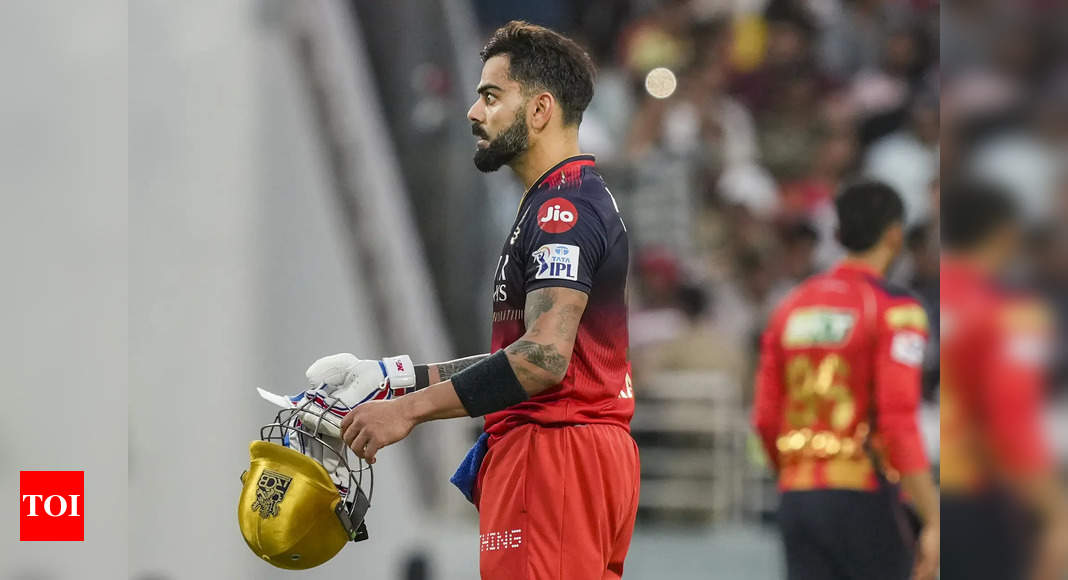
Virat Kohli, a name synonymous with passion and unwavering competitiveness, once again found himself at the center of attention during Royal Challengers Bengaluru's (RCB) recent triumph over Punjab Kings (PBKS) in the Indian Premier League (IPL). While RCB secured a convincing seven-wicket victory, it wasn't just Kohli's masterful batting display that captured headlines; it was an incident involving the stump microphone that ignited a social media firestorm. The incident, involving a sharp remark directed at Punjab Kings spinner Harpreet Brar, has divided fans and cricket analysts alike, sparking a debate about the fine line between spirited aggression and unsportsmanlike conduct. This incident serves as a microcosm of Kohli's career, one where his unparalleled talent is often intertwined with moments of intense emotional expression, sometimes blurring the lines of acceptable on-field behavior.
The crux of the matter lies in a brief yet impactful exchange captured by the stump microphone. During RCB's chase of 158, Kohli was heard uttering the words, "20 saal ho gaye cricket khelte hue, aese stump thodi na ho jaunga. Tere coach ko bhi janta hoon," which roughly translates to "I've been playing cricket for 20 years, I'm not going to get out like that. I even know your coach." While the exact context and tone of the exchange remain open to interpretation, the remark was perceived by many as a display of arrogance and an attempt to intimidate the young spinner. This immediately triggered widespread discussions on social media platforms, with opinions sharply divided between those who viewed it as harmless banter, a natural manifestation of Kohli's competitive spirit, and those who deemed it a disrespectful and unnecessary act of bullying. Critics argued that such behavior sets a poor example for aspiring cricketers and undermines the spirit of fair play. Supporters, on the other hand, defended Kohli, claiming that it was simply a case of him being passionate about the game and attempting to unsettle the opposition through psychological warfare. The debate underscores the complex relationship between sportsmanship, competition, and the personalities of individual players within the high-pressure environment of professional cricket.
The incident raises crucial questions about the boundaries of on-field behavior and the responsibilities that come with being a prominent figure in the sporting world. Virat Kohli, as one of the most recognizable and influential cricketers globally, carries a significant weight of expectation. His actions, both on and off the field, are scrutinized and dissected by millions of fans and aspiring players around the world. While his passion and drive are undoubtedly admirable qualities that have fueled his success, it is equally important for him to be mindful of the impact his words and actions can have on others. The role of role models in sports cannot be overstated, and players like Kohli have a responsibility to uphold the values of respect, fairness, and sportsmanship, even in the heat of intense competition. Finding the right balance between expressing passion and maintaining ethical conduct is a challenge that every athlete faces, and the Kohli-Brar incident serves as a reminder of the ongoing need for self-awareness and responsible behavior in the sporting arena.
Beyond the immediate controversy, the incident also highlights the increasing role of technology in shaping public perception of sporting events. The ubiquitous presence of stump microphones and cameras ensures that virtually every aspect of the game is captured and disseminated to a global audience. This level of scrutiny inevitably increases the pressure on players, who are now constantly aware of the potential for their words and actions to be scrutinized and interpreted by millions. While technology has undoubtedly enhanced the viewing experience for fans and provided greater transparency in the sport, it has also created a new set of challenges for players, who must navigate the complexities of maintaining privacy and managing their public image in an increasingly connected world. The Kohli-Brar incident serves as a stark reminder of the power of technology to amplify even the smallest of moments and transform them into subjects of widespread debate and scrutiny.
However, it is important to contextualize the incident within the larger narrative of the match and Kohli's overall performance. The RCB-PBKS encounter was a crucial one for both teams, as they both sought to solidify their position in the playoff race. Kohli, coming off a period of relatively inconsistent form, played a pivotal role in guiding RCB to victory, scoring an unbeaten 73 off 54 balls. His innings was a testament to his skill, determination, and ability to perform under pressure. Alongside Devdutt Padikkal, Kohli forged a crucial 103-run partnership that effectively sealed the game for RCB. Furthermore, Kohli surpassed David Warner to become the player with the most 50-plus scores in IPL history, further cementing his legacy as one of the league's all-time greats. While the stump mic incident may have overshadowed some of these achievements, it is important to remember that Kohli's on-field antics are just one facet of a complex and multifaceted sporting career.
In conclusion, the Virat Kohli-Harpreet Brar incident serves as a compelling case study of the complexities and challenges inherent in modern professional sports. It highlights the tension between passion and sportsmanship, the impact of technology on public perception, and the responsibilities that come with being a prominent role model. While Kohli's remark to Brar may have been ill-advised, it is important to avoid reducing his entire career to a single isolated incident. He remains one of the most talented and influential cricketers of his generation, and his contributions to the sport should not be overshadowed by a momentary lapse in judgment. Ultimately, the incident serves as a valuable reminder that even the most successful athletes are human beings capable of making mistakes, and that true sportsmanship involves not only competing with intensity but also treating opponents with respect and maintaining a sense of perspective, even in the heat of battle. The legacy of Virat Kohli will continue to be debated and analyzed for years to come, and incidents like this one will undoubtedly play a role in shaping the narrative of his remarkable career.
Source: Virat Kohli caught bullying Punjab Kings bowler on stump mic - Watch