
 |
|
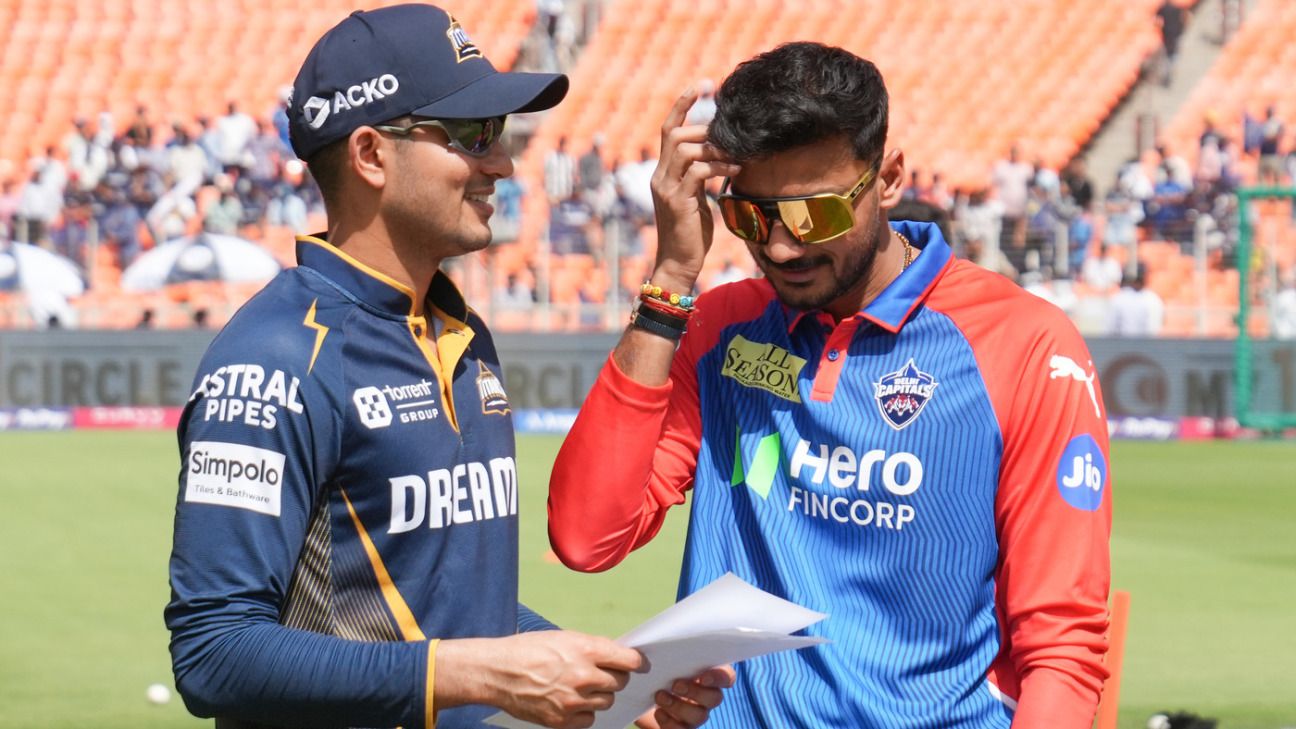
The Gujarat Titans' decision to bowl first against the Delhi Capitals in Ahmedabad was influenced by the prevailing hot weather conditions. This strategic choice highlights the significance of environmental factors in cricket, where captains often consider the pitch conditions, dew, and temperature before making a decision at the toss. Shubman Gill, the GT captain, acknowledged the heat as a contributing factor to his choice. This indicates a calculated approach aimed at leveraging the conditions to their advantage, possibly anticipating that batting later in the evening might become more challenging due to the anticipated onset of dew. The decision reflects a broader trend in cricket where teams are increasingly data-driven and consider various environmental variables to optimize their chances of success. The reliance on weather forecasts and pitch reports has become integral to pre-match preparations, allowing teams to formulate strategies tailored to specific conditions. The GT's decision also implicitly suggests a confidence in their bowling attack to exploit the conditions effectively, perhaps anticipating that the pitch might offer more assistance to bowlers early in the innings. This aspect also brings in the consideration for the composition of the teams, where the bowling and batting strengths are weighed against the expected pitch behavior. For the GT, choosing to bowl first could also be indicative of their intention to chase a target, a strategy that might be favored given their batting depth and chasing prowess.
The anticipated return of Kagiso Rabada to the Gujarat Titans squad within the next ten days is a significant development for the team. Rabada's absence, attributed to personal reasons that saw him return to South Africa, has undoubtedly impacted the team's bowling arsenal. His expected return represents a substantial boost to their pace attack, given his proven track record and experience in high-pressure situations. Rabada is known for his express pace, ability to generate bounce, and his mastery of variations, making him a formidable bowler in both the powerplay and death overs. His inclusion in the team will provide GT with more flexibility and firepower in their bowling lineup. Rabada’s presence also contributes a psychological advantage, as his reputation as a world-class bowler can intimidate opposition batsmen. The timing of his return is also crucial, as it coincides with a critical phase of the tournament, where every match carries significant weight in determining playoff qualification. His ability to deliver under pressure and take crucial wickets at pivotal moments makes him a valuable asset to the team. The team management will be keen to ensure that Rabada is fully fit and ready to perform at his best upon his return, as his contribution will be vital to the team's aspirations for a successful campaign. His experience and skill set are precisely what GT needs to bolster their chances in the latter stages of the competition.
Delhi Capitals' decision to omit Jake Fraser-McGurk from their playing XI after six matches is a noteworthy move, reflecting their performance assessment and tactical adjustments. Fraser-McGurk's relatively modest run accumulation of 55 runs at a strike rate of 105.76, with a best of 38, prompted the team management to seek alternatives. This decision highlights the high-pressure environment of franchise cricket, where consistent performance is crucial for retaining a place in the team. The omission of Fraser-McGurk signals a willingness to make tough calls based on performance data and strategic considerations. Furthermore, Faf du Plessis' continued absence due to an unspecified injury also impacts the DC's team composition and balance. Du Plessis' experience and leadership qualities would be valuable assets, and his absence necessitates adjustments in the batting order and overall team strategy. The absence of both Fraser-McGurk and du Plessis underscores the challenges that teams face in maintaining consistency and adapting to unforeseen circumstances such as injuries and performance fluctuations. In addition, the decision to have Abishek Porel open the innings, instead of being used as an Impact Player, signifies a change in DC’s strategy. Axar Patel’s acknowledgement of his confusion regarding the decision-making process underscores the complexities involved in strategic planning, where factors like weather and pitch conditions can significantly influence the approach.
The announced playing XIs for both Gujarat Titans and Delhi Capitals provide insights into their respective strategies and team compositions for the match. The GT's lineup, featuring Shubman Gill, Sai Sudharsan, Jos Buttler, Rashid Khan, Shahrukh Khan, Rahul Tewatia, Arshad Khan, R Sai Kishore, Mohammed Siraj, Prasidh Krishna, and Ishant Sharma, reflects a balanced combination of batting firepower and bowling depth. The presence of experienced players like Rashid Khan and Mohammed Siraj adds stability and expertise to the bowling attack, while the batting lineup boasts a blend of established performers and promising youngsters. The DC's XI, consisting of Abishek Porel, Karun Nair, KL Rahul, Axar Patel, Tristan Stubbs, Ashutosh Sharma, Vipraj Nigam, Mitchell Starc, Kuldeep Yadav, Mohit Sharma, and Mukesh Kumar, also showcases a mix of talent and experience. Kuldeep Yadav's presence as a wrist spinner provides a crucial element to their bowling attack, while the batting lineup includes a blend of established names and emerging talents. The Impact Players lists for both teams further highlight the strategic flexibility that teams possess in modern T20 cricket, allowing them to adapt their lineups based on the evolving match situation. The presence of players like Sherfane Rutherford, Mahipal Lomror, Anuj Rawat, Washington Sundar, Karim Janat for GT and Jake Fraser-McGurk, Sameer Rizvi, Darshan Nalkande, Donovan Ferreira, Dushmantha Chameera for DC indicates the depth of talent available and the potential for impactful contributions from these players during the course of the match.
The composition of both teams, GT and DC, reveals a strategic approach towards leveraging the strengths of their players while addressing potential weaknesses. For Gujarat Titans, the emphasis appears to be on maintaining a balanced attack with a strong spin component spearheaded by Rashid Khan, supplemented by the pace of Mohammed Siraj and Prasidh Krishna. The batting order seems designed to provide stability at the top with Shubman Gill and Sai Sudharsan, followed by aggressive hitters like Shahrukh Khan and Rahul Tewatia who are capable of accelerating the scoring rate in the middle and later overs. The inclusion of all-rounders like Arshad Khan and R Sai Kishore adds depth to both the batting and bowling departments. On the other hand, Delhi Capitals' team composition suggests a focus on bolstering their batting lineup after the removal of Fraser-McGurk, with Abishek Porel promoted to open the innings. Axar Patel's role as captain adds stability to the middle order, supported by the likes of Tristan Stubbs and KL Rahul. The bowling attack relies on the spin of Kuldeep Yadav and the pace of Mitchell Starc and Mohit Sharma, with Mukesh Kumar adding further depth. The Impact Players list for both teams offers additional options for tactical adjustments based on the match situation, allowing for flexibility in either strengthening the batting or bolstering the bowling attack. The choice of Impact Players will likely depend on the progress of the match and the specific requirements at different stages of the game. The emphasis on team balance and strategic flexibility underscores the importance of adaptability in the fast-paced and dynamic environment of T20 cricket. Teams that can effectively leverage their resources and make timely adjustments are more likely to succeed in the long run.
Source: Unchanged GT opt to bowl vs DC, Gill says Rabada is expected to return in 'ten days or so'