
 |
|
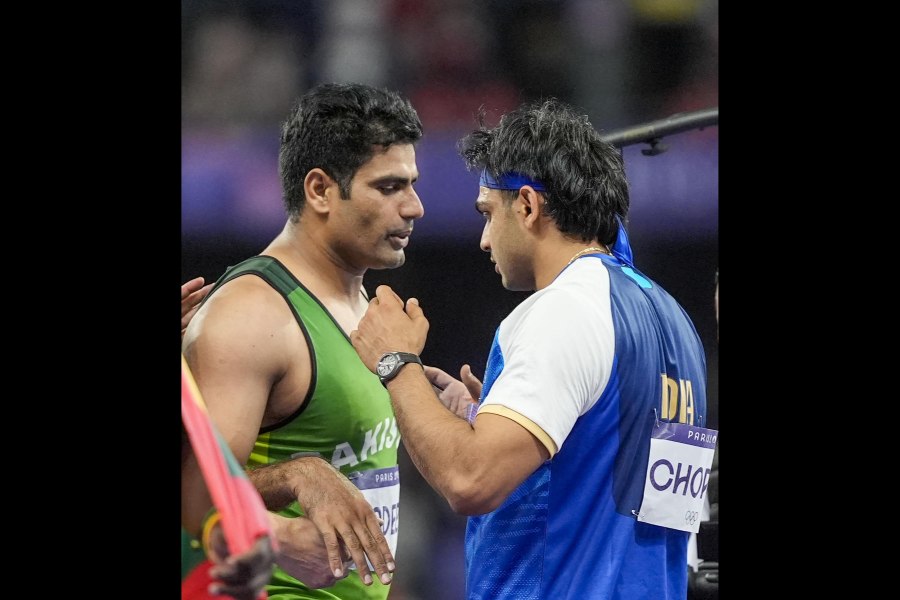
Arshad Nadeem, the Pakistani javelin thrower who clinched the gold medal at the Paris Olympic Games, has officially withdrawn from the upcoming Neeraj Chopra Classic, scheduled to take place in Bengaluru on May 24th. This decision has sparked considerable discussion within the athletics community, with various factors potentially contributing to Nadeem's withdrawal. The official reason cited by sources close to Nadeem is a pre-existing, demanding training schedule that leaves little room for additional engagements. However, the timing of the announcement, following closely on the heels of a recent terror attack on tourists in Pahalgam, has led to speculation that the incident may have played a role in Nadeem's decision. Furthermore, the already heightened diplomatic tensions between India and Pakistan undoubtedly add another layer of complexity to the situation. It was already considered unlikely that Nadeem would receive the necessary clearance to participate in the event, given the current geopolitical climate. Nadeem is currently in Lahore, actively preparing for the new athletics season. He has been absent from competition since his triumphant gold medal victory last August. His anticipated comeback event is the Asian Athletics Championship, set to be held in Gumi, South Korea, from May 27th to 31st. This championship will serve as a crucial test of his form and readiness for the upcoming World Athletics Championship in Tokyo. Neeraj Chopra, the Indian javelin superstar, had previously indicated during a virtual press conference that Nadeem's participation was still unconfirmed. Chopra stated that Nadeem was consulting with his coach and that the necessary government permissions were still pending. He emphasized that the final list of participants would be released once all confirmations were received. The last time Nadeem competed in a major event held in India was at the 2016 South Asian Games in Guwahati. During that competition, he secured a bronze medal with a throw of 78.33 meters. Notably, Neeraj Chopra won the gold medal at the same event with a throw of 82.23 meters. Despite the competitive rivalry on the field, Neeraj Chopra and Arshad Nadeem share a cordial and respectful relationship. Their head-to-head matchups have become highly anticipated events for athletics fans worldwide. After Neeraj Chopra's historic gold medal victory at the Tokyo Olympic Games in 2021, where Nadeem finished fifth, Chopra established himself as the leading figure in javelin throwing. However, Nadeem has consistently closed the gap, showcasing his remarkable talent and dedication. In the 2023 World Championship in Budapest, Neeraj Chopra secured the gold medal, while Nadeem claimed the silver. In the 2023 Asian Games in Hangzhou, Neeraj Chopra once again emerged victorious with the gold medal, while Nadeem finished third, securing the bronze. The Paris Olympics witnessed a significant shift in the dynamic, with Arshad Nadeem achieving a remarkable throw of 92.97 meters to win the gold medal. Neeraj Chopra secured the silver medal with a throw of 89.45 meters. With the upcoming World Athletics Championship in Tokyo, another exciting duel between these two world-class athletes is eagerly anticipated. The absence of Nadeem from the Neeraj Chopra Classic deprives fans of an early opportunity to witness their rivalry unfold. The focus now shifts to the Asian Athletics Championship and the World Athletics Championship, where the world will be watching to see who will emerge victorious in their next encounter. The dynamics of Indo-Pakistani relations often spill over into the realm of sports, adding a layer of political significance to their on-field competitions. The performance of athletes from both countries is often viewed as a reflection of national pride and a symbol of their respective nations' capabilities. In this context, the withdrawal of Nadeem from the Neeraj Chopra Classic underscores the complex interplay between sports and geopolitics. While the official reason may be a packed schedule, the underlying tensions and security concerns cannot be entirely discounted. The decision to prioritize the Asian Athletics Championship and the World Athletics Championship is understandable, given their importance in the global athletics calendar. These events provide Nadeem with the opportunity to compete against the best javelin throwers in the world and to showcase his talent on a global stage. The Asian Athletics Championship will serve as a valuable warm-up for the World Athletics Championship, allowing Nadeem to fine-tune his technique and build his confidence. The World Athletics Championship in Tokyo will be the ultimate test of his abilities, as he seeks to defend his Paris Olympic gold medal and cement his place among the elite javelin throwers in history. The rivalry between Neeraj Chopra and Arshad Nadeem is not merely a competition between two individuals; it is also a reflection of the sporting rivalry between India and Pakistan. The two athletes have consistently pushed each other to new heights, raising the standards of javelin throwing in the process. Their performances have inspired millions of young athletes in both countries to pursue their dreams and to strive for excellence. The absence of Nadeem from the Neeraj Chopra Classic is a setback for the event, but it does not diminish the significance of the rivalry between these two exceptional athletes. Their future encounters will undoubtedly continue to captivate audiences around the world and to inspire generations of athletes to come. The incident also highlights the security concerns involved in Pakistani athletes competing in India and vice versa. The increased tension that has developed in recent years has made it more difficult for athletes from both countries to compete in each other's nations, and this is another unfortunate instance of that outcome. Despite their friendly relationship and mutual respect, the political backdrop to the sporting competition is always present, and the withdrawal demonstrates its pervasive influence.
The impact of Arshad Nadeem's absence from the Neeraj Chopra Classic extends beyond just the sporting aspect. It underscores the delicate balance that exists between athletic competition and geopolitical realities. The event, designed to foster camaraderie and showcase talent, inadvertently becomes a microcosm of the broader relationship between India and Pakistan. While the officially stated reason for Nadeem's withdrawal is a scheduling conflict, the undercurrent of diplomatic tensions and security concerns cannot be ignored. These factors create a complex web of considerations for athletes, coaches, and sports administrators when planning international participation. The decision-making process is no longer solely based on training regimes and competitive strategies; it also involves navigating political landscapes and assessing potential risks. In such circumstances, the well-being and safety of athletes become paramount, and prioritizing participation in events where security is assured becomes a prudent choice. The Asian Athletics Championship, scheduled in Gumi, South Korea, provides a relatively neutral platform for Nadeem to showcase his skills and prepare for the World Athletics Championship. The absence of the added pressure of competing in India allows him to focus solely on his performance, without the distractions of heightened security protocols and potential political scrutiny. This strategic choice reflects a pragmatic approach to managing the challenges that arise from the intersection of sports and politics. It also highlights the importance of creating environments where athletes can compete freely and fairly, without fear of intimidation or prejudice. The rivalry between Neeraj Chopra and Arshad Nadeem is a testament to the power of sports to transcend national boundaries and foster understanding. Their mutual respect and admiration for each other's talent serve as a positive example in a world often marred by conflict and division. However, the reality remains that political tensions can cast a shadow over even the most amicable sporting relationships. The hope is that future opportunities will arise for Chopra and Nadeem to compete against each other in a spirit of healthy competition and mutual respect, regardless of the political climate. Their performances not only inspire aspiring athletes but also serve as a reminder of the shared humanity that binds us together. Sports can be a powerful tool for promoting peace and understanding, and it is essential to safeguard its integrity from the negative influences of political and social divisions. The withdrawal from the Classic serves as a reminder that it is not as simple as just wanting to participate for some athletes due to external issues. As Neeraj said, governmental permission would also be required.
The dynamic between Neeraj Chopra and Arshad Nadeem exemplifies a compelling narrative that resonates far beyond the realm of athletics. It’s a story of fierce competition intertwined with mutual respect, camaraderie forged amidst intense rivalry, and the unifying power of sports to transcend geopolitical divides. While their on-field encounters are marked by unwavering determination to outdo each other, their interactions off the field reveal a deep-seated appreciation for each other’s talent and dedication. This duality is what makes their rivalry so captivating for audiences around the world. It’s not just about who throws the farthest; it’s about the human connection that exists between two athletes who share a common passion and a relentless pursuit of excellence. Their story provides a refreshing counterpoint to the often-divisive narratives that dominate the global landscape. In a world plagued by conflict and mistrust, their relationship offers a glimmer of hope, demonstrating that even amidst intense competition, mutual respect and understanding can prevail. It’s a powerful reminder that we are all part of a shared humanity, and that sports can be a unifying force that brings us together. The challenges that arise from the intersection of sports and politics underscore the importance of creating environments where athletes can compete freely and fairly. This requires a concerted effort from governments, sports organizations, and individual athletes to promote a culture of respect and understanding. It also necessitates a willingness to engage in dialogue and address the underlying issues that contribute to tension and mistrust. Sports should be a platform for celebrating diversity and promoting intercultural exchange, not a battleground for political ideologies. The Neeraj Chopra Classic, despite the absence of Arshad Nadeem, remains an important event that celebrates the spirit of athleticism and promotes camaraderie among athletes from different nations. It provides an opportunity for young athletes to showcase their talent and to learn from their peers. It also serves as a reminder of the positive values that sports can instill, such as discipline, teamwork, and perseverance. The absence of one athlete should not overshadow the overall significance of the event. It is a testament to the enduring power of sports to bring people together and to inspire them to achieve their full potential. The future holds many more opportunities for Neeraj Chopra and Arshad Nadeem to compete against each other and to continue their remarkable journey together. Their story is far from over, and the world will be watching with bated breath as they continue to push the boundaries of javelin throwing and to inspire generations of athletes to come. Their legacy will not only be defined by their athletic achievements but also by their unwavering commitment to mutual respect and understanding. They are true ambassadors of sportsmanship, and their influence will be felt for years to come. Therefore the dynamic of the rivalry will continue to grow when they meet again at the world athletics championship.
The interplay of factors—scheduling conflicts, diplomatic nuances, and security anxieties—demonstrates the complexities faced by international athletes. Nadeem's decision illuminates a nuanced understanding of the current global climate, where sports participation involves more than just athletic preparedness. His focus on the Asian Athletics Championship and the World Athletics Championship highlights a strategic prioritization of events, a common practice among elite athletes. These championships offer a prominent platform to showcase talent and represent his nation on a global scale. By concentrating on these events, Nadeem can optimize his training, manage travel logistics, and minimize potential disruptions. The Asian Athletics Championship serves as a crucial stepping stone towards the World Athletics Championship, providing a competitive environment to assess his form and refine his technique. This strategic approach reflects a meticulous planning process, where every decision is carefully weighed to maximize performance and minimize risks. The diplomatic and security considerations further complicate the decision-making process. The heightened tensions between India and Pakistan necessitate careful evaluation of potential risks and logistical challenges. Securing the necessary clearances and ensuring the safety of athletes become paramount concerns. In such circumstances, prioritizing events where security is assured and diplomatic hurdles are minimized becomes a prudent choice. The absence of Nadeem from the Neeraj Chopra Classic underscores the need for a collaborative approach to international sports participation. Governments, sports organizations, and athletes must work together to create a conducive environment for competition, ensuring the safety and well-being of all participants. Open communication, transparent procedures, and mutual respect are essential for fostering trust and minimizing misunderstandings. The rivalry between Neeraj Chopra and Arshad Nadeem serves as a powerful reminder of the unifying potential of sports. Despite the political tensions, their mutual respect and admiration transcend national boundaries, inspiring athletes and fans alike. Their story demonstrates that sports can be a bridge between cultures, fostering understanding and promoting peace. The absence of Nadeem from the Neeraj Chopra Classic does not diminish the significance of their rivalry. Their future encounters will undoubtedly captivate audiences around the world, showcasing the pinnacle of athletic achievement and the spirit of sportsmanship. The challenges faced by international athletes highlight the need for greater understanding and support. By acknowledging the complexities involved in international participation, we can create a more inclusive and equitable environment for athletes from all nations. This requires a collective effort to promote dialogue, foster collaboration, and prioritize the safety and well-being of all participants. The goal is to ensure that sports can continue to be a source of inspiration, unity, and positive change in the world.