
 |
|
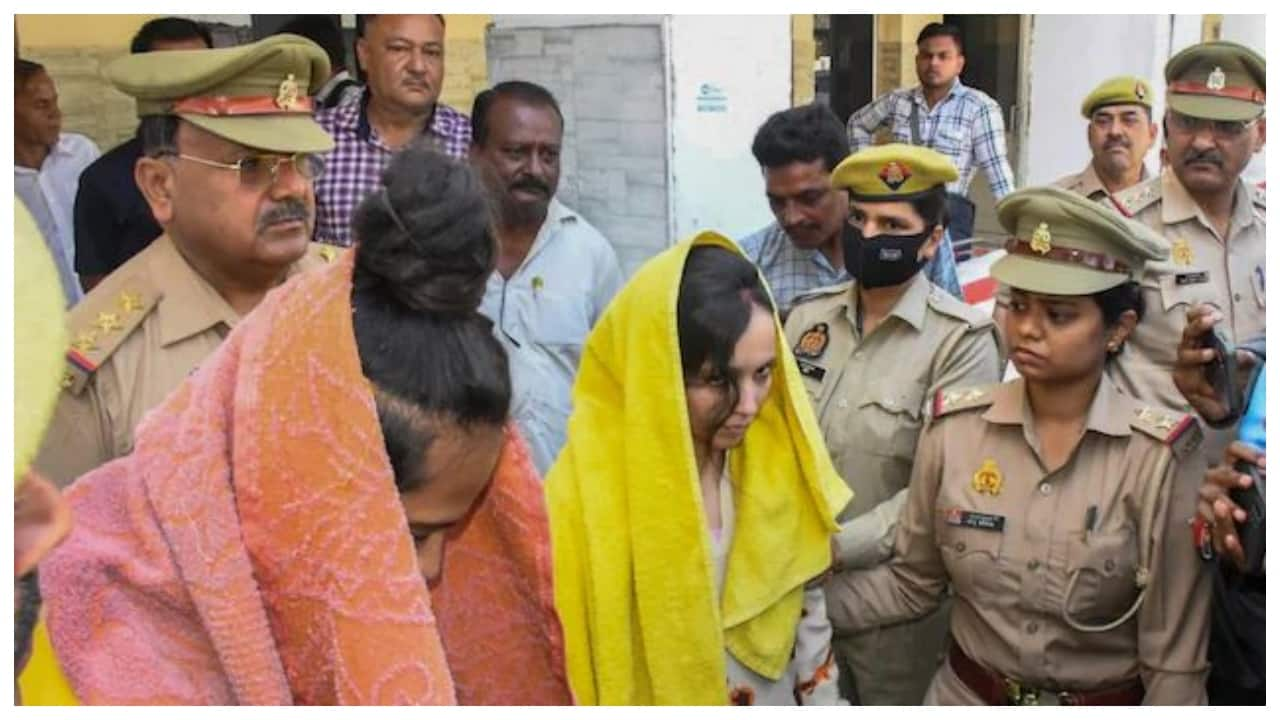
The case of Muskan Rastogi, accused of the gruesome murder of her husband Saurabh Rajput in Meerut, has taken a new and unexpected turn. While incarcerated awaiting trial for the alleged crime, Muskan has been discovered to be pregnant during a routine health check-up conducted within the jail premises. This revelation adds a complex layer to an already disturbing case involving accusations of drugging, stabbing, dismemberment, and concealment of remains. The pregnancy raises numerous ethical, legal, and logistical questions, impacting not only Muskan's personal circumstances but also the ongoing judicial proceedings and the responsibilities of the correctional system. The primary focus of the investigation remains the murder of Saurabh Rajput, a former Merchant Navy officer. According to police reports, Muskan Rastogi and her alleged lover, Sahil, conspired to kill Saurabh on the night of March 4 in Indiranagar, Meerut. The alleged motive for the murder remains under investigation, but reports suggest a pre-existing relationship between Muskan and Sahil, and the police are exploring the possibility of the murder being a result of a planned conspiracy to eliminate Saurabh. The details of the crime are particularly disturbing. The prosecution alleges that Muskan and Sahil drugged Saurabh before fatally stabbing him. Following the murder, they are accused of dismembering Saurabh's body, severing his head and hands, and attempting to dispose of the remains by concealing them in a blue drum filled with cement. This attempt at concealment ultimately failed, leading to the discovery of the body and the subsequent arrest of Muskan and Sahil. The police investigation further revealed that Muskan had allegedly been planning the murder since November 2023, indicating a premeditated nature to the crime. Both Muskan and Sahil are currently in judicial custody, awaiting trial for their alleged involvement in the murder of Saurabh Rajput. The discovery of Muskan's pregnancy now presents a unique set of challenges for the judicial system. The immediate concern is the health and well-being of Muskan and the unborn child. The jail administration has confirmed that routine health check-ups and pregnancy tests are conducted for all female inmates upon arrival at the jail. This practice is in line with standard protocols for correctional facilities, ensuring that the health needs of inmates are addressed and any pre-existing conditions or medical requirements are identified. Senior Jail Superintendent Viresh Raj Sharma has stated that while he has not yet received an official medical report, he was verbally informed of Muskan's pregnancy by the medical staff. Chief Medical Officer Dr. Ashok Kataria has confirmed that a preliminary test indicated Muskan is pregnant, and that the next step will be an ultrasound to determine the duration and condition of the pregnancy. The confirmation of the pregnancy will necessitate a comprehensive assessment of Muskan's medical needs, including prenatal care, nutritional support, and monitoring for any potential complications. The jail administration will need to ensure that Muskan receives adequate medical attention throughout her pregnancy, adhering to standards of care comparable to those available outside of the prison environment. This may involve consultations with obstetricians and other specialists, as well as the provision of necessary medications and supplements. Furthermore, the prison environment itself may need to be adapted to accommodate Muskan's pregnancy, ensuring that she has access to a safe and comfortable living space, and that her work assignments are appropriate for her condition. The pregnancy also raises legal questions regarding the status of the unborn child. While Muskan is incarcerated, the child will be dependent on the state for its well-being. The legal implications of this dependency are complex and may involve issues of parental rights, child custody, and the potential for adoption. The courts will need to consider the best interests of the child, balancing the rights of the mother with the need to ensure the child's safety and welfare. The identity of the child's father is also a significant factor. If Sahil is confirmed to be the father, it could potentially complicate the ongoing murder investigation and the legal proceedings against both Muskan and Sahil. DNA testing may be required to establish paternity, and the results could have implications for the prosecution's case. The trial of Muskan and Sahil for the murder of Saurabh Rajput will undoubtedly be impacted by the discovery of Muskan's pregnancy. The defense attorneys may argue that Muskan's condition warrants special consideration, potentially seeking leniency in sentencing or a delay in the trial proceedings. The prosecution, on the other hand, will likely argue that Muskan's pregnancy should not diminish her culpability for the alleged crime. The judge will need to carefully weigh all the factors involved, ensuring that the trial is conducted fairly and impartially, while also taking into account the unique circumstances of Muskan's pregnancy. The case of Muskan Rastogi also highlights the broader issues surrounding the treatment of pregnant inmates in correctional facilities. Advocates for prisoners' rights argue that pregnant inmates are a particularly vulnerable population, requiring specialized care and attention. They point to the potential for complications during pregnancy and childbirth, as well as the psychological and emotional toll that incarceration can take on pregnant women. There is a growing movement to reform prison policies and practices to better address the needs of pregnant inmates, including providing access to comprehensive prenatal care, promoting healthy eating habits, and reducing the use of restraints during labor and delivery. Some jurisdictions have even implemented alternative sentencing options for pregnant women, such as home confinement or community-based programs, in an effort to reduce the number of pregnant women in prisons and jails. The case of Muskan Rastogi is also a reminder of the human tragedy that often lies at the heart of criminal cases. The murder of Saurabh Rajput has left a void in the lives of his family and friends, and the discovery of Muskan's pregnancy adds another layer of complexity to an already heartbreaking situation. Regardless of the outcome of the trial, the lives of all those involved have been irrevocably altered by the events of March 4 in Indiranagar, Meerut. The revelation of Muskan Rastogi's pregnancy has introduced a new and challenging dimension to the already complex case of the murder of Saurabh Rajput. The legal, ethical, and logistical implications of this development will require careful consideration by the courts, the correctional system, and the community as a whole. The focus remains on ensuring justice for Saurabh Rajput, while also upholding the rights and well-being of Muskan Rastogi and her unborn child. The case serves as a reminder of the human complexities that often underpin criminal proceedings and the need for a compassionate and just approach to the administration of law. The investigation into the murder continues, and authorities are meticulously gathering evidence to present a compelling case in court. The testimonies of witnesses, forensic analysis of the crime scene, and the recovery of the alleged murder weapon will all play crucial roles in the prosecution's efforts to secure a conviction. The defense, meanwhile, is expected to challenge the evidence presented by the prosecution and to raise doubts about the guilt of Muskan and Sahil. The trial is likely to be lengthy and contentious, with both sides presenting their arguments in detail. The judge will ultimately be responsible for determining the guilt or innocence of the accused, based on the evidence presented and the applicable laws. The jury, if one is selected, will also play a critical role in the decision-making process. The outcome of the trial will have significant implications for the lives of Muskan Rastogi and Sahil, as well as for the family and friends of Saurabh Rajput. The case serves as a stark reminder of the devastating consequences of violence and the importance of upholding the rule of law. The judicial system is designed to ensure that justice is served, and that those who are found guilty of crimes are held accountable for their actions. The case of Muskan Rastogi is a complex and multifaceted one, and it will be closely watched by the public as it unfolds in the coming months. The legal proceedings are expected to be transparent and fair, and the outcome will be determined by the evidence presented and the applicable laws. The case is a reminder of the importance of due process and the right to a fair trial for all individuals, regardless of the charges against them. The discovery of Muskan's pregnancy has added a new layer of complexity to the case, and it will be important for the courts to carefully consider the implications of this development as the legal proceedings move forward. The well-being of Muskan and her unborn child will need to be taken into account, and appropriate measures will need to be taken to ensure that their needs are met. The case is a reminder of the human complexities that often underlie criminal proceedings, and it underscores the importance of a compassionate and just approach to the administration of law.
The revelation of Muskan Rastogi's pregnancy while incarcerated adds a significant ethical dimension to an already disturbing case. It raises fundamental questions about the state's responsibility towards pregnant inmates and the rights of the unborn child. Correctional facilities are inherently punitive environments, designed to restrict liberty and punish offenders. However, the presence of a pregnant woman within such a setting necessitates a more nuanced approach, balancing the demands of justice with the moral imperative to protect vulnerable individuals. The primary ethical concern revolves around the provision of adequate prenatal care. Pregnant inmates are at higher risk of experiencing complications, due to factors such as poor nutrition, stress, and limited access to healthcare. The state has a duty to ensure that Muskan receives comprehensive medical attention throughout her pregnancy, including regular check-ups, ultrasounds, and any necessary medications. This care should be comparable to the standards available in the community, and should be tailored to meet Muskan's specific needs. Furthermore, the prison environment itself may pose risks to the pregnancy. Exposure to infectious diseases, inadequate nutrition, and physically demanding work assignments can all negatively impact the health of both the mother and the developing fetus. The jail administration must take steps to mitigate these risks, providing Muskan with a safe and sanitary living space, nutritious meals, and appropriate work duties. The use of restraints during pregnancy and childbirth is another ethical issue that has garnered significant attention. The practice of shackling pregnant inmates during labor is widely condemned by medical professionals and human rights advocates, who argue that it poses a serious risk to both the mother and the child. Many jurisdictions have banned or restricted the use of restraints on pregnant inmates, recognizing the inherent cruelty and potential for harm. The ethical considerations surrounding Muskan's pregnancy also extend to the unborn child. The child is entirely dependent on the state for its well-being, and the state has a responsibility to ensure that the child's rights are protected. This includes providing for the child's physical and emotional needs, as well as ensuring that the child is raised in a safe and nurturing environment. The long-term implications of Muskan's incarceration on the child's development must also be considered. Children born to incarcerated mothers are at higher risk of experiencing developmental delays, emotional problems, and involvement in the criminal justice system. The state should provide support services to Muskan and her child, both during and after her release, to mitigate these risks and promote positive outcomes. The question of who should care for the child after birth is another complex ethical issue. Muskan may not be able to care for the child herself, due to her incarceration. In such cases, the state must determine the best placement for the child, considering factors such as the child's relationship with other family members, the suitability of potential adoptive parents, and the child's overall well-being. The ethical considerations surrounding Muskan Rastogi's pregnancy are multifaceted and require careful deliberation. The state must balance its duty to uphold the law with its moral obligation to protect vulnerable individuals and ensure the well-being of the unborn child. A compassionate and just approach is essential to navigate these complex ethical dilemmas and ensure that the rights of all parties are respected.
The discovery of Muskan Rastogi's pregnancy also has significant logistical implications for the jail administration and the judicial system. Managing a pregnant inmate requires specialized resources and protocols to ensure her health and safety, as well as the well-being of the unborn child. One of the immediate logistical challenges is providing adequate medical care. This includes regular prenatal check-ups, ultrasounds, and access to obstetricians and other specialists. The jail administration must establish a system for transporting Muskan to medical appointments outside the facility, while ensuring her security and the safety of the public. The jail may also need to provide specialized medical equipment and supplies to care for Muskan during her pregnancy and childbirth. The dietary needs of a pregnant inmate are also different from those of other inmates. Muskan requires a balanced and nutritious diet to support her pregnancy and the development of the fetus. The jail administration must ensure that her meals meet these nutritional requirements, and that she has access to any necessary supplements. The prison environment may also need to be adapted to accommodate Muskan's pregnancy. This may involve providing her with a more comfortable living space, allowing her to avoid strenuous work assignments, and ensuring that she has access to fresh air and exercise. The jail administration must also take steps to protect Muskan from potential harm, such as exposure to infectious diseases or violence from other inmates. The logistical challenges associated with Muskan's pregnancy extend beyond the jail administration. The judicial system must also adapt to the unique circumstances of her case. The trial proceedings may need to be adjusted to accommodate her medical needs, and the judge may need to consider her pregnancy when determining her sentence. The defense attorneys may argue that her pregnancy warrants special consideration, while the prosecution will likely argue that it should not diminish her culpability for the alleged crime. The judge must carefully weigh all the factors involved and ensure that the trial is conducted fairly and impartially. The logistical implications of Muskan's pregnancy also extend to the period after she gives birth. The state must determine who will care for the child, and how the child's needs will be met. If Muskan is unable to care for the child herself, the state must find a suitable caregiver, such as a family member or foster parent. The state must also provide financial and other support to ensure that the child's needs are met. The logistical challenges associated with Muskan Rastogi's pregnancy are significant, but they can be overcome with careful planning and coordination. The jail administration, the judicial system, and other relevant agencies must work together to ensure that Muskan receives the care and support she needs, and that the well-being of her unborn child is protected.
Source: Muskan Rastogi, arrested for killing husband in Meerut, found pregnant during jail check-up