
 |
|
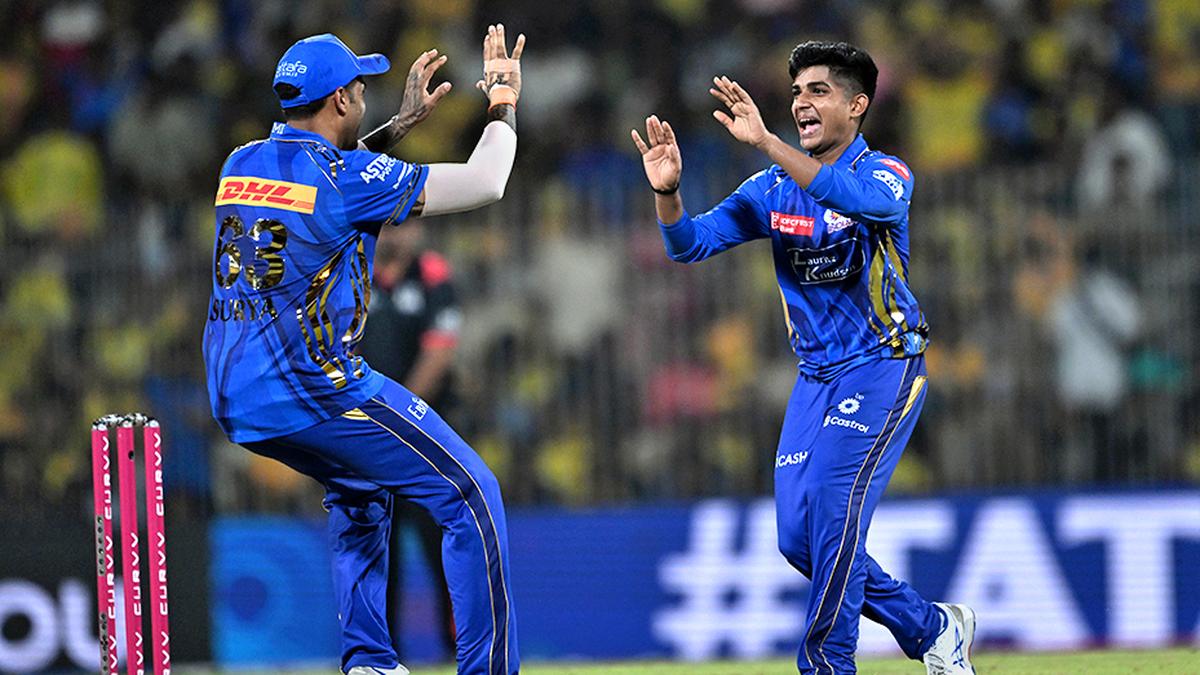
The story of Vignesh Puthur is a testament to perseverance, the importance of good coaching, and the potential for talent to emerge from unexpected places. His journey from the small town of Perinthalmanna to the hallowed grounds of the IPL, representing the Mumbai Indians, is an inspiring narrative of overcoming financial hardships, facing setbacks in age-group cricket, and ultimately seizing the opportunity when it presented itself. The article effectively portrays the sacrifices made by Vignesh's parents, the dedication of his coach Vijayan, and the faith shown in him by the Mumbai Indians management. The initial focus on his parents' emotional reaction to seeing him debut underscores the human element of professional sports, highlighting the profound impact it has on families. The financial struggles faced by Sunil Kumar, who drives an auto, add a layer of relatability and emphasize the obstacles Vignesh had to overcome. This establishes the context for appreciating his achievements and highlights the rarity of his accomplishment, having made it to the IPL without the traditional route of Ranji Trophy or Vijay Hazare appearances. Vijayan, the coach, emerges as a pivotal figure in Vignesh's development. His understanding of spin bowling, particularly left-arm wrist spin, is deeply rooted in the teachings of Vasoo Paranjape, the 'Dronacharya of Indian cricket.' This connection to a legendary figure adds gravitas to Vijayan's coaching methods and suggests a lineage of excellence. The description of Vijayan's time assisting Paranjape with the Oman national side provides credibility to his expertise. His emphasis on the fluidity and flexibility required for leg spin, contrasting it with 'robotic movement,' reveals a nuanced understanding of the craft. Furthermore, Vijayan's ability to impart this knowledge to a young Vignesh, even at the age of 11, demonstrates his skill as a teacher. The article highlights the uniqueness of Vignesh's left-arm spin in Kerala cricket, where he was the sole representative at the age-group level. This underscores the niche he occupied and the challenges he faced in developing his skills without a readily available peer group. The detail about him perfecting his googly in six months showcases his dedication and aptitude for learning. Vijayan's anxieties while watching Vignesh's IPL debut mirror the emotions of any coach who has invested years in nurturing a young talent. His analysis of the pitch conditions and the strategic advantage Vignesh had being included in the impact player list demonstrates his keen understanding of the game. The coach’s observation that Vignesh displayed the maturity of someone with 10 IPL games of experience speaks volumes about his composure and ability to handle pressure. The acknowledgement of the confidence shown in Vignesh by captain Suryakumar Yadav further emphasizes his potential and the positive environment within the Mumbai Indians camp. The article also touches upon Vignesh's previous stints in the Kerala Premier League and Tamil Nadu Premier League, framing them not as flashy successes but as crucial steps in refining his action and building the confidence that ultimately led to his Mumbai Indians selection. The description of his trip to South Africa to work with Rashid Khan and Lasith Malinga provides insight into the Mumbai Indians' investment in his development. The opportunity to learn from two of the world's best bowlers under the guidance of Mahela Jayawardene is a significant advantage. The coach's initial concern about Vignesh's introverted nature and his ability to adapt to the demanding environment of franchise cricket reveals a paternal concern for his well-being. Vijayan's observation that being around established players like Rohit Sharma, Hardik Pandya, and Suryakumar Yadav will foster a sense of belonging and growth underscores the importance of the team environment. Jayawardene's words, comparing Vignesh's importance to that of Jasprit Bumrah, serve as a powerful motivator and a testament to the team's belief in his potential. The phrase 'rough diamond, definitely, but he's being polished by the Mumbai Indians' aptly summarizes Vignesh's current stage of development. The article effectively contrasts the quiet life of Vignesh's parents and coach before his IPL debut with the sudden attention they received after his impressive performance. The anecdote about the pat on the shoulder from M.S. Dhoni adds a touch of prestige and validation to his achievement. The description of Malappuram district as known for its football culture highlights the challenges faced by cricket in gaining traction. The article discusses the importance of infrastructure in promoting sports and points out the limitations faced by cricket in the region due to the lack of dedicated facilities. Vijayan's explanation of the monsoon season's impact on Kerala's domestic cricket performance provides context for understanding the state's struggles in the Ranji Trophy. The opening of an indoor cricket stadium is presented as a positive development that allows players to train year-round. The coach's advice against overzealous parents pulling their children from studies emphasizes the importance of a balanced approach and having a backup plan in case a cricket career doesn't materialize. He uses Vignesh's graduation in English Literature as an example. The concluding statement, contrasting the current interest in cricket with the past skepticism, effectively drives home the impact of Vignesh's success and its potential to inspire future generations of cricketers in the region.
The article could be strengthened by delving deeper into the specific coaching techniques employed by Vijayan, providing concrete examples of how he helped Vignesh develop his variations, particularly the googly. While the article mentions the influence of Vasoo Paranjape, it could benefit from a more detailed explanation of his philosophy and how it was translated into practical training methods. Including anecdotes from Vignesh himself about his experiences, challenges, and motivations would add a personal touch and make the story more engaging. For instance, his thoughts on working with Rashid Khan and Lasith Malinga, or his feelings about being compared to Jasprit Bumrah, would provide valuable insights. The article could also explore the broader context of Kerala cricket, examining the factors that have historically hindered its progress and the recent initiatives aimed at promoting the sport at the grassroots level. Including statistics on the number of cricketers from Kerala who have gone on to play at the national or international level would provide a more comprehensive picture. Furthermore, the article could analyze Vignesh's bowling style in greater detail, discussing his strengths and weaknesses, and comparing him to other left-arm wrist spinners in the game. A technical analysis of his action, variations, and effectiveness in different conditions would add a layer of analytical depth. The article briefly mentions the impact of the monsoon season on Kerala cricket. Expanding on this point by exploring innovative training methods employed to overcome the weather-related challenges, and the use of technology to simulate match conditions, would make for a more insightful piece.
Finally, the article's conclusion could be more impactful by emphasizing the long-term implications of Vignesh's success. How will his achievements inspire other young cricketers in the region? What steps need to be taken to ensure that more talent emerges from Kerala and gets the opportunity to shine on the national and international stage? What role can the Mumbai Indians play in nurturing young cricketers from underserved communities? By addressing these questions, the article can move beyond a simple narrative of individual success and contribute to a broader discussion about the development of cricket in India. The contrast between the football-focused culture and the burgeoning cricket scene in Malappuram district could be further highlighted with statistical data showcasing youth participation rates in both sports and infrastructure investments allocated to each. The article also hints at the financial burden placed on families supporting aspiring cricketers. A discussion of scholarships, sponsorships, and other forms of financial aid available to talented young players would enrich the piece. The specific challenges faced by left-arm wrist spinners, given their rarity, and the psychological aspects of bowling such an unconventional style, could be explored. An interview with a cricket psychologist on the mental fortitude required to succeed as a bowler in high-pressure situations would add depth. The piece could also benefit from expert commentary from former cricketers or cricket analysts providing their perspective on Vignesh Puthur's potential and his future prospects in the IPL and beyond. Quotes from these experts could lend additional credibility and insight. The article could delve into the Mumbai Indians scouting process in Thiruvananthapuram, detailing what specific qualities and skills they look for in young cricketers. This behind-the-scenes look at talent identification would be of great interest to aspiring players and cricket enthusiasts alike. Lastly, the narrative could be enhanced by weaving in a sense of place, describing the atmosphere and the cricket culture in Perinthalmanna and Malappuram, painting a vivid picture of the environment that shaped Vignesh Puthur's journey. This would add a layer of local color and emotional resonance to the story.
Source: IPL 2025: Rough seas have made Mumbai Indians’ find Vignesh Puthur a better sailor