
 |
|
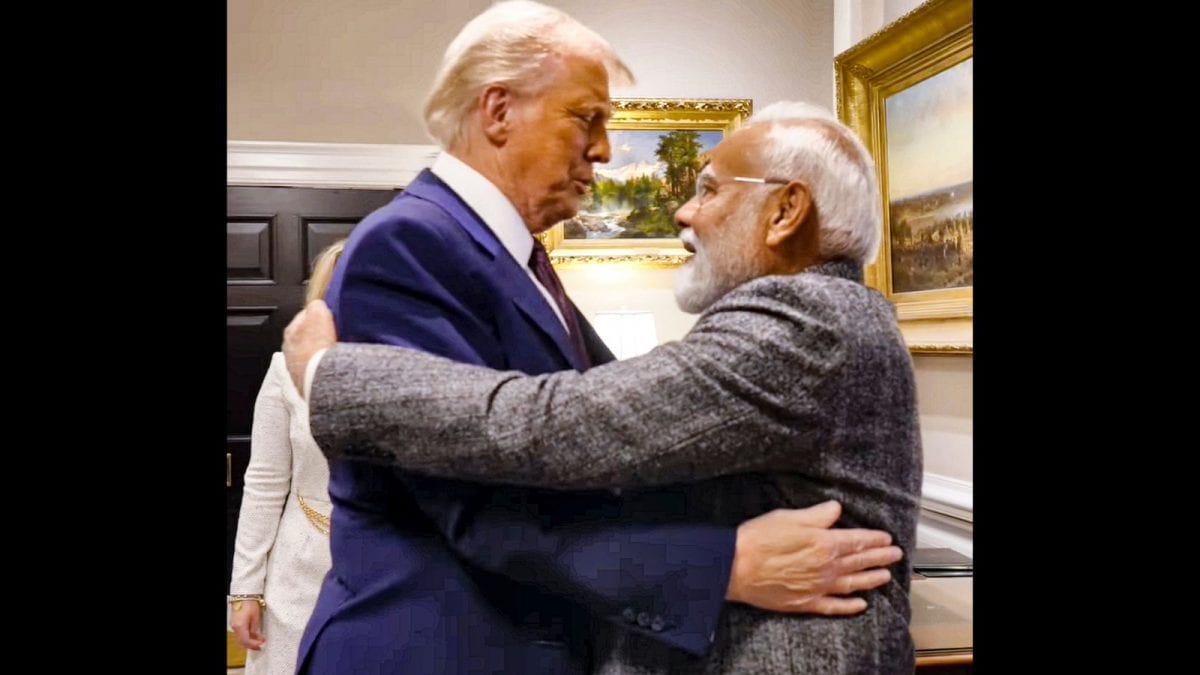
The specter of a global trade war looms large as US President Donald Trump prepares to implement reciprocal tariffs on both allies and competitors, starting April 2, 2025. This policy shift, aimed at “making America Rich Again,” according to Trump, has sent ripples of anxiety through the international economic community. Dartmouth College economics professor Douglas Irwin, in an interview with CNN-News18, offers a sobering assessment of the potential consequences, predicting a disintegration of the current world trading system. Irwin's insights highlight the complexities and potential pitfalls of Trump's protectionist policies, emphasizing the risks to US consumers and the global economy. He suggests that while India might find some opportunities amidst the chaos, it must tread carefully to avoid becoming a target of Trump's trade agenda. The core of Trump's argument, as Irwin points out, rests on the belief that other countries are taking advantage of the US, leading to trade imbalances. However, Irwin, echoing the consensus of most economists, disputes this claim, arguing that a trade deficit does not necessarily indicate exploitation. Instead, he emphasizes that tariffs will ultimately increase prices for American consumers, effectively hurting the US in an attempt to remedy trade deficits. This fundamental disagreement on the nature and consequences of trade imbalances underpins the broader debate surrounding Trump's trade policies. The imposition of tariffs has already triggered countermeasures from key trading partners like Canada, Mexico, and China, signaling the beginning of a trade war. Irwin warns that this escalation will further complicate international trade relations and potentially destabilize the global economy. He highlights the departure from the Most Favoured Nation trading status at the World Trade Organization (WTO) as a particularly concerning development, suggesting a move away from the principles of free and fair trade that have underpinned the global economy for decades. The potential for a US recession looms large in the context of Trump's trade policies. Irwin acknowledges the market's growing awareness of Trump's seriousness about imposing tariffs, even at an economic cost to the US and the world. This realization has already led to market corrections, and Irwin suggests that further corrections may be in store as the tariffs come into force. The uncertainty surrounding the scope and duration of the tariffs is also contributing to market volatility. While Trump's initial pronouncements suggested a broad-based application of tariffs, Irwin notes reports indicating a potential scaling back, targeting specific countries and products. The Secretary of Treasury's mention of the “Dirty 15” – the 15 countries with the largest trade deficits with the US, including India – further complicates the picture. The possibility of India being targeted by Trump's tariffs raises concerns about the impact on the Indian economy. However, Irwin offers a glimmer of hope, suggesting that the relationship between Prime Minister Narendra Modi and President Trump could potentially mitigate the negative impact. He posits a scenario where the US focuses on other countries, allowing India to benefit from trade diversion, similar to how Vietnam benefited from tariffs imposed on China during Trump's first term. This potential opportunity hinges on the strength of the personal relationship between Modi and Trump, which could influence Trump's perception of India. Despite the potential benefits, Irwin cautions India to be wary of a growing trade surplus with the US, as this could attract Trump's attention and lead to retaliatory measures. He emphasizes that personal relations, while important, are not a guarantee of protection from Trump's trade agenda. The fact that the Trump administration recognizes India's geopolitical advantage adds another layer of complexity to the situation. Irwin suggests that the US may act in India's favor due to its strategic importance as a valued partner. He notes that India has not been mentioned as frequently as China, Canada, Mexico, and the EU in Trump's trade rhetoric, further suggesting that it is not currently a primary target. However, he cautions that complacency would be a mistake, urging India to remain vigilant and proactive in managing its trade relationship with the US. The implications of Trump's trade policies extend far beyond the immediate economic consequences. They represent a fundamental challenge to the established global trading order and a shift towards protectionism and bilateralism. The future of the WTO and the principles of free and fair trade are at stake, as countries grapple with the uncertainty and instability created by Trump's actions. The situation highlights the need for international cooperation and dialogue to address trade imbalances and resolve disputes in a constructive manner. However, the current political climate makes such cooperation difficult, as countries prioritize their own interests and adopt retaliatory measures. The coming months will be crucial in determining the long-term impact of Trump's trade policies on the global economy. The decisions made by governments and businesses in response to these policies will shape the future of international trade and investment for years to come. As Irwin observes, the markets are already reacting to the uncertainty, and further volatility is likely as the tariffs come into force and the consequences become clearer. The situation calls for careful analysis, strategic planning, and proactive engagement by all stakeholders to mitigate the risks and seize any opportunities that may arise. Ultimately, the success of India in navigating this challenging landscape will depend on its ability to leverage its geopolitical advantages, maintain a strong relationship with the US, and manage its trade surplus in a sustainable manner.
The economist Douglas Irwin emphasizes the counter-productive nature of reciprocal tariffs, arguing that the costs will inevitably be passed on to US consumers. This perspective challenges the underlying rationale of Trump's trade policy, which aims to reduce trade deficits by imposing tariffs on imports. Irwin contends that simply importing more than exporting does not necessarily equate to being taken advantage of, a view widely supported by economists. Instead, he argues that tariffs act as a tax on consumers, increasing the prices of goods and services. This analysis highlights the potential for Trump's policies to backfire, hurting the very people they are intended to help. The focus on trade imbalances as the primary justification for tariffs also comes under scrutiny. Irwin suggests that Trump's obsession with trade deficits overlooks the broader economic benefits of international trade, such as increased competition, access to cheaper goods, and specialization. By prioritizing the reduction of trade deficits above all else, Trump risks undermining these benefits and harming the overall economy. The potential for trade diversion is another key concern. As tariffs are imposed on certain countries, businesses may shift their sourcing to other countries to avoid the tariffs. This can disrupt established supply chains and lead to inefficiencies, as businesses are forced to switch to less competitive suppliers. In the case of India, Irwin suggests that tariffs on countries like China, Canada, and Mexico could create opportunities for Indian businesses to increase their exports to the US. However, he cautions that this benefit could be short-lived if India's trade surplus with the US grows too large, attracting Trump's attention and leading to retaliatory measures. The political dimension of trade policy cannot be ignored. Irwin highlights the importance of the relationship between Prime Minister Modi and President Trump in shaping the US approach to India. A strong personal relationship could potentially shield India from the worst effects of Trump's trade policies, as Trump may be more willing to grant India preferential treatment. However, relying solely on personal relationships is a risky strategy, as political circumstances can change quickly. India must also focus on strengthening its economic ties with other countries and diversifying its export markets to reduce its dependence on the US. The uncertainty surrounding the implementation of Trump's trade policies further complicates the situation. Irwin notes that there have been reports of the tariffs being scaled back from their initial scope, potentially targeting only certain countries and products. This uncertainty makes it difficult for businesses to plan and invest, as they are unsure of the future trade environment. The “Dirty 15” list of countries with large trade deficits with the US adds another layer of complexity, as it is unclear whether India will be included in the final list of targets. The geopolitical implications of Trump's trade policies are also significant. Irwin suggests that the US may be more willing to act in India's favor due to its strategic importance as a valued partner. However, this geopolitical advantage does not guarantee protection from Trump's trade agenda. India must continue to engage with the US on a range of issues, including trade, security, and climate change, to maintain a strong and mutually beneficial relationship. The overall impact of Trump's trade policies on the global economy remains uncertain. While some countries may benefit from trade diversion, the potential for a global trade war is a serious threat. The breakdown of the established trading order could lead to increased protectionism, reduced trade flows, and slower economic growth. It is therefore crucial for countries to work together to resolve trade disputes and maintain a stable and predictable trading environment.
Ultimately, the interplay of economic realities and political dynamics will determine the fate of global trade under the Trump administration. Irwin's analysis serves as a crucial guide for understanding the complexities and potential consequences of Trump's policies. By highlighting the risks to US consumers, the potential for trade diversion, and the importance of political relationships, Irwin provides valuable insights for policymakers and businesses alike. Navigating this turbulent period will require careful planning, strategic engagement, and a commitment to international cooperation. The future of the global trading system hangs in the balance, and the decisions made in the coming months will have far-reaching consequences for the world economy.