
 |
|
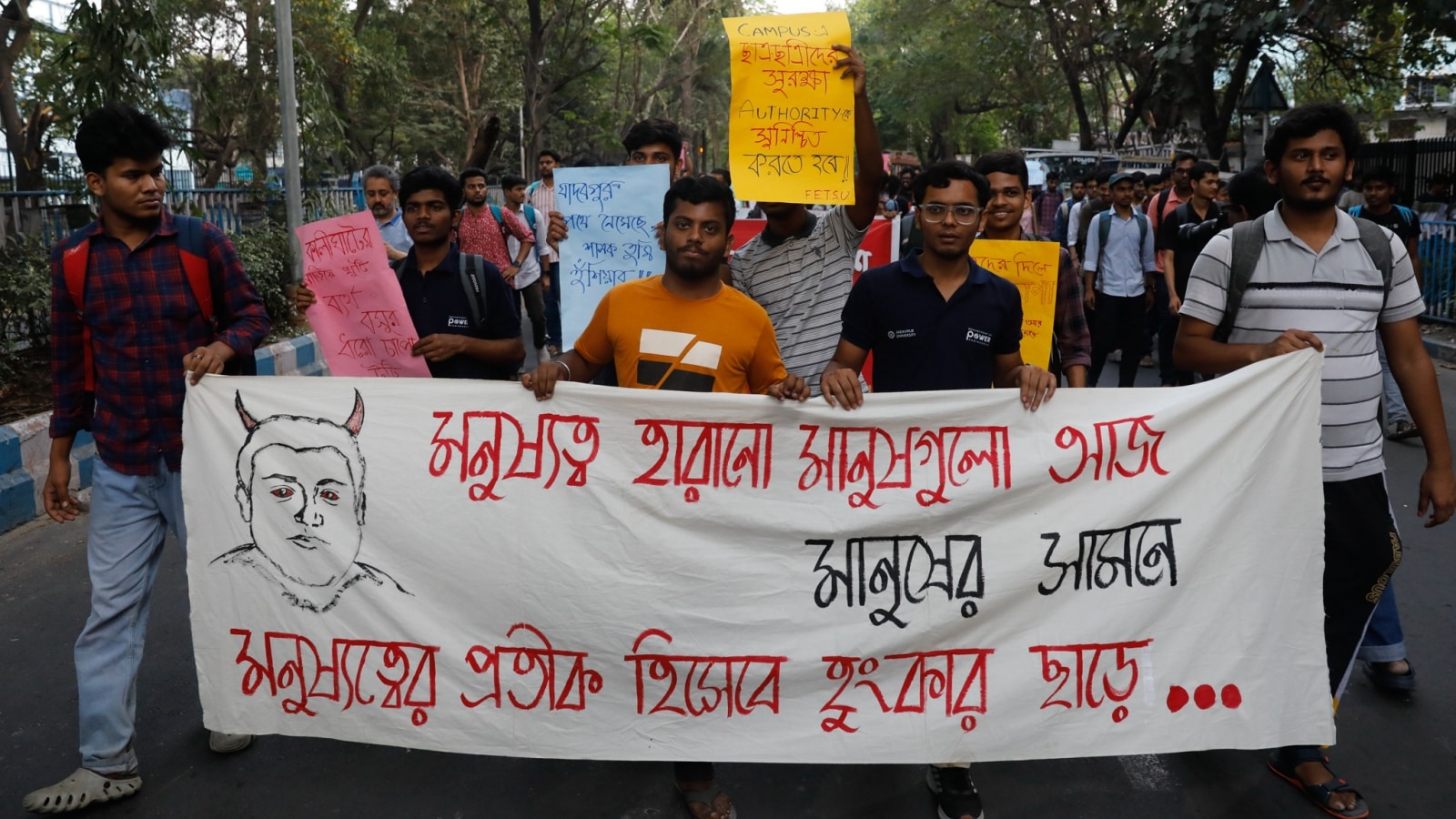
The recent events at Jadavpur University, culminating in a new policy requiring police to seek permission before entering the campus, underscore the complex relationship between law enforcement, academic institutions, and student activism. This decision, reached after a late-night meeting between university officials and students, follows a period of unrest sparked by protests against state education minister Bratya Basu, which allegedly turned violent on March 1st. The situation highlights the delicate balance universities must strike between ensuring campus safety, respecting institutional autonomy, and upholding students' rights to protest and express their political views. The new policy, in effect, seeks to reassert the university's control over its own grounds and limit the potential for external interference, particularly from law enforcement. This decision also reflects a long-standing tradition at Jadavpur University of maintaining a certain level of independence from state control, which is seen as essential for fostering an environment of free inquiry and critical thinking. However, such policies can also raise concerns about accountability and the ability of law enforcement to respond effectively to emergencies on campus. The issue of student elections, which served as a catalyst for the protests, remains unresolved. While the university administration has pledged to appeal to the state government for permission to hold elections, the final decision rests with the state. This underscores the limitations of university autonomy in matters of governance and the potential for political interference in academic affairs. The students' demand for elections reflects a desire for greater participation in university decision-making and a belief that their voices are not being adequately represented. The allegations of police harassment against students further complicate the situation, raising concerns about the proportionality of law enforcement's response to the protests. Students claim that their phones have been seized, hindering their academic work and potentially chilling their right to free speech. These allegations warrant a thorough investigation to ensure that students' rights are not being violated. The absence of the interim Vice Chancellor, Bhaskar Gupta, due to health reasons, adds another layer of complexity to the situation. His inability to attend the meeting, either physically or virtually, underscores the challenges of leadership during times of crisis and the importance of having strong and effective leadership in place to navigate complex issues. The incident involving Indranuj Roy, the student who was allegedly injured near the education minister's car, further highlights the risks associated with student protests and the potential for clashes between protesters and authorities. Roy's injuries, requiring hospitalization and ongoing medical care, serve as a stark reminder of the human cost of political unrest. His father's plea for normalcy to return to the university reflects a desire for a peaceful and productive learning environment, free from violence and disruption. The university's decision to cover Roy's medical expenses demonstrates a commitment to supporting its students and addressing the consequences of the protests. Overall, the situation at Jadavpur University is a complex and multifaceted one, involving issues of campus security, student activism, university autonomy, and political interference. The new policy regarding police entry onto campus represents an attempt to address these issues, but it is likely to be just one step in an ongoing process of negotiation and compromise. The key to resolving the situation will be open communication, mutual respect, and a commitment to finding solutions that serve the best interests of all stakeholders, including students, faculty, administrators, and the wider community. The events also raise broader questions about the role of universities in a democratic society. Should universities be bastions of free speech and critical thinking, even when those ideas challenge the status quo? Or should they be more closely aligned with the goals and priorities of the state? These are questions that have been debated for centuries, and there are no easy answers. Ultimately, the success of Jadavpur University in navigating these challenges will depend on its ability to uphold its core values of academic freedom and intellectual inquiry, while also ensuring the safety and well-being of its students and faculty.
The decision to mandate police permission before entering the Jadavpur University campus can be analyzed through several lenses, each offering a different perspective on the underlying issues and potential consequences. From a civil liberties perspective, the policy can be seen as a positive step towards protecting students' rights to privacy and freedom of assembly. By requiring police to seek permission before entering campus, the university is asserting its right to control its own space and limit the potential for unwarranted intrusions by law enforcement. This is particularly important in the context of student protests, where the presence of police can often have a chilling effect on free speech and discourage students from expressing their political views. However, from a law enforcement perspective, the policy could be seen as hindering their ability to respond effectively to emergencies on campus. If police are required to obtain permission before entering, this could delay their response to serious crimes or threats to public safety. Critics might argue that the policy prioritizes institutional autonomy over the safety and security of students and faculty. The university would need to establish clear protocols and communication channels to ensure that police can respond quickly and efficiently to emergencies, even while respecting the university's autonomy. From an administrative perspective, the policy represents an attempt to balance competing interests and maintain order on campus. The university administration is under pressure from both students and the state government to address the issues of campus security and student activism. By implementing this policy, the administration is hoping to appease both sides and create a more stable and predictable environment. However, the policy could also be seen as a sign of weakness or indecisiveness. Critics might argue that the administration is simply trying to avoid taking a strong stance on the issues and is instead deferring to the demands of both students and the state government. The success of the policy will depend on the university's ability to enforce it consistently and fairly. From a political perspective, the events at Jadavpur University are indicative of broader tensions between the state government and academic institutions in West Bengal. The issue of student elections has been a long-standing point of contention, with the state government often accused of interfering in university affairs. The protests against the education minister reflect a growing sense of discontent among students, who feel that their voices are not being heard. The university's decision to appeal to the state government for permission to hold elections highlights the limitations of its autonomy and the potential for political interference. The state government's response to the university's appeal will be closely watched by students and faculty, as it will be seen as a test of the government's commitment to academic freedom. The events at Jadavpur University are also relevant to broader debates about the role of universities in a democratic society. Universities are often seen as centers of intellectual inquiry and critical thinking, where students are encouraged to challenge conventional wisdom and question authority. However, universities are also subject to political and economic pressures, which can sometimes limit their ability to fulfill this role. The challenge for universities is to maintain their independence and autonomy, while also remaining engaged with the wider community. The events at Jadavpur University serve as a reminder of the importance of academic freedom and the need to protect universities from undue political interference.
Looking at the bigger picture, the situation at Jadavpur University mirrors similar tensions playing out at universities across the globe. Questions regarding the appropriate level of police presence on campus, the balance between free speech and safety, and the role of universities in political discourse are not unique to Jadavpur. Many universities grapple with these issues, often in the wake of protests or controversial speakers. The Jadavpur University case offers a valuable case study for other institutions navigating these challenges. The university's new policy requiring police permission could serve as a model for other institutions seeking to limit police presence on campus and assert greater control over their own grounds. However, it is important to note that the policy is not without its risks and limitations. Other universities considering similar policies should carefully weigh the potential benefits against the potential drawbacks, and they should develop clear protocols for ensuring that police can respond effectively to emergencies. The issue of student elections is also relevant to universities around the world. Many universities struggle to find ways to engage students in decision-making and ensure that their voices are heard. The Jadavpur University case highlights the importance of student participation in university governance and the need for universities to create meaningful opportunities for students to express their views. The allegations of police harassment against students are also a cause for concern. Universities have a responsibility to protect their students from undue harassment by law enforcement, and they should work to ensure that students' rights are respected. The Jadavpur University case underscores the importance of transparency and accountability in law enforcement, and the need for independent investigations into allegations of police misconduct. The role of university leadership is also critical in navigating these challenges. University leaders must be able to balance competing interests, maintain order on campus, and uphold the values of academic freedom and intellectual inquiry. The Jadavpur University case highlights the importance of strong and effective leadership in times of crisis. Finally, the Jadavpur University case serves as a reminder of the importance of communication and dialogue. The key to resolving the situation will be open communication, mutual respect, and a commitment to finding solutions that serve the best interests of all stakeholders. The university should engage in ongoing dialogue with students, faculty, administrators, and the wider community to address the underlying issues and build trust. In conclusion, the events at Jadavpur University are a complex and multifaceted issue with broader implications for universities around the world. The university's new policy requiring police permission, the issue of student elections, the allegations of police harassment, and the role of university leadership are all relevant to universities navigating similar challenges. By learning from the Jadavpur University case, other institutions can better prepare themselves to address these issues and create a more positive and productive learning environment for their students.