
) |
|
The article analyzes the significantly improved relationship between the United States and India following Donald Trump's return to the White House. It contrasts this with the perceived difficulties experienced during the Biden administration, highlighting instances of delayed defense supplies, postponed Quad meetings, alleged targeting of Indian intelligence agencies, and the indictment of an Indian businessman—actions that were later questioned by American lawmakers. The author argues that these actions were symptomatic of a 'Deep State' agenda driven by globalist forces aiming to undermine nationalist leaders under the guise of safeguarding democracy and human rights. The author credits Trump's election victory with disrupting this 'Deep State' influence, referencing his administration's actions against USAID, the reduction of agenda-driven questions at press conferences, and the extradition of the 26/11 Mumbai terror attack accused, Tahawwur Rana, to India as clear signs of this shift.
A key aspect of the improved relationship is the transactional nature of the Trump administration's approach to foreign policy. While acknowledging Trump's focus on 'America First,' the author contends that this approach, devoid of ideological constraints, has surprisingly benefited India. This is exemplified by the frank discussion regarding tariffs. Trump's call for 'reciprocal tariffs' on India, despite being framed as a challenge, is presented as a necessary step toward more equitable trade relations. The author suggests that this 'bitter pill' of reduced tariff rates might ultimately prove beneficial to the Indian economy, particularly considering the potential advantages of participating in diversifying global supply chains. The joint statement following the Modi-Trump meeting reinforces this transactional approach, outlining goals for a mutually beneficial trade agreement and increased bilateral trade.
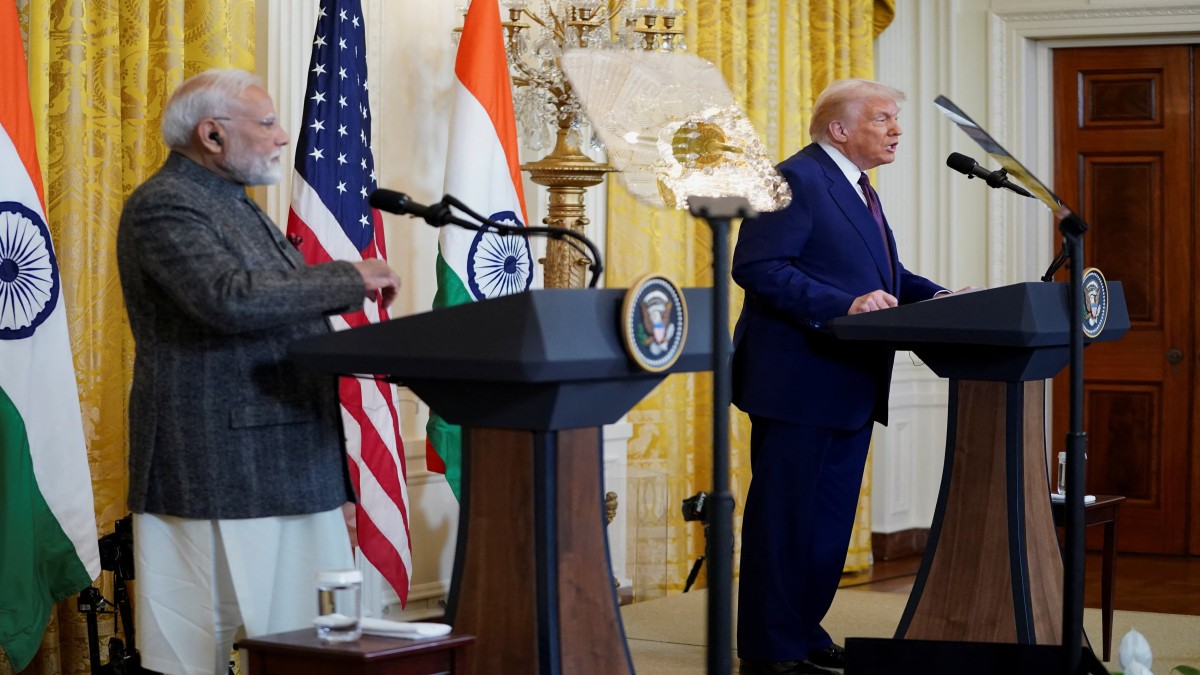
The author further emphasizes the symbolic significance of the interactions between Modi and Trump. The warm reception, including a hearty embrace and Trump's gesture of pulling a chair for Modi, is contrasted with the perceived coldness and hostility of the previous administration. These gestures symbolize the restoration of trust and the potential for a stronger, more authentic partnership. The appointment of key figures in the Trump administration, including Secretary of State Marco Rubio and Director of National Intelligence Tulsi Gabbard, both strong advocates for close India-US partnership and skeptical of China, further underscores the positive trajectory of the relationship. The nomination of Paul Kapur as assistant secretary of state for South Asian affairs, a known critic of the Biden-era India policy and a strong supporter of close India-US ties, is cited as another indicator of the shift towards a more realist and transactional approach to US foreign policy.
The author concludes that while challenges remain, such as the issue of tariffs, Trump's actions have fundamentally served India's interests by curtailing the influence of the 'Deep State' and creating a platform for a more genuine partnership. The transactional nature of this relationship, while criticized by some as lacking ideological depth, is posited as a significant improvement for India, which previously faced interference in its domestic affairs. The author suggests that this pragmatic approach allows for a more effective and mutually beneficial relationship, focusing on concrete gains rather than ideological battles. The article subtly implies that a focus on trade negotiations, although seemingly confrontational, could ultimately lead to broader cooperation across diverse domains, positioning the US-India partnership for a potentially transformative future.