
 |
|
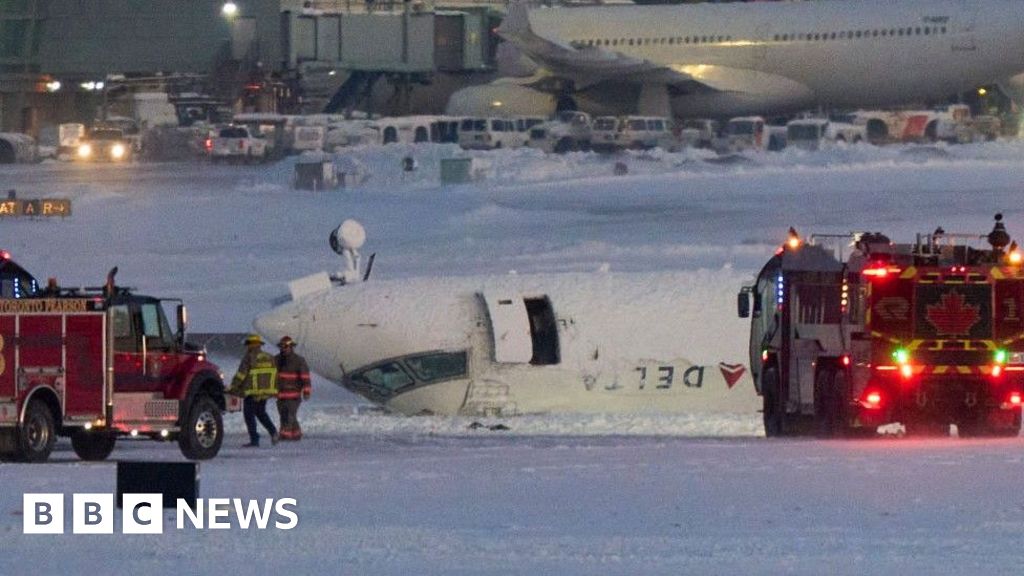
On Monday, Delta Air Lines flight DL4819, a CRJ-900 aircraft en route from Minneapolis to Toronto, experienced a dramatic landing incident. The plane, carrying 76 passengers and four crew members, skidded upon landing, ultimately flipping over on the runway. Despite the severity of the incident, which included a brief period of flames visible from the aircraft, all 80 individuals on board miraculously survived. While 18 passengers sustained injuries, only a few are considered serious. This remarkable outcome is attributed to a combination of factors, including the plane's structural integrity, the safety features incorporated into the aircraft design, and the swift response of emergency services and the crew themselves. The investigation into the cause of the crash is ongoing, but initial reports suggest that a confluence of circumstances, including weather conditions and possibly a collision with an object on the runway, may have played significant roles.
The sequence of events leading to the plane's inversion remains under scrutiny. Expert analysis points to several potential contributing factors. Journalist and FAA-licensed pilot Dan Ronan hypothesizes that the right wing might have impacted the runway or a runway object, such as a light. This impact could have destabilized the aircraft, leading to the subsequent flip. Weather conditions are also considered a major possibility. Though the runway was reported to be dry, strong winds and frigid temperatures were present at the time of landing. Air traffic controllers had informed the pilots of 38 mph gusts and a possible slight bump in the glide path. This adverse weather likely complicated the landing, potentially contributing to the plane's instability. Evidence suggests the pilots may have employed a crab manoeuvre – aligning the plane's longitudinal axis into the wind to counteract the crosswind before correcting to the runway at the last moment. However, there seems to have been a hard landing, with a high rate of descent and possible initial contact with one wheel, leading to a potential collapse of the landing gear.
The extraordinary survival of all passengers and crew highlights the effectiveness of modern aviation safety measures. The plane's fuselage remained largely intact, a crucial factor in preventing widespread injuries or fatalities. The aircraft's high-impact 16G seats, designed to absorb significant force, played a vital role in protecting occupants from the impact forces. The design of the plane itself, with features ensuring passenger safety even during a crash, such as the separation of the wing preventing the fuselage from catastrophic ripping apart, also significantly contributed to this outcome. Furthermore, the efficient work of flight attendants in evacuating passengers from the inverted aircraft, combined with the quick response and heroic efforts of ground emergency crews, minimized the time passengers were exposed to potential harm. The passengers' cooperation and support for one another during and after the crash are also commendable, creating a supportive environment which undoubtedly aided recovery and assisted in a rapid and organised evacuation from the overturned aircraft. These elements, combined with the effective use of safety restraints like seatbelts, significantly contributed to the positive outcome.
While the specific cause of the Toronto plane crash remains under investigation, the incident underscores the complex interplay of factors influencing aviation safety. Further investigation will scrutinize the pilots' actions, the aircraft's mechanical condition, and the prevailing weather conditions to determine the precise sequence of events. The event also serves as a reminder of the crucial role of multiple safety measures – from aircraft design and construction to pilot training, air traffic control procedures, and the immediate response of emergency services – in mitigating risks and ensuring passenger safety. The investigation's findings will likely lead to recommendations for enhancing aviation safety protocols and procedures to prevent similar incidents in the future. The remarkable outcome – a complete survival of all onboard despite a dramatic crash – serves as a testament to the effectiveness of modern aviation safety systems and the rapid, coordinated response of all involved.
Source: Why did a plane crash in Toronto, and how did everyone survive?