
 |
|
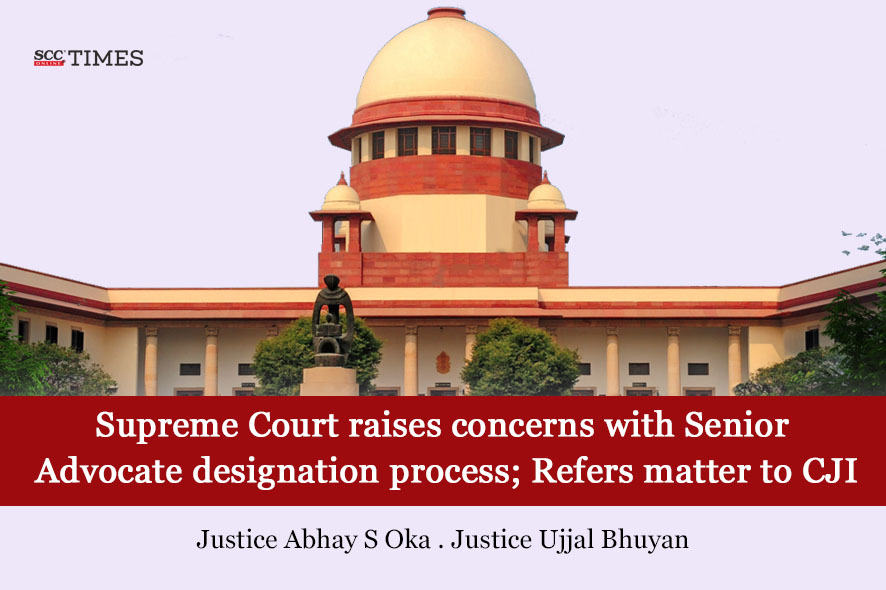
The Supreme Court of India, in a recent decision, has raised significant concerns regarding the process of designating lawyers as Senior Advocates. A Division Bench comprising Justices Abhay S Oka and Ujjal Bhuyan highlighted these concerns, prompting a referral of the matter to the Chief Justice of India, Sanjiv Khanna. While the Bench explicitly stated that no disrespect was intended towards the guidelines established in the Indira Jaising cases of 2017 and 2023, the ruling indicates a perceived inadequacy within the current system. The core issue centers around the suitability and thoroughness of the current selection process, specifically the interview component. The judges questioned whether the interview format is sufficiently robust to accurately assess an advocate's personality and overall suitability for the prestigious designation of Senior Advocate. This raises fundamental questions about the fairness and efficacy of the existing framework.
The decision underscores a critical element often overlooked in discussions of legal appointments: the subjective nature of evaluating an individual's fitness for a position of elevated status and responsibility. The designation of Senior Advocate is not merely a title; it represents a recognition of exceptional legal expertise, professional ethics, and contributions to the field. It carries weight not only in terms of professional prestige but also in influencing the course of legal proceedings and the shaping of legal precedents. The Court's concerns highlight the need for rigorous standards to maintain the integrity and credibility of this designation. The interview process, as the Bench suggested, might not adequately capture the nuances of an advocate's character, experience, and ethical conduct, which are equally vital considerations. The implication is that the existing process might be overlooking crucial aspects that are essential for a fair and objective evaluation.
The referral to the Chief Justice of India for consideration of a larger bench signifies the gravity of the issues at stake. The composition of a larger bench suggests the potential for a more comprehensive and in-depth review of the current guidelines and processes. This could lead to a comprehensive overhaul of the system, incorporating measures to enhance objectivity, transparency, and fairness. Potential changes could include revised interview protocols, the inclusion of diverse perspectives in the evaluation process, or the establishment of more clearly defined criteria for assessment. This move also points towards a commitment to ongoing evaluation and improvement within the judicial system itself, reflecting a self-reflective approach to ensuring the continued efficacy and legitimacy of its procedures. The decision highlights the importance of maintaining public confidence in the integrity of the legal profession and the mechanisms used to recognize outstanding legal practitioners.
Furthermore, the Court's emphasis on the designation as a 'privilege' conferred by the Court, rather than a right claimed by the advocate, underscores the hierarchical structure within the legal profession and the responsibility that comes with such a privilege. This is not simply a matter of personal achievement; it carries with it responsibilities toward the profession, the courts, and the broader legal system. The Court's concern extends beyond the individual applicant to the broader implications for the legal profession as a whole. A flawed selection process risks diminishing the prestige of the designation and potentially undermining public trust in the legal system. The ultimate goal is to ensure that only those who truly exemplify the highest standards of legal expertise, integrity, and ethical conduct are conferred with this prestigious title.
In conclusion, the Supreme Court's decision to refer the matter to the Chief Justice of India for consideration of a larger bench highlights a crucial need for a critical review of the process for designating Senior Advocates. The concerns raised regarding the sufficiency of the interview process, coupled with the broader implications for maintaining the integrity of the legal profession, underscore the importance of establishing a fair, transparent, and robust system for evaluating candidates. The outcome of this review will have significant implications not only for aspiring Senior Advocates but also for the future of the legal profession in India and its ability to uphold the highest standards of justice and ethical conduct.
Source: Supreme Court raises concerns with Senior Advocate designation process; Refers matter to CJI