
 |
|
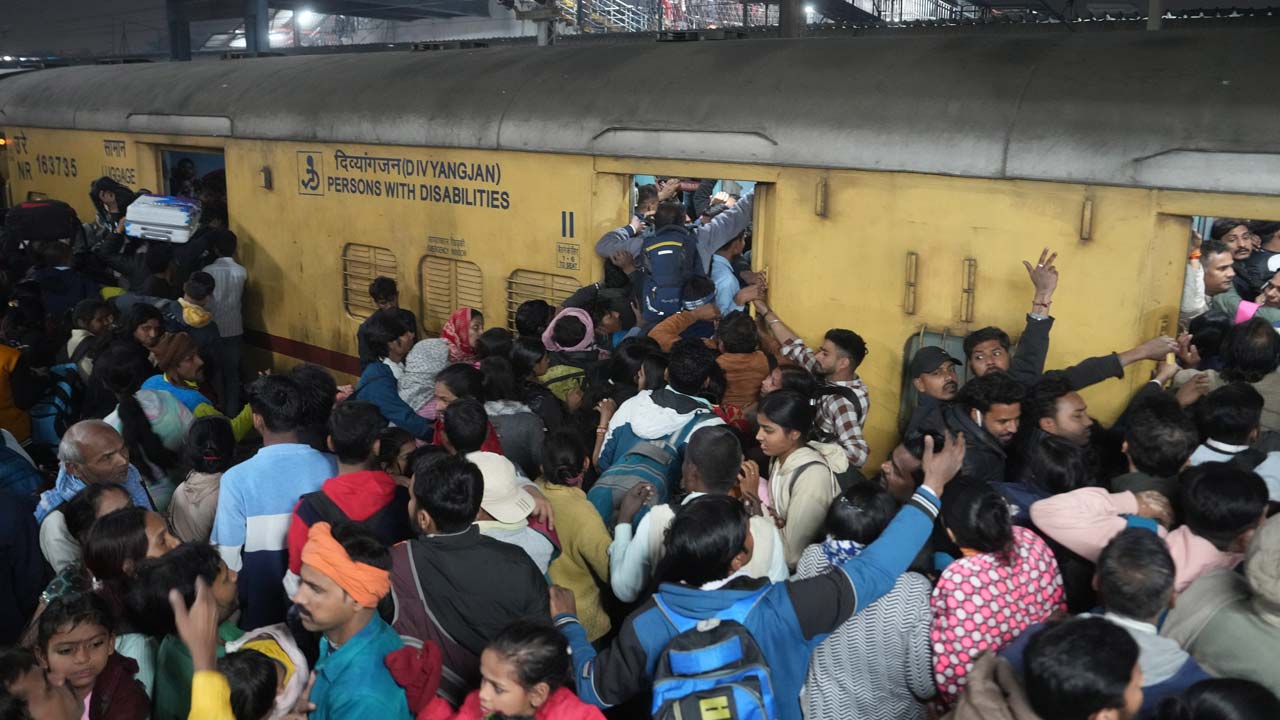
The Supreme Court's refusal to entertain the plea regarding the alleged New Delhi railway station stampede raises several important questions about the court's role in addressing public safety concerns and the accessibility of justice for victims of such incidents. While the court's decision is brief and lacks detailed reasoning in the given article, it's crucial to analyze the potential motivations behind such a decision and its broader implications. The court's action could be interpreted in several ways. Firstly, the court might have deemed the plea inadmissible due to a lack of verifiable evidence supporting the claim of a stampede resulting in over 200 deaths. The legal system relies heavily on factual accuracy, and without substantial proof, the court might have considered the plea unsubstantiated and therefore not worthy of judicial intervention. Secondly, the court might have felt that the issue falls under the purview of the executive branch or other relevant authorities responsible for railway safety and crowd management. The judiciary often avoids intervening in matters that are primarily within the domain of other government branches, adhering to the principle of separation of powers. In this case, the court might have believed that directing authorities on crowd management would overstep its boundaries and encroach upon the responsibilities of the railway administration and other relevant agencies. Thirdly, the court might have been concerned about opening the floodgates to similar petitions, potentially overburdening the judicial system with matters that are more appropriately addressed through administrative or legislative channels. The court's resources are finite, and it must prioritize cases that involve fundamental rights violations or significant legal questions. Entertaining every plea related to public safety incidents, especially those lacking strong evidentiary support, could strain the court's capacity and hinder its ability to address more pressing legal issues. However, the court's decision also raises concerns about the accountability of authorities responsible for railway safety and the potential for injustice to victims of such incidents. If a stampede did indeed occur, resulting in significant casualties, it's imperative that the relevant authorities conduct a thorough investigation to determine the causes and implement measures to prevent future occurrences. The lack of judicial intervention in this case could be perceived as a setback for those seeking justice and accountability for alleged negligence or mismanagement. It's also important to consider the potential impact of this decision on public trust in the judiciary. If the public perceives the court as being unresponsive to their concerns about public safety, it could erode confidence in the legal system and undermine its legitimacy. Therefore, it's crucial for the court to provide clear and transparent explanations for its decisions, especially in cases that involve matters of public interest. Furthermore, the lack of detailed information in the article makes it difficult to fully assess the merits of the plea and the rationale behind the court's decision. More information is needed about the specific grounds on which the plea was based, the evidence presented to the court, and the arguments made by both sides. Without such information, it's challenging to form a comprehensive understanding of the case and its implications. The media also has a responsibility to provide accurate and balanced reporting on such matters, avoiding sensationalism and ensuring that all perspectives are represented. In conclusion, the Supreme Court's refusal to entertain the plea regarding the alleged New Delhi railway station stampede is a complex issue with potential implications for public safety, accountability, and public trust in the judiciary. While the court's decision might be justified based on legal principles and procedural considerations, it's crucial to ensure that the underlying concerns about railway safety and the potential for injustice to victims of such incidents are addressed effectively through alternative channels. Further investigation and transparency are needed to shed light on the circumstances surrounding the alleged stampede and the reasons behind the court's decision.
The absence of detailed reasoning behind the Supreme Court's decision forces us to speculate on several possibilities regarding the nature of the plea itself. Was the petition filed prematurely, lacking sufficient investigation and corroboration from relevant authorities? Often, the courts require a level of due diligence and initial investigation by governmental bodies before they are willing to intervene. This is particularly true in matters involving alleged negligence or systemic failures within large organizations like the railway system. The petitioner's failure to demonstrate prior engagement with the railway authorities or present evidence of their lack of responsiveness could have been a significant factor in the court's decision. Furthermore, the court might have questioned the locus standi of the petitioner. Locus standi refers to the legal standing to bring a case before the court. Generally, only those who are directly affected by an action or have a demonstrable interest in the outcome can file a petition. The court might have determined that the petitioner lacked the necessary connection to the alleged victims or the incident itself to justify their intervention. This is a common hurdle in public interest litigation, where individuals or organizations seek to address broader societal issues without necessarily being directly impacted themselves. The court has often been cautious in granting standing in such cases, recognizing the potential for abuse and the need to maintain a clear distinction between judicial and executive functions. Another possibility is that the court found the plea to be vague or lacking in specific demands. A successful petition typically requires clear and concise requests for specific actions to be taken by the authorities. A plea that simply seeks general directions on crowd management without outlining concrete measures or identifying specific deficiencies might be deemed insufficient by the court. The court might have felt that granting such a broad and undefined request would be impractical and difficult to enforce. Moreover, the court could have been influenced by the potential for political motivation behind the plea. In a politically charged environment, it is not uncommon for individuals or organizations to use the courts to advance their own agendas or to embarrass political opponents. The court is often wary of becoming embroiled in political disputes and strives to maintain its impartiality and independence. If the court perceived the plea as being primarily motivated by political considerations, it might have been reluctant to entertain it. The timing of the plea could also have been a factor. If the petition was filed shortly before an election or during a period of heightened political activity, the court might have been more skeptical of its genuineness and more cautious about intervening. The court is aware of the potential for its decisions to be politicized and strives to avoid actions that could be interpreted as taking sides in a political contest. Finally, it is important to acknowledge the inherent limitations of the judicial process. The courts are not equipped to solve all societal problems or to prevent every tragedy from occurring. The judiciary plays a vital role in upholding the rule of law and protecting individual rights, but it is not a substitute for effective governance, responsible management, and individual accountability. The court's decision in this case might reflect a recognition of these limitations and a reluctance to assume responsibility for matters that are primarily within the domain of other branches of government.
Examining the role of the media in reporting on incidents like the alleged New Delhi railway station stampede is crucial to understanding the complexities surrounding the Supreme Court's decision and its potential impact on public perception. The media serves as a vital bridge between the public and the institutions of power, including the judiciary. Its role is to inform, investigate, and hold those in authority accountable. However, the media's performance in this regard is often subject to various influences, including commercial pressures, political biases, and the pursuit of sensationalism. In the context of the alleged stampede, the media's initial reporting could have significantly influenced the Supreme Court's decision. If the media presented the incident as a confirmed fact with overwhelming evidence of negligence on the part of the railway authorities, it might have created a sense of public urgency and pressure on the court to intervene. Conversely, if the media coverage was limited, speculative, or contradictory, it could have undermined the credibility of the alleged incident and made the court more hesitant to take action. The media's framing of the issue is also crucial. If the media focused on the plight of the alleged victims and their families, it could have elicited greater public sympathy and support for the plea. However, if the media framed the issue as a political dispute or a potential threat to the railway system's reputation, it could have diverted attention from the human cost of the alleged incident. The media's sources of information are also a critical factor. If the media relied solely on unsubstantiated claims or anonymous sources, it could have disseminated misinformation and distorted the public's understanding of the events. Conversely, if the media conducted thorough investigations and consulted with independent experts, it could have provided a more accurate and reliable account of the incident. The media's relationship with the government and other powerful institutions can also influence its reporting. If the media is overly reliant on government sources or susceptible to political pressure, it might be reluctant to criticize the authorities or to challenge their version of events. Conversely, if the media is independent and adversarial, it might be more willing to scrutinize the government's actions and to hold it accountable for any alleged wrongdoings. Furthermore, the rise of social media has added another layer of complexity to the media landscape. Social media platforms can be powerful tools for disseminating information and mobilizing public opinion, but they can also be breeding grounds for misinformation, rumors, and hate speech. The media's role in verifying and contextualizing information from social media is crucial to preventing the spread of false or misleading narratives. In the case of the alleged stampede, social media might have played a significant role in shaping public perception of the incident. If social media users shared graphic images or videos of the alleged victims, it could have amplified the sense of outrage and urgency. However, if social media users also spread rumors or conspiracy theories about the incident, it could have undermined the credibility of the allegations. In conclusion, the media's role in reporting on incidents like the alleged New Delhi railway station stampede is multifaceted and complex. The media has the power to inform, investigate, and hold those in authority accountable, but its performance is often subject to various influences that can compromise its objectivity and accuracy. It is crucial for the public to be critical consumers of media and to seek out diverse sources of information to form a balanced understanding of complex issues. The courts, in turn, must carefully evaluate the evidence presented to them, regardless of the media's portrayal of events, to ensure that their decisions are based on facts and legal principles rather than public pressure or political considerations.
Source: Top Court Refuses To Entertain Plea On New Delhi Railway Station Stampede