
 |
|
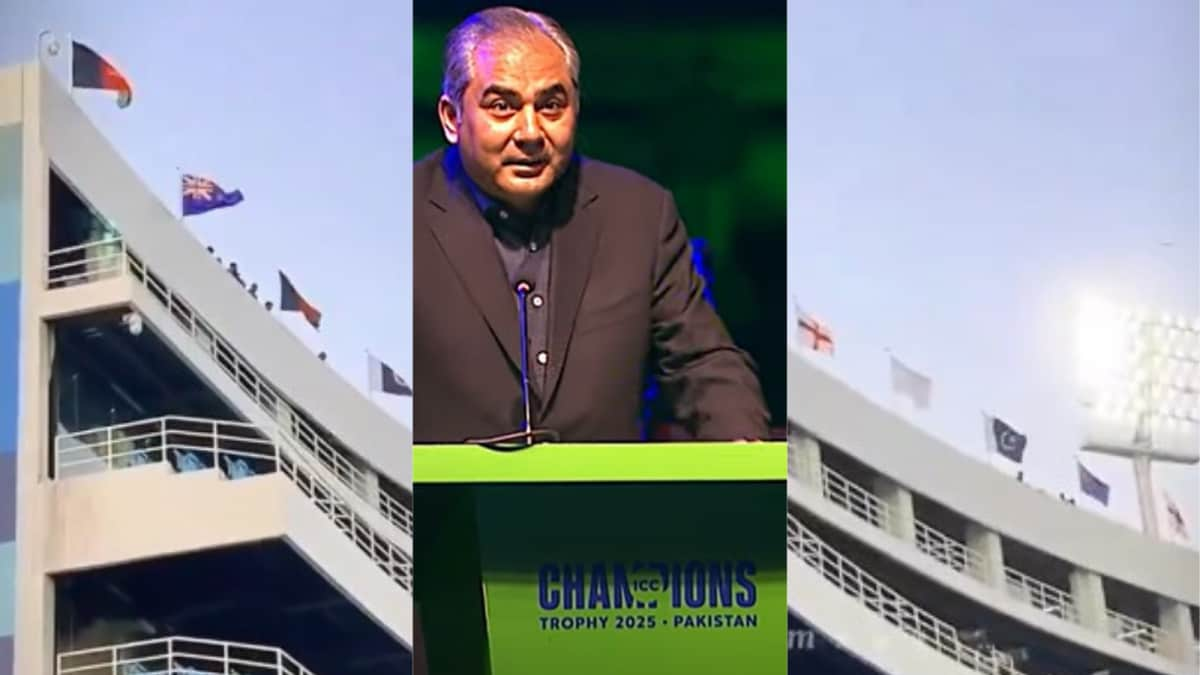
The absence of the Indian flag at the Gaddafi Stadium in Lahore during the Champions Trophy curtain raiser has sparked considerable attention and discussion. This omission, preceding the start of the tournament on February 19th, highlights the complex geopolitical realities shaping the sporting event. While flags representing seven other participating nations were prominently displayed, the Indian tri-color was noticeably absent, raising questions about the diplomatic sensitivities surrounding India's participation in the tournament. The decision by India not to play their matches on Pakistani soil due to security concerns underscores the deeper political tensions between the two nations, casting a shadow over what should be a purely sporting competition. This situation emphasizes the intermingling of sports and international relations, where events on the field can be significantly influenced by off-field political dynamics.
The Pakistan Cricket Board (PCB), organizing the tournament, made the decision to play all Indian matches in the UAE, a neutral venue. This decision, though impacting the tournament's atmosphere and potentially reducing spectator engagement in Pakistan, was considered necessary to ensure the safety and security of the Indian team. The PCB's head, Mohsin Naqvi, emphasized the importance of the Champions Trophy as a 'momentous occasion' for Pakistan, highlighting the country's hospitality and passion for cricket. However, the absence of the Indian flag serves as a stark reminder of the difficulties in separating sports from the larger political context, especially when dealing with deeply rooted tensions between competing nations. This raises questions about the future of cricketing ties between India and Pakistan, and the ability to foster sporting cooperation despite political differences.
The Champions Trophy, returning to Pakistan after a 29-year hiatus, holds immense significance for the country. The tournament, taking place across multiple cities in Pakistan including Karachi, Lahore, and Rawalpindi as well as in Dubai, aims to showcase Pakistan's capability to host major international sporting events. Despite India's decision to play in a neutral venue, the PCB remains committed to putting on a successful tournament. The tournament's structure, with a group stage followed by semi-finals, is a standard format. The group stage pairings see Pakistan grouped with New Zealand, India, and Bangladesh, while Australia, England, South Africa, and Afghanistan complete the other group. The top two teams from each group will advance to the semi-finals, setting the stage for a thrilling contest. The tournament's success will not only depend on the quality of cricket displayed but also on successfully managing the geopolitical intricacies that continue to shape the dynamics between participating nations.
The incident surrounding the missing Indian flag, while seemingly a minor detail, speaks volumes about the delicate balance between sports and politics. It underscores the challenges of hosting international events in regions with significant geopolitical tensions. The PCB’s decision to relocate India’s matches is a pragmatic response to security concerns but also a symbolic acknowledgement of the limitations imposed by the political climate. The broader implication is that while sporting events can unite people through their shared passion for the game, they can also become a stage for playing out larger political narratives and conflicts. The Champions Trophy 2025 thus serves as a compelling case study of how international sports events can be simultaneously a celebration of sporting prowess and a reflection of the complex geopolitical landscape in which they are situated. The absence of the Indian flag, therefore, stands not just as a physical absence, but as a symbolic representation of the ongoing challenges in achieving complete sporting harmony in a world marked by political divisions and regional tensions.