
 |
|
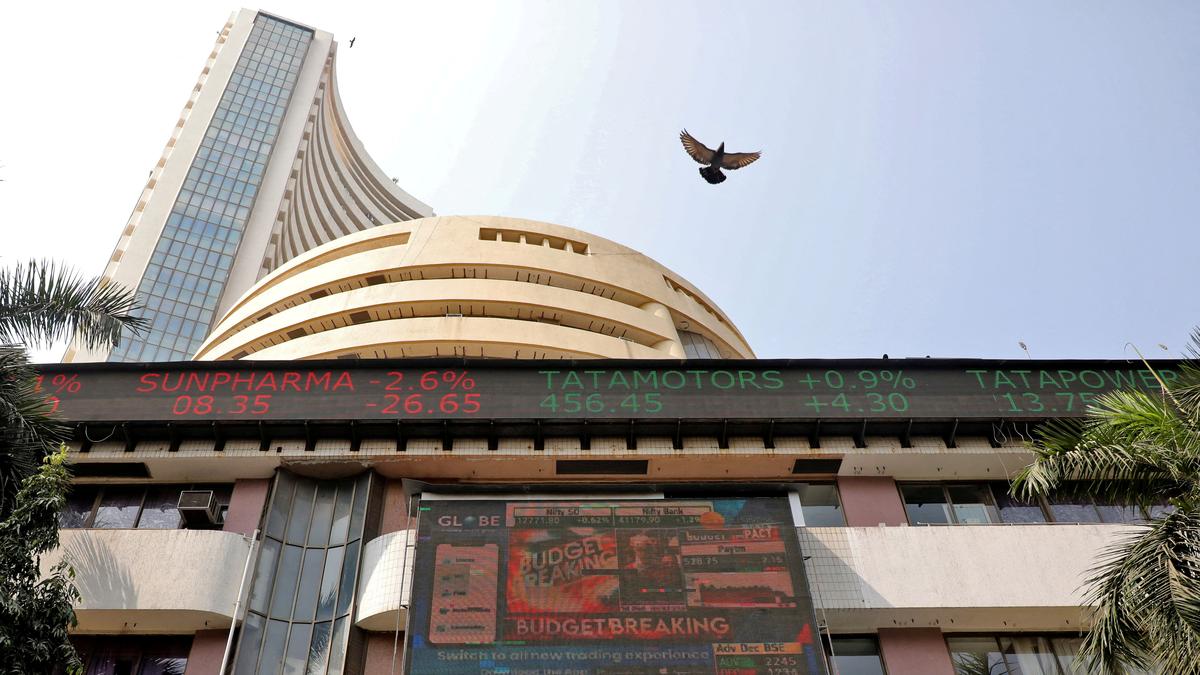
The Indian stock market experienced a three-day downturn, with benchmark indices Sensex and Nifty declining significantly on February 20, 2025. This decline was attributed to a confluence of factors, primarily fueled by anxieties surrounding potential new US tariffs on Indian goods. The uncertainty created by these tariff threats led to a considerable weakening of investor confidence, prompting a wave of selling across major sectors. The Sensex, a key indicator of the Bombay Stock Exchange (BSE), plummeted by 203.22 points (0.27%), closing at 75,735.96. The intraday low was even more pronounced, reaching a drop of 476.17 points (0.62%) to 75,463.01. Similarly, the Nifty 50 index, a benchmark for the National Stock Exchange (NSE), experienced a downturn of 19.75 points (0.09%), settling at 22,913.15. This downward trend was not isolated to a single sector; it impacted a broad swathe of the market, demonstrating a widespread lack of confidence among investors.
A key driver of the market's negative performance was the considerable outflow of foreign capital. Foreign Institutional Investors (FIIs), significant players in the Indian stock market, offloaded equities worth ₹1,881.30 crore on Wednesday, February 19, 2025, following a brief respite on the preceding day. This substantial sell-off further exacerbated the downward pressure on the market indices, as FIIs' investment decisions often significantly influence market trends. The anticipated inflationary pressures stemming from the proposed trade policy further dampened investor enthusiasm. The recent minutes from the Federal Reserve (Fed) meetings suggested a potential delay in any interest rate cuts, adding another layer of concern for investors already grappling with the uncertainty surrounding tariffs and capital outflows. This combination of factors – tariff threats, FII sell-off, and the prospect of delayed rate cuts – created a perfect storm that negatively impacted investor sentiment and drove the market's decline.
The negative trend in the Indian markets was mirrored in several key Asian markets. Seoul, Tokyo, Shanghai, and Hong Kong all ended the trading day in negative territory, signaling a broader regional trend of market weakness. This regional trend underscored the interconnectedness of global financial markets and highlighted how events in one region can significantly impact others. In contrast, European markets exhibited a more mixed performance, with most indices trading higher, indicating a divergence in global market sentiment. The contrasting performance between Asian and European markets indicates the diverse and complex factors influencing global stock markets. U.S. markets, however, concluded Wednesday's trading session in positive territory, providing some degree of counterbalance to the negative sentiment prevalent in Asian and Indian markets. The performance of U.S. markets serves as a reminder that global financial markets are characterized by dynamism and are frequently impacted by multifaceted and often unpredictable factors.
Among the Sensex components, several frontline stocks witnessed significant losses, contributing to the overall decline. HDFC Bank and ICICI Bank, two of India's largest private sector banks, experienced substantial selling pressure, pulling down the key indices. Other notable laggards included Maruti, Tech Mahindra, HCL Tech, ITC, Kotak Mahindra Bank, and Bajaj Finance. However, not all stocks followed the downward trend. Some companies, such as NTPC, Adani Ports, Mahindra & Mahindra, Tata Steel, and IndusInd Bank, bucked the negative sentiment and registered gains. This divergence in performance underlines the sector-specific dynamics at play within the broader market downturn. The price of the oil benchmark Brent crude also experienced a slight uptick, increasing by 0.08% to $76.10 a barrel, adding another layer of complexity to the economic factors influencing the market's performance. This seemingly small fluctuation in oil prices could still have subtle ripple effects throughout various sectors of the Indian economy.
The overall decline of the Sensex and Nifty on February 20th was a continuation of the downward trend observed in the previous two days. The Sensex had dipped by 28.21 points (0.04%) to 75,939.18 on Wednesday, while the Nifty fell by 12.40 points (0.05%) to 22,932.90. This consistent pattern of decline points to a more enduring concern among investors, emphasizing the need for a deeper understanding of the underlying reasons for this market weakness. The situation underscores the volatility inherent in financial markets and the interconnectedness of global economic factors. Future market performance will likely be significantly influenced by the resolution of the uncertainty surrounding US tariffs, FII sentiment, and broader global economic conditions. Analysts and investors will be keenly monitoring developments in these areas to assess the potential for future market fluctuations.
Source: Stock markets fall for 3rd day amid uncertainty over U.S. tariff measures, weak Asian peers