
 |
|
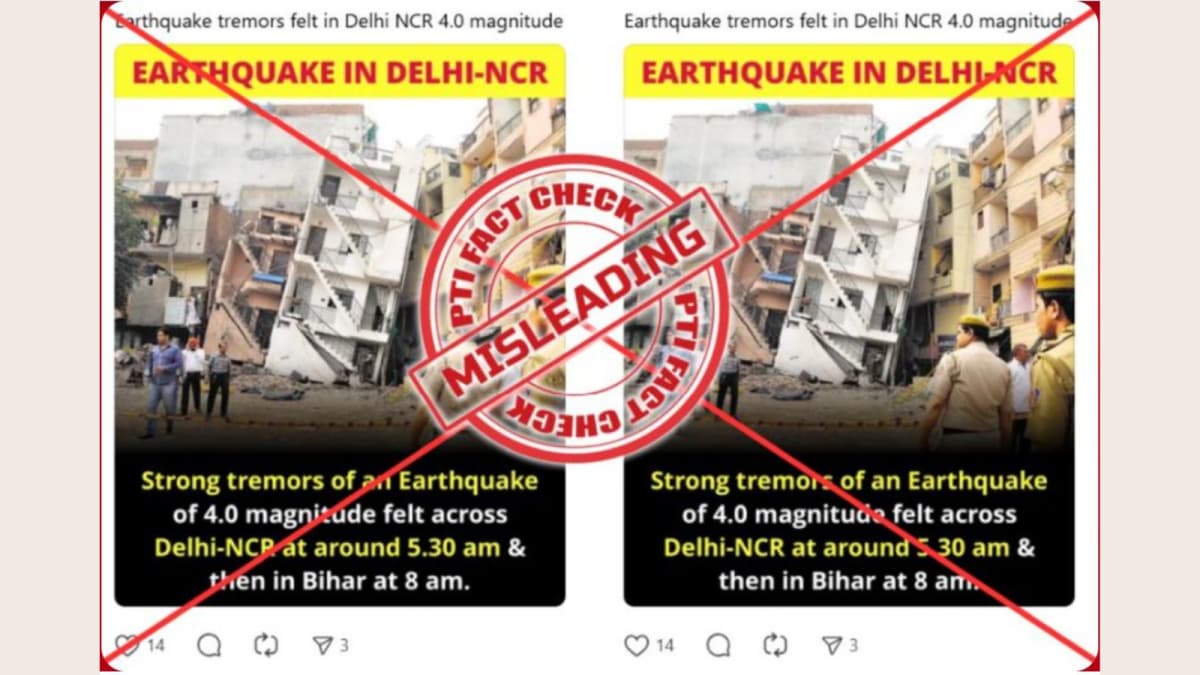
The recent 4.0 magnitude earthquake that struck Delhi-NCR on February 17, 2025, triggered a wave of social media activity, much of it accurate reporting on the event itself and its impact. However, amidst legitimate news and concerns, a false narrative emerged, rapidly spreading a misleading image. This image, depicting a partially collapsed building, was falsely attributed to the damage caused by the February 17th earthquake. The rapid dissemination of this misinformation highlights the challenges in effectively combating the spread of false information in the digital age, especially during times of crisis or heightened public concern.
A thorough investigation by the PTI Fact Check Desk revealed the true origin of the viral image. The photograph, widely shared across various social media platforms, including Twitter and Instagram, actually dates back to 2015. It depicts the aftermath of a separate building collapse in Delhi that occurred following an earlier earthquake in November of that year. This earlier incident, reported by the Hindustan Times on November 9th, 2015, involved a four-story building's partial collapse in an unauthorized colony in Safdarjung Enclave. The 2015 report detailed the fear and concern among residents about the possibility of further collapses in neighboring buildings. The clear discrepancy between the image's timestamp and the date of the recent earthquake strongly suggests intentional or unintentional misinformation.
The propagation of this false image emphasizes the importance of media literacy and critical thinking skills in today's digital landscape. The ease with which misleading content can be created and disseminated necessitates a proactive approach to verifying information before sharing it. This particular instance serves as a cautionary tale, highlighting how easily a seemingly innocuous image can be manipulated and used to propagate false narratives, potentially causing unnecessary alarm and confusion. The role of fact-checking organizations, such as the PTI Fact Check Desk, becomes crucial in identifying and debunking such misinformation, ensuring that accurate information reaches the public swiftly. The rapid spread of the false image also underscores the need for social media platforms to improve their mechanisms for detecting and flagging potentially misleading content.
The case study of the 2015 building collapse photograph, falsely attributed to the February 17th, 2025 Delhi earthquake, serves as a compelling example of the challenges posed by the proliferation of misinformation online. It illustrates how easily an image can be taken out of context and shared to support a false claim, potentially impacting public perception and causing unnecessary anxiety. The swift response by the PTI Fact Check Desk in identifying and debunking the false narrative underscores the importance of credible fact-checking organizations in safeguarding the integrity of information in the digital age. This incident also highlights the significant role of media literacy and critical thinking in combating misinformation, empowering individuals to differentiate between reliable and unreliable sources of information.
The speed at which the false information spread across social media platforms showcases the virality of misinformation and the ease with which it can gain traction. Understanding the mechanics behind such rapid dissemination is crucial to developing effective countermeasures. Further investigation into the social media algorithms and user behaviors that contributed to the image's widespread sharing could offer valuable insights into strategies for limiting the spread of such misinformation in the future. This might involve educating users about critical information evaluation, improving social media platform content moderation strategies, and promoting the use of fact-checking resources.
In conclusion, the case of the misattributed 2015 building collapse image serves as a stark reminder of the constant battle against misinformation in the digital age. It demonstrates the need for continued vigilance, effective fact-checking mechanisms, and increased media literacy among the public. Addressing the issue effectively requires a multi-faceted approach involving collaboration between fact-checking organizations, social media platforms, and individuals to promote critical thinking and responsible information sharing. The incident highlights the importance of verifying information before sharing it online and underscores the significant role that fact-checking plays in maintaining the integrity of public discourse.
Source: Fact Check: This Is A 2015 Building Collapse Photo, Has No Link With Feb 17 Delhi Earthquake