
 |
|
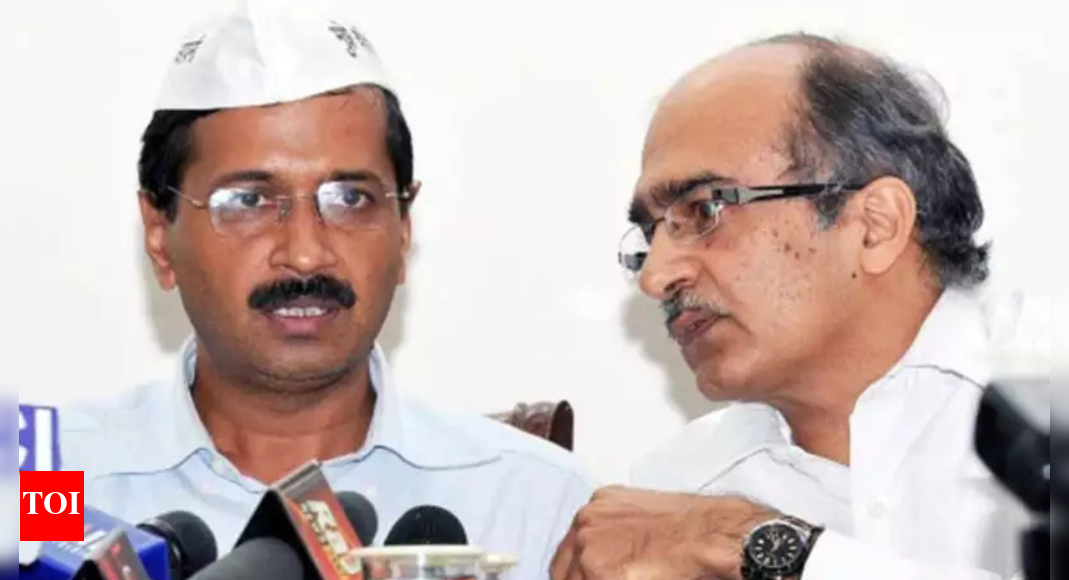
Prashant Bhushan, a former co-founder of the Aam Aadmi Party (AAP), has squarely blamed Arvind Kejriwal for the party's significant loss in the recent Delhi Assembly elections. Bhushan's accusations, delivered via social media and a previously written open letter, paint a damning picture of Kejriwal's leadership and the trajectory of the party he once helped to found. The core of Bhushan's argument centers on Kejriwal's alleged transformation of AAP from a transparent and accountable organization into a 'supremo-dominated' and corrupt entity. This shift, Bhushan contends, is the primary reason for AAP's dramatic decline from 62 seats in the previous election to a mere 22 in the recent polls. The contrast between the party's initial ideals and its current state, as depicted by Bhushan, underscores a significant internal conflict and raises questions about the future of AAP.
Bhushan's criticism is multi-faceted. He points to the alleged construction of a lavish 'sheesh mahal' (palace) for Kejriwal, as well as his use of luxury cars, as stark examples of the party's departure from its professed commitment to frugality and transparency. Furthermore, Bhushan accuses Kejriwal of disregarding detailed policy reports prepared by expert committees appointed by the AAP itself. These reports, according to Bhushan, were discarded in favor of what he describes as expedient and populist policies based on bluster and propaganda rather than considered policymaking. This alleged disregard for expert advice and a focus on short-term political gain, Bhushan argues, represent a betrayal of AAP's founding principles and a significant factor in the party's electoral defeat.
The open letter Bhushan shared, written in 2015 after he and Yogendra Yadav were expelled from the party, acts as a chilling prophecy. In the letter, Bhushan warned Kejriwal that the party's idealistic vision of clean and principled politics risked becoming a nightmare if the current trajectory continued. He expressed concern that even if Kejriwal successfully governed Delhi, the damage inflicted on the party's internal structure and moral compass would be irreversible. Bhushan's prescient words now appear remarkably accurate, given AAP's subsequent electoral performance and the ongoing internal strife. This reinforces the argument that the party's current predicament is not simply a result of electoral setbacks, but a consequence of deeper systemic issues stemming from leadership choices.
The significance of Bhushan's accusations extends beyond the internal dynamics of AAP. It raises wider questions about the nature of political parties in India and the challenges of maintaining ideological purity and accountability amidst the complexities of electoral politics. The stark contrast between AAP's initial promise of a different kind of politics and its current reality serves as a cautionary tale. Whether AAP can recover from this significant setback and regain its former support base remains to be seen. However, Bhushan's accusations provide a compelling narrative for understanding the party's decline and the significant role leadership plays in shaping a political party's success or failure. The BJP's decisive victory in Delhi, in stark contrast to AAP's loss, further highlights the volatility of the Indian political landscape and the importance of internal party cohesion and adherence to founding principles.
The immediate future of the AAP remains uncertain. While the party still holds power in Punjab and continues to operate at a national level, the Delhi loss represents a significant blow to its ambitions. The internal divisions highlighted by Bhushan's accusations could further hamper the party's ability to regroup and regain lost ground. The success of the BJP, a traditional political party with a long history, in contrast to the relative failure of AAP despite having a significantly shorter history underscores the continued dominance of established players in Indian politics and the challenges faced by newer parties aiming to disrupt the system. Furthermore, it suggests that even a party built on strong anti-corruption platforms can still succumb to the pressures of internal conflict and power struggles.