
 |
|
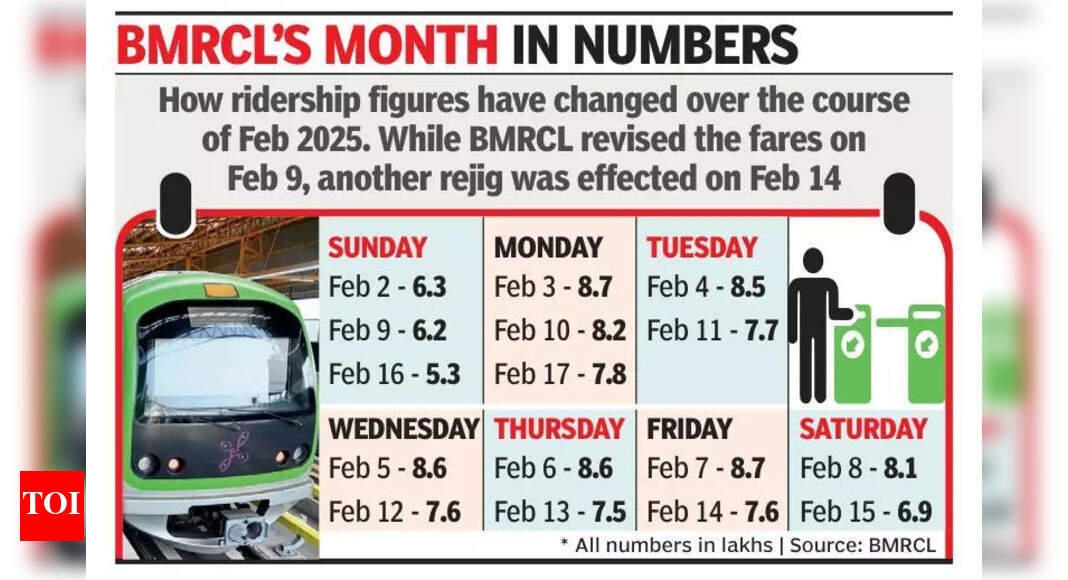
The recent fare hike implemented by Bengaluru's Namma Metro has resulted in a significant and sustained drop in daily ridership, raising concerns about the effectiveness of the fare adjustment and its impact on the city's transportation system. Initially, the fare increase, which passengers reported as a 100% increase on certain routes, led to an immediate decline in ridership. Even after BMRCL (Bangalore Metro Rail Corporation Limited) attempted to mitigate the negative impact by revising the fares, capping the maximum increase at 70%, the downward trend in ridership persisted. This decrease is not limited to weekdays; weekend ridership also experienced a sharp drop, indicating a broad rejection of the adjusted fares by a large segment of the population.
The revised fares, while intended to alleviate the burden on short-distance commuters, have done little to stem the overall decline. Long-distance travelers, in particular, continue to face significantly higher costs. Many commuters, unable or unwilling to bear the increased expenses, are turning to alternative transportation options. This includes an increase in the use of city buses operated by BMTC (Bangalore Metropolitan Transport Corporation) and a rise in the number of private vehicles on the road. This shift away from public transport directly contradicts the initial aim of the Metro system, which was designed to ease traffic congestion in the city. The increase in private vehicles used for commuting could potentially exacerbate the very problem the Metro was intended to solve, creating a vicious cycle of increased congestion and environmental concerns.
The negative impact of the fare hike is particularly felt by lower-income groups who relied heavily on the affordability of the Metro. The higher fares have effectively priced many out of the system, forcing them to rely on more expensive alternatives or forgo travel altogether. This raises serious questions about the social equity of the fare structure and the accessibility of public transportation for all segments of society. The blame game between the state and central governments further exacerbates the situation, with no clear resolution in sight. The lack of a concrete plan to address the issue, coupled with the continued decline in ridership, suggests a serious need for policy revisions and a reassessment of the cost-benefit analysis of the fare increase.
One particularly concerning aspect of the situation is the lack of consideration for certain passenger demographics. The absence of discounted passes for students, a common practice in other cities like Kochi, demonstrates a lack of sensitivity toward the specific needs of this crucial segment of the population. This omission may further contribute to the decline in ridership and underscores the need for a more inclusive and responsive fare policy. The BMRCL's response to the falling ridership has been rather passive, with the managing director stating that they are only 'looking at the data' and will consider further steps after establishing a clear trend. This lack of decisive action and proactive problem-solving raises questions about the organization's commitment to maintaining a viable and accessible public transportation system.
The overall situation highlights a critical need for a comprehensive review of the Namma Metro's fare structure. Simple price adjustments without considering the broader societal implications may only serve to alienate passengers and weaken the efficiency of the system. A successful public transportation system must be both affordable and accessible to all segments of the population. Failure to address these concerns could lead to further decline in ridership, increased traffic congestion, and environmental challenges. The BMRCL needs to engage in a more proactive and transparent dialogue with commuters, taking their feedback into consideration to ensure that the Metro system remains a viable and sustainable solution for Bengaluru's transportation needs. This includes actively exploring discounted fares for specific demographics, ensuring transparency in financial decisions, and addressing environmental impacts.
Source: Daily ridership continues to plummet on Bengaluru’s Namma Metro