
 |
|
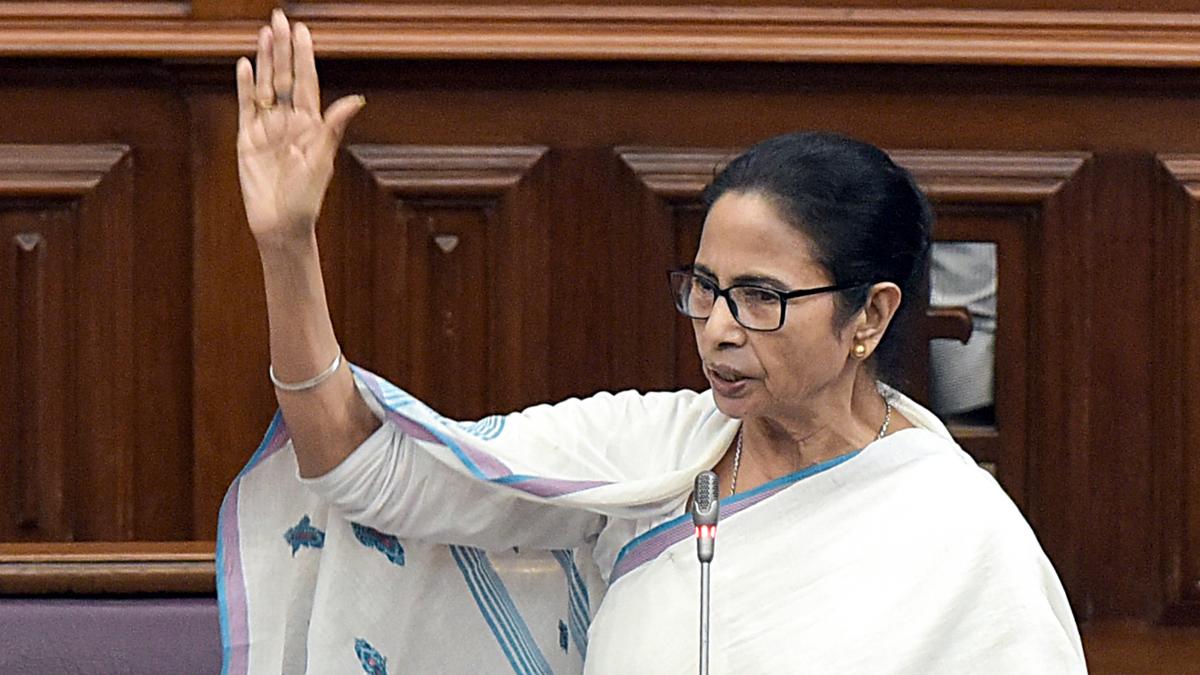
The political landscape of West Bengal is currently embroiled in a heated conflict, sparked by accusations of 'minority appeasement' leveled against Chief Minister Mamata Banerjee by the opposition BJP. This clash, playing out dramatically within the state assembly, highlights deep-seated religious and political divisions. The BJP, led by Suvendu Adhikari, has vehemently accused Banerjee's government of being anti-Hindu, going so far as to label her a leader of the 'Muslim League'. These allegations, coupled with claims of leniency towards terrorist groups, have ignited a fierce debate within the state legislature and beyond. Banerjee, visibly angered by these accusations, has vehemently denied them, asserting her Brahmin heritage and Hindu identity. She challenged Adhikari and the BJP to provide proof of these claims, threatening resignation if evidence is presented. This defiant stance underscores the high stakes of this political battle and the potential for escalating tensions.
The core of the conflict revolves around accusations of preferential treatment towards the Muslim minority population in West Bengal. The BJP's narrative centers on alleged discrimination against Hindus, citing instances such as concerns over restrictions on Saraswati Puja celebrations. The suspension of BJP MLAs, including Adhikari, for protesting against these perceived restrictions further inflamed the situation, leading to boycotts and dramatic displays within the assembly. These actions, while fueled by political motivations, reflect underlying societal divisions and anxieties related to religious identity and political representation. The suspension itself, a move interpreted by the BJP as an act of suppression, showcases the escalating tensions between the ruling Trinamool Congress and the opposition.
Banerjee's response to the accusations attempts to counter the BJP's narrative by emphasizing her Hindu identity. Her assertion of being a Brahmin and a proud Hindu is strategically aimed at defusing the BJP's claims of minority appeasement. However, her questioning of the potential consequences if a particular community takes to the streets reveals a perceived vulnerability within her approach. This highlights a complex dynamic where appeals to religious identity coexist with concerns about maintaining social order and political stability. The underlying tension underscores the precarious balance between political rhetoric and the potential for social unrest. The BJP's counter-arguments, pointing to instances like the alleged failure to arrest a member of a banned terrorist organization, further fuel the ongoing debate and raise concerns about governance and security.
The incident involving Saad Sheikh, an alleged member of the Ansarullah Bangla Team (ABT), arrested by Assam Police, adds another layer of complexity to the situation. The BJP uses this case to highlight perceived failures in law enforcement and further bolster its accusations against Banerjee's government. The inclusion of Sheikh's name on the Murshidabad voter's list casts a shadow on the administration's efficiency and raises concerns about potential security lapses. This points to a broader narrative beyond the immediate political conflict, raising concerns about potential security threats and governance issues within the state. This aspect of the conflict brings the debate beyond the realm of political maneuvering, introducing significant implications for the state's security and stability.
Beyond the immediate political ramifications, this conflict exposes deeper fault lines in West Bengal's socio-political fabric. The accusations and counter-accusations highlight a society deeply divided along religious lines, with each side utilizing religious identity for political gain. This has implications for social harmony and the delicate balance of power within the state. The escalation of the conflict, characterized by suspensions, protests, and strong rhetoric from both sides, indicates the potential for further unrest and challenges to the stability of the state. The coming months will likely witness a continued struggle for dominance, with both the ruling party and the opposition using this conflict to rally their respective bases and secure political advantage.