
 |
|
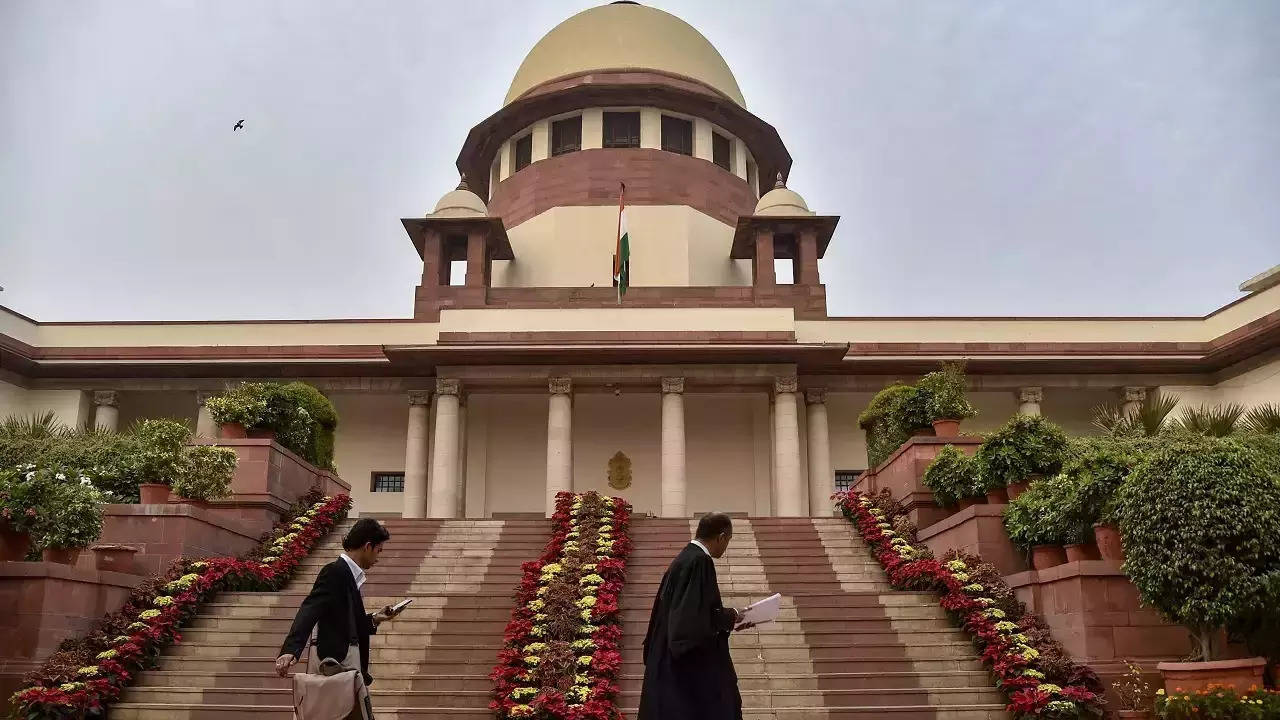
The Supreme Court of India is currently deliberating on a significant legal challenge to the Muslim Women (Protection of Rights on Marriage) Act, 2019, commonly known as the triple talaq criminalization law. This landmark case, heard before a bench led by Chief Justice Sanjiv Khanna, stems from a batch of Public Interest Litigations (PILs) filed seven and a half years after the court initially declared triple talaq unconstitutional. The core contention revolves around the act's criminalization of the pronouncement of triple talaq, even though the practice itself has been deemed void. The petitioners argue that this criminalization is paradoxical; if the divorce is not legally recognized, the marital relationship ostensibly continues, thus rendering the punishment for the mere utterance of the words “talaq, talaq, talaq” unjust and illogical. The essence of their argument hinges on the seeming contradiction of penalizing an act that doesn't legally dissolve the marriage.
Chief Justice Khanna’s pointed questioning during the hearing underscored this central paradox. He highlighted the incongruity of criminalizing the pronouncement of triple talaq when the act itself is not legally valid. The query implicitly challenges the effectiveness and rationale behind the law's deterrent effect. If the marriage remains legally intact despite the pronouncement, what is the actual harm being prevented or mitigated by the criminalization? This seemingly simple question exposes a fundamental flaw in the logic underpinning the act. The court's request for data from the Centre – the total number of FIRs filed, chargesheets submitted, and any similar petitions before High Courts – suggests a thorough investigation into the practical application and impact of the criminalization provision.
The Solicitor General, Tushar Mehta, representing the Centre, defended the law's criminalization aspect, arguing that triple talaq, despite being outlawed, persists as a regressive form of divorce. He maintained that this issue is a policy matter, one that the court shouldn't interfere with. His argument relies on the premise that a simple pronouncement of “talaq, talaq, talaq” effectively disrupts the marital relationship and leaves the woman vulnerable, regardless of its legal invalidity. He supported this by referencing Parveen Shakir, a Pakistani poet and former civil servant who experienced the harsh reality of triple talaq. This anecdotal evidence, while poignant, does not fully address the legal argument of the petitioners, who contend that the criminalization provision fails to adequately protect women. The Centre, in a previous affidavit, had justified the criminalization as a necessary deterrent, claiming that merely setting aside the practice had proved insufficient.
The petitioners contend that the law's primary objective—protecting women—is undermined by its focus solely on criminalizing the pronouncement, without addressing critical aspects such as maintenance and post-divorce support for women. They argue that the act does not ensure the women's financial security or physical safety. Their critical question is: What happens to a woman whose husband is incarcerated for uttering triple talaq, but their marriage remains legally intact? This question forces a reconsideration of the law's effectiveness and its overall impact on the lives of women affected by triple talaq. The petitioners’ claim that the act is unconstitutional rests heavily on the inherent conflict between criminalizing a void act and failing to provide necessary support to the affected women. The Supreme Court's decision will have significant implications, not just for the legal landscape regarding Muslim women's rights in India but also for the broader discussion on the balance between criminalizing harmful practices and effectively protecting vulnerable individuals.
The hearing's adjournment until March 17th suggests a comprehensive evaluation of the presented arguments and data. The Supreme Court's ultimate decision will determine the fate of this controversial law and set a significant precedent for future legal challenges involving the intersection of religious practices and women's rights. The justices will carefully consider the complex arguments, weigh the evidence, and strive for a judgment that reflects a fair and equitable approach to resolving this deeply sensitive and contested issue. The case highlights the ongoing tension between maintaining religious freedoms and ensuring the protection of women's rights within a diverse and evolving societal context. The final decision will have far-reaching implications for the legal and social landscape of India, shaping discussions on gender equality and the relationship between law and religious practices for years to come.