
 |
|
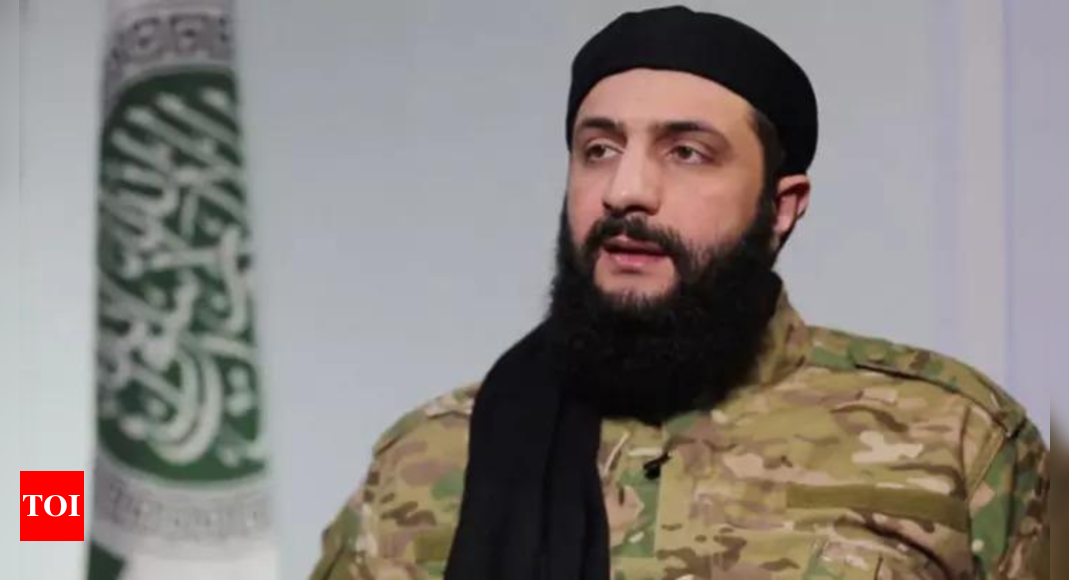
Mohammed Al-Jolani, the leader of Hayat Tahrir al-Sham (HTS), has become a central figure in the Syrian civil war. His rise to prominence, marked by a decisive rebel offensive that claimed to topple President Bashar al-Assad, has been accompanied by a significant shift in his public image. Once associated with Al-Qaeda and known for operating in the shadows, Jolani now presents himself as a more moderate and pragmatic leader, even adopting a new, more secular look, trading his traditional jihadist attire for military fatigues.
Jolani's past is undeniably controversial. His group, HTS, has its roots in Al-Qaeda's Syrian branch, and has been accused of numerous extremist activities and war crimes by the UN. His previous association with Al-Qaeda, and the continued classification of HTS as a terrorist organization by Western governments, complicates his current image as a leader working to bring order and stability to areas under HTS control. The ambiguity surrounding his motives remains a key point of contention, with some analysts viewing his moderation as genuine, and others seeing it as calculated political maneuvering.
This transformation in Jolani's image extends beyond his appearance. He has taken a more public role, appearing in recently captured cities like Aleppo and addressing crowds directly. This contrasts sharply with his previous reclusive persona, operating mostly from the shadows. The use of his real name, Ahmed al-Sharaa, instead of his nom de guerre in official statements, further suggests a deliberate attempt to distance himself from his militant past and potentially foster greater acceptance among the population. His actions in Aleppo, such as ordering his fighters to avoid public institutions to maintain order, exemplify this pragmatic approach.
Jolani's calculated actions are evident in his focus on reassuring residents in liberated areas, particularly minority groups. His public pronouncements emphasizing the safety and well-being of civilians, especially the Christian minority in Aleppo, are potentially intended to alleviate concerns and garner support. Analysts suggest these actions, while possibly not entirely sincere, are politically astute strategies to legitimize HTS's rule and secure their control in these regions. This strategic approach underscores Jolani's pragmatic leadership style, aiming to solidify HTS's power base in the midst of the ongoing conflict and the volatile geopolitical landscape.
The international community's response to Jolani's transformation has been mixed. While some experts acknowledge his shift towards more moderate rhetoric and actions, others remain skeptical. The continued designation of HTS as a terrorist organization by many Western governments highlights the enduring concerns about the group's true intentions and past actions. The lack of a clear and unified international approach toward HTS and Jolani underlines the challenges inherent in dealing with complex, evolving conflicts and the complexities of navigating power dynamics in post-conflict areas.
Jolani's journey underscores the fluid nature of power and ideology in conflict zones. His transformation highlights the potential for strategic shifts and adaptations in the pursuit of political goals. His success in consolidating power in Idlib province by merging with rival Islamist groups and establishing a civilian government, though often accused of human rights abuses, demonstrates his political acumen and operational capabilities. The longevity and stability of his current image and the ultimate impact of his leadership on Syria's future remain uncertain, dependent on several factors, including the evolving dynamics of the Syrian conflict and international reactions.
The ongoing debate surrounding Jolani's character and motives underscores the complexities of analyzing conflict leaders and the difficulty in disentangling genuine ideological change from strategic political maneuvering. His actions raise questions about the nature of leadership in civil conflicts, the influence of past associations and ideologies, and the effectiveness of image-building in securing power. The case of Mohammed Al-Jolani remains a crucial subject for analysts and observers of the ongoing Syrian conflict and its implications for regional stability and international security.
Source: Mohammed Al-Jolani: The rebel leader who toppled Assad’s rule in Syria