
 |
|
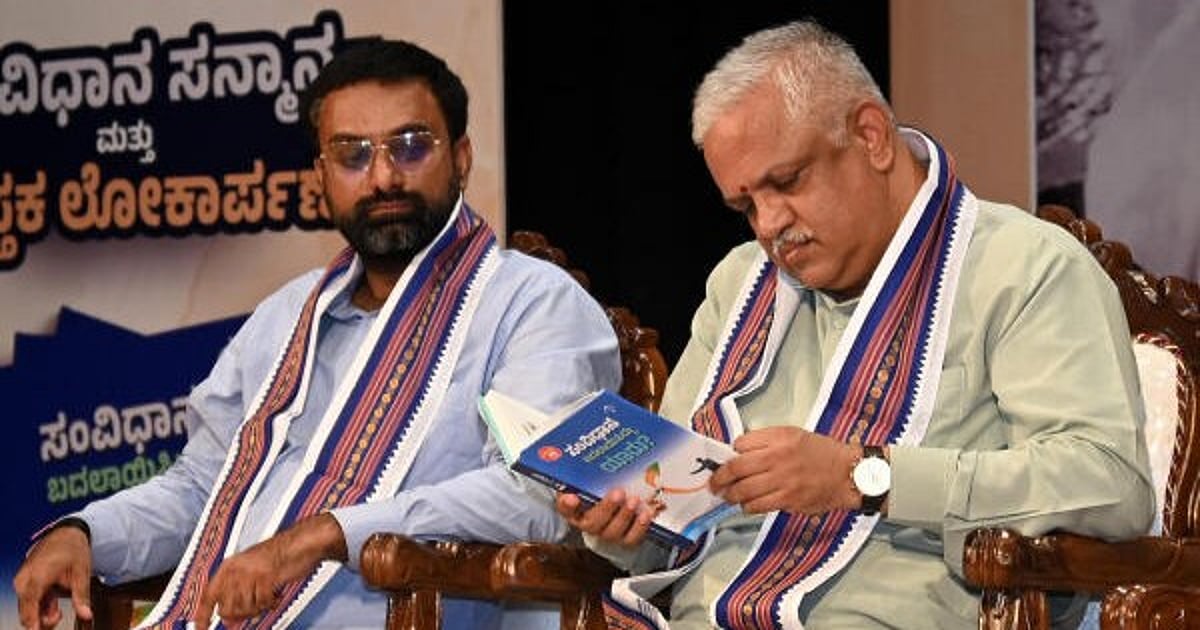
The statement by B.L. Santhosh, a prominent figure within the Bharatiya Janata Party (BJP), accusing the Indian National Congress (Congress) of attempting to undermine the fundamental structure of the Indian Constitution, has ignited a fresh wave of political discourse. This accusation, delivered during the launch of the book "Samvidhana Badalisidavaru Yaaru?" (Who Changed the Constitution?), authored by BJP leader Vikas Kumar P, underscores a long-standing tension between India's two major political parties regarding their respective interpretations of the Constitution and its implementation. The event, organized by Citizens for Social Justice, served as a platform for Santhosh to elaborate on his serious allegations, further fueling the ongoing debate surrounding the Congress party's historical role in shaping India's governance. The specifics of these accusations remain largely undefined in the provided text, leaving room for further investigation and potential counterarguments from the Congress party.
The book itself, "Samvidhana Badalisidavaru Yaaru?" (Who Changed the Constitution?), undoubtedly plays a central role in this controversy. Its title suggests a direct challenge to the Congress party's legacy, implying that the authors believe the party's actions have significantly altered or compromised the original intent and principles enshrined in the Indian Constitution. The absence of detailed information regarding the book's content prevents a thorough analysis of its arguments and the evidence presented to support Santhosh's claims. However, the very existence of such a publication, released under the auspices of a prominent BJP member and publicized through a seemingly partisan organization, highlights the significant political implications of this event. The book's reception and the subsequent public debate will likely serve as a barometer of public opinion on this contentious issue, influencing future political discourse and potentially impacting upcoming elections.
The involvement of Citizens for Social Justice, the organization responsible for hosting the book launch event, adds another layer of complexity to the situation. The organization's name suggests a commitment to social justice; however, its alignment with the BJP and its role in promoting a potentially partisan book raises questions about its neutrality and objectivity. Further research into the organization's history, funding, and past activities is necessary to fully understand its motivations and potential influence on the narrative surrounding the accusations against the Congress party. This raises a broader concern about the role of advocacy groups and organizations in shaping public opinion and influencing political narratives. The potential for bias and the importance of critical evaluation of information sources remain paramount in understanding the complexities of this political conflict.
The accusations levelled by Santhosh against the Congress party demand careful scrutiny. A thorough examination of historical events and policy decisions made by the Congress during its long tenure in power is crucial to assess the validity of these claims. This requires an objective analysis of the Congress party's actions, considering both their intended consequences and their actual impact on the functioning of the Indian democracy and the protection of fundamental rights. The need for a balanced perspective is crucial, acknowledging the challenges faced by the Congress party throughout India's history while also critically evaluating decisions that may have inadvertently or intentionally undermined constitutional principles. This necessitates a nuanced and detailed examination of the historical context, going beyond soundbites and political rhetoric.
Moving forward, a productive discussion surrounding these allegations requires a commitment to factual accuracy, rigorous analysis, and respectful debate. Dismissing accusations outright without providing counterarguments or engaging in constructive dialogue hinders meaningful progress. It is imperative that all parties involved, including the BJP, the Congress, and independent observers, adhere to the highest standards of intellectual honesty and academic rigor when addressing these serious accusations. The debate must move beyond partisan rhetoric and focus on a comprehensive and evidence-based assessment of the Congress party’s historical role in shaping the Indian Constitution and its application. Only through a commitment to truth and respectful discourse can a balanced understanding be reached, and the integrity of India’s democratic institutions be upheld.
Source: Congress tried to destroy the basic structure of the Indian Constitution: B L Santhosh