
 |
|
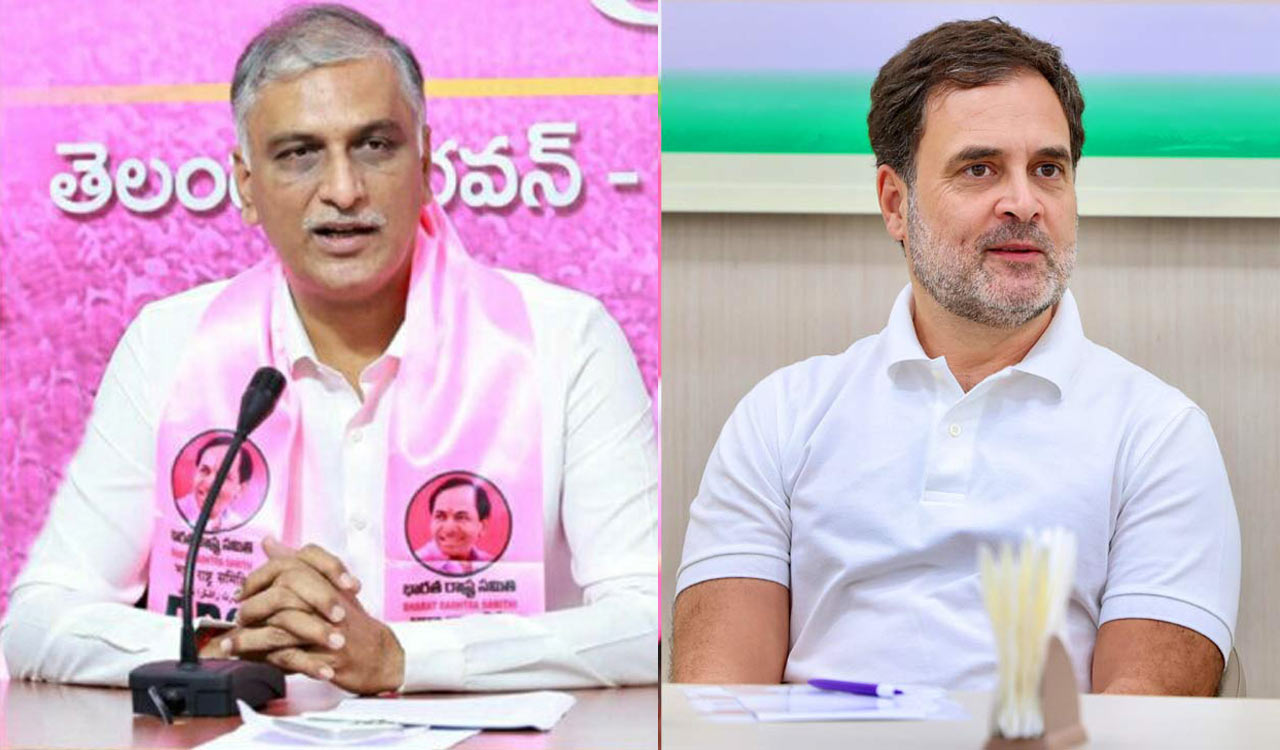
The recent political sparring between Telangana Rashtra Samithi (BRS) leader Harish Rao and Congress leader Rahul Gandhi highlights a crucial point about the application of constitutional rights and the accusations of hypocrisy often levied in political discourse. Harish Rao's sharp criticism centers on what he perceives as a double standard in Rahul Gandhi's public pronouncements regarding restrictions on his political activities and the Congress party's own actions in the past. The crux of Rao's argument revolves around an incident involving the arrest of S Madhusudana Chari, the Leader of the Opposition in the Telangana Legislative Council, during the Congress party's tenure in power in Telangana. Rao directly questions the apparent contradiction between Rahul Gandhi's condemnation of alleged restrictions on his movement in Uttar Pradesh and the Congress government's actions in Telangana. This confrontation underscores the complexities of political accusations of hypocrisy and the challenges in maintaining consistent adherence to constitutional principles across diverse political landscapes and changing power dynamics.
The incident involving Madhusudana Chari serves as the central point of contention. Rao emphasizes that if Rahul Gandhi believes he holds the right to visit Sambhal in Uttar Pradesh as the Leader of the Opposition, then the Congress government in Telangana should be held accountable for its actions against Chari. This isn't simply a matter of differing political views; Rao frames it as a blatant disregard for constitutional principles. By linking the two events – Gandhi's alleged impediment in Uttar Pradesh and Chari's arrest in Telangana – Rao aims to expose a supposed hypocrisy at the heart of the Congress party's approach to constitutional rights. The timing of Rao’s statement is also politically significant, potentially aiming to undermine the Congress party's credibility in the lead-up to any future elections. The accusation of hypocrisy serves as a potent political weapon, potentially impacting public perception of the Congress party.
The broader implications of this exchange extend beyond the specific individuals involved. It touches upon the crucial issue of how political parties uphold and interpret constitutional principles. Accusations of hypocrisy, when levied effectively, can significantly damage a political party's reputation and credibility. The public often holds political leaders to a higher standard, expecting them to act in accordance with the values they publicly espouse. Rao’s criticism challenges the Congress party's narrative surrounding the protection of constitutional rights and aims to draw attention to the alleged inconsistency between its words and actions. This incident underscores the importance of transparency and accountability in political actions and the need for consistent adherence to constitutional values regardless of political affiliations. Further investigation into the specifics of Madhusudana Chari’s arrest, the reasons behind it, and the legal justification for the actions taken by the Congress government in Telangana would provide greater clarity on the validity of Rao’s claims. This episode highlights the inherent tensions between political expediency and upholding the rule of law, a tension that is often at the heart of political debates concerning constitutional rights.
The use of strong rhetoric, such as Rao's description of the situation as embodying “hypocrisy,” further amplifies the political dimension of this conflict. This isn't simply a factual discussion; it's a calculated political move aimed at discrediting a rival political party. The power struggle between the BRS and Congress in Telangana further contextualizes this clash. The accusations are not only about constitutional rights but also about political positioning and the competition for influence within the state's political landscape. This political maneuvering underlines the importance of understanding the intricate dynamics of state-level politics and their connections to national political narratives. The public's reception to these accusations will likely depend on its assessment of the credibility of both sides involved, the available evidence concerning Madhusudana Chari's arrest, and the broader public perception of each party’s commitment to upholding the constitution.
Source: Harish Rao slams Rahul Gandhi over hypocrisy in constitutional violations under Congress Rule