
 |
|
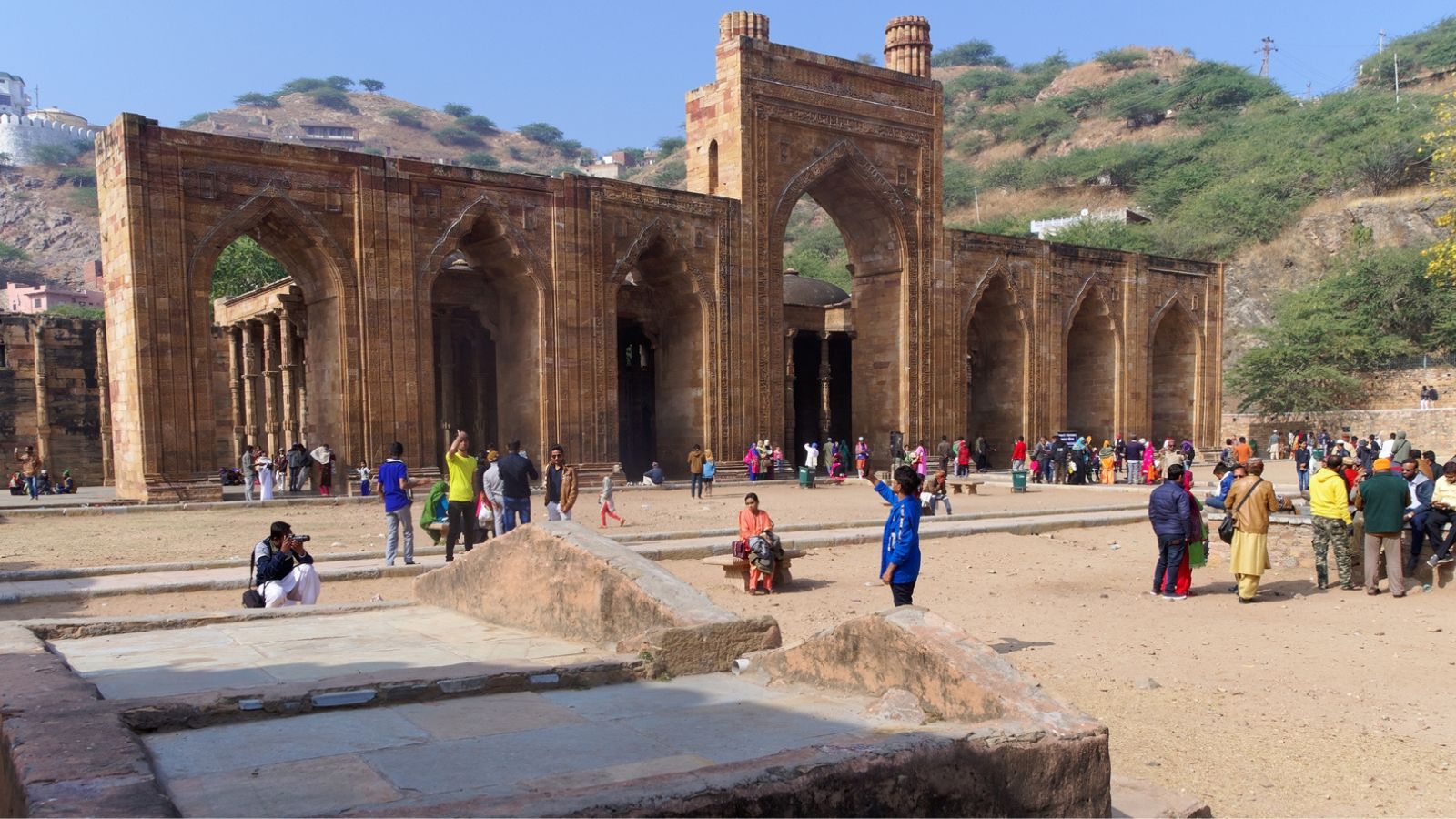
The recent petition for a survey of the Ajmer Sharif Dargah has ignited a parallel demand for a similar investigation into the historical Adhai Din Ka Jhonpra mosque in Ajmer, Rajasthan. This demand, fueled by claims of a pre-existing Sanskrit college and temple on the site, highlights a complex intersection of historical narratives, religious sensitivities, and political maneuvering. The Adhai Din Ka Jhonpra, located a short distance from the Dargah, is a significant monument protected by the Archaeological Survey of India (ASI), adding another layer of complexity to the unfolding situation. The deputy mayor of Ajmer, Neeraj Jain, has been a vocal proponent of the survey, asserting that evidence points towards the mosque's construction on the ruins of a demolished Hindu educational institution, echoing the destruction of Nalanda and Takshila. He cites the ASI's possession of over 250 statues, swastikas, bells, and Sanskrit shlokas found at the site as proof of its pre-Islamic origins, claiming this supports a narrative of cultural and civilizational destruction.
Jain’s claims, however, are not universally accepted. The ASI's official position attributes the mosque's name to a two-and-a-half-day Urs festival held there centuries ago. Historian Har Bilas Sarda's 1911 book, 'Ajmer: Historical and Descriptive', provides a different perspective, suggesting the name emerged in the late 18th century when fakirs began gathering to commemorate their religious leader. Sarda's account also describes a Jain temple built by Seth Viramdeva Kala in 660 AD, constructed to accommodate the Jain priestly class. This temple, according to Sarda, was later destroyed by Afghan forces under Muhammad Ghori in 1192, subsequently being transformed into the mosque we see today. The ASI's own account corroborates this latter part of the narrative, highlighting the mosque's construction by Qutubuddin Aibak around 1200 AD, using carved pillars and incorporating architectural elements indicative of its conversion from a pre-existing structure. The discrepancy lies in the nature and extent of the pre-existing structure and its significance.
The debate extends beyond academic circles. Rajasthan Assembly speaker Vasudev Devnani, MLA from Ajmer North, publicly supported the call for an ASI survey in May, following claims made by Jain monks and members of the Vishwa Hindu Parishad, who echoed the assertions of a prior Sanskrit school and temple. This political dimension adds another layer of complexity, potentially influencing public discourse and potentially impacting future decisions regarding the site. The call for halting existing religious activities and restoring the site to its alleged former glory highlights the deeply rooted political and religious sensitivities surrounding this historical site. The competing narratives, with claims supported by both historical accounts and archaeological findings, present a challenge in determining the actual historical sequence of events.
The controversy surrounding the Adhai Din Ka Jhonpra underscores the complexities of interpreting historical narratives, particularly in regions with a multi-layered religious and cultural history. The competing claims regarding the mosque's origins highlight the inherent difficulties in establishing a definitive account based on the available evidence. The fact that the site is under ASI protection adds another layer of complexity, raising questions about the process and implications of any potential survey. The potential for such surveys to become politically charged is undeniable, particularly in a region with a history of religious and communal tensions. The involvement of political figures and organizations further underscores the significant political dimensions at play, raising concerns about the potential for the situation to escalate beyond academic discourse.
The situation necessitates a careful and impartial approach, prioritizing rigorous historical research and a balanced interpretation of available evidence. The ASI's role becomes critical in navigating this sensitive situation, ensuring transparency and impartiality in any investigation. The debate underscores the importance of fostering open dialogue and mutual understanding between different religious and community groups, encouraging a respectful exploration of shared history. Ultimately, the focus should be on preserving the historical significance of the site, irrespective of the specific narratives surrounding its origins. The ongoing debate over the Adhai Din Ka Jhonpra serves as a potent reminder of the delicate balance between historical accuracy, religious sentiments, and political considerations in interpreting India's rich and often contested past.