
 |
|
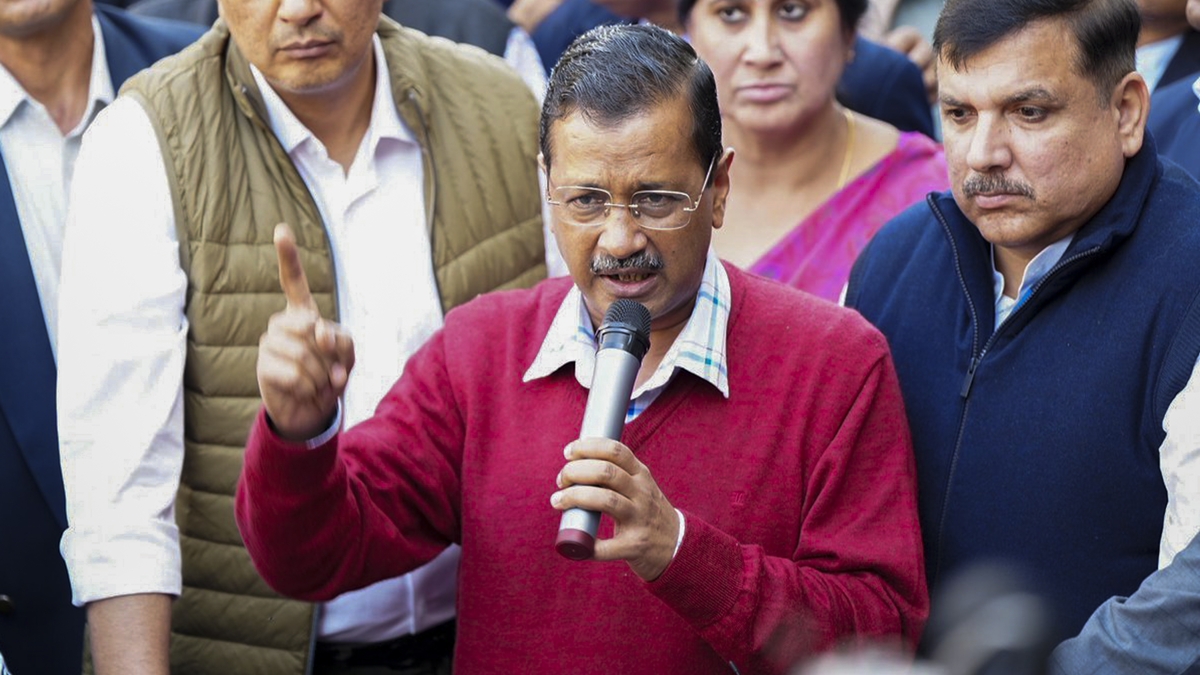
The recent attack on Shiromani Akali Dal leader Sukhbir Singh Badal outside the Golden Temple in Amritsar has sparked a political firestorm in India. Delhi Chief Minister Arvind Kejriwal, leader of the Aam Aadmi Party (AAP), swiftly condemned the incident, praising the swift action of the Punjab Police in preventing what he termed a "very big" tragedy. Kejriwal's statement, delivered in the Delhi Assembly, highlighted his commendation of the police force's efficiency in maintaining law and order and averting a potentially catastrophic event. This praise stands in stark contrast to his subsequent criticism of the Bharatiya Janata Party (BJP), accusing them of complicity in an attempt to damage Punjab's reputation. The incident, captured on camera, involved a former terrorist, Narain Singh Chaura, attempting to shoot Badal at close range while Badal was serving as a sewadar (volunteer) at the temple. The attacker was apprehended by a plainclothes policeman before he could inflict any serious harm. The timely intervention prevented a potentially significant loss of life and an escalation of already tense political climate.
Kejriwal's statement serves a dual purpose; it expresses concern over the attack and attempts to leverage the situation for political gain. His pointed criticism of the BJP’s silence on the incident while simultaneously highlighting the violence within Delhi, controlled by the BJP-led central government, is a clear attempt to shift the narrative and attack a political opponent. This strategic move underscores the highly charged political landscape of India, where even acts of violence become tools of political maneuvering. The contrast drawn between the perceived effectiveness of the Punjab Police, a state government entity, and the perceived shortcomings of the Delhi Police, controlled by the central government, is strategically placed to create a narrative of comparative governance success. This narrative is intended to benefit Kejriwal and the AAP politically, emphasizing their preferred governance model. The timing of the incident, during Badal's penance for past governance perceived failings, adds another layer of complexity and political intrigue to the situation.
The incident raises crucial questions about security at high-profile religious sites and the potential for politically motivated attacks. The fact that the attacker was a former terrorist adds a layer of concern about potential extremist networks and their ability to infiltrate such locations. The investigation launched by the Punjab Police will be crucial in determining the full extent of the plot and any potential links to organized groups or political entities. The speed and efficiency of the police response must also be analyzed to assess the preparedness and effectiveness of security protocols around the Golden Temple, a site of immense religious and cultural significance. Beyond the immediate incident, the broader political context is equally important. The ongoing tension between the AAP and BJP, the two major political forces in the region, casts a long shadow on the interpretation of the event. This case serves as a clear example of how even events seemingly unrelated to a specific political party can be manipulated and used to advance political goals and narratives.
Furthermore, the attack highlights the vulnerabilities of even high-profile individuals in public life. Despite being surrounded by potential security personnel, Badal was still vulnerable to an attack. This raises questions about the adequacy of security measures provided to political leaders and the need for continuous improvement and evaluation of security protocols. The incident has undoubtedly raised concerns among the general public, highlighting the pervasive nature of violence and the potential for targeted attacks even in sacred spaces. The ensuing political debate surrounding the incident will likely continue for some time, further deepening the existing political divides within the region. The coming days and weeks will be critical in determining the full consequences of this event, both politically and in terms of security improvements in the wake of the attack. The investigation’s findings and any subsequent legal proceedings will likely provide valuable insights into the context and potential motivations behind the attack, informing future security strategies and public policy debates.
Finally, the narrative surrounding this incident underscores the complex relationship between religion, politics, and security in India. The Golden Temple, a sacred site for Sikhs worldwide, has unfortunately become a focal point of political maneuvering. The implications of this event extend beyond Punjab; it contributes to a broader national conversation about political violence, the effectiveness of law enforcement, and the safety and security of prominent political figures and religious sites. The use of this event for political point-scoring further emphasizes the need for responsible and reasoned discourse in the face of such incidents, avoiding further escalation of tensions and focusing instead on the safety and security of the population. The ongoing investigation will be critical in determining the full facts of the case, and all parties involved must allow the due process of law to function unimpeded.