
 |
|
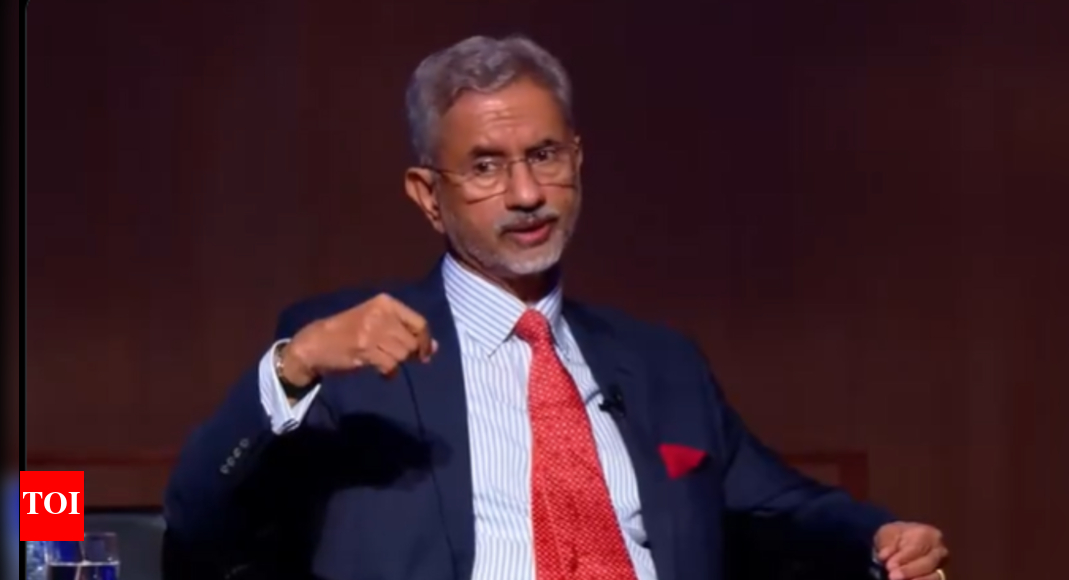
External Affairs Minister S. Jaishankar's recent statement regarding the Quadrilateral Security Dialogue (Quad) offers valuable insight into India's foreign policy and its assessment of the evolving geopolitical landscape. His confident assertion that the incoming Trump administration is unlikely to diminish support for the Quad is a significant declaration, particularly given the often unpredictable nature of Trump's foreign policy stances. This confidence stems not only from a hopeful outlook but also from a clear recognition of the Trump administration's instrumental role in revitalizing and strengthening the Quad. Jaishankar's direct crediting of the previous Trump administration for the Quad's resurgence from a vice-ministerial to a ministerial level underscores the significant progress made under the previous administration. This elevation reflects a recognition of the strategic importance of the Quad, showcasing a commitment to elevating it to a higher level of cooperation.
The minister's emphasis on the Quad's framework of equal contribution from all member nations (India, the United States, Japan, and Australia) is a critical point. This aligns perfectly with Trump's often-expressed views on alliances and burden-sharing. The 'everybody pays their fair share' analogy used by Jaishankar is not simply a diplomatic phrase; it reflects a fundamental principle of the Quad's structure. This is likely a reassuring factor for the Trump administration, as it resonates with his emphasis on equitable partnerships and avoiding situations where one nation carries a disproportionate burden. This aspect potentially diminishes concerns that the Quad might be viewed by the Trump administration as an unfair or imbalanced alliance, thereby securing its continued support.
Jaishankar's address to concerns about 'weak links' within the Quad highlights the inherent complexities of multilateral alliances. He acknowledges that disagreements and differing priorities among member nations will inevitably lead to external assessments of potential weakness. However, his dismissal of these concerns – particularly focusing on past skepticism regarding Australia's commitment and even past concerns about Japan's role – emphasizes the maturity and strengthening of the Quad. The minister's reference to Mike Pompeo and his likely agreement with Tony Blinken on the Quad's importance serves as a strong testament to the cross-party bipartisan understanding of the Quad's value, indicating that this consensus transcends partisan divisions in US foreign policy.
The evolution of the Quad's agenda, as noted by Jaishankar, is noteworthy. The expansion from initial focuses to a broader intergovernmental coordination mechanism reflects not only the growing confidence and cooperation between member nations, but also an acknowledgement of the interconnectedness of regional and global challenges. This expanding agenda indicates that the Quad is not just a reactive alliance but a proactive framework for addressing a wide range of issues from security concerns to economic cooperation. The alternating schedule of in-person and virtual summits showcases flexibility and adaptability in meeting the demands of an ever-changing global environment. The upcoming summit in India, in 2025, underscores the continued importance of the Quad and serves as a further testament to its commitment to solidifying its presence on the global stage.
In conclusion, Jaishankar's optimistic assessment of the Quad's future under the Trump administration is rooted in a thorough understanding of the partnership's development and structure. By highlighting the Trump administration's pivotal role in the Quad's resurgence, its commitment to fair burden-sharing, and the resolution of past concerns about potential weak links, Jaishankar lays out a compelling case for continued support. His analysis reinforces the view that the Quad is not merely a collection of nations bound by short-term interests but rather a strategic alliance with shared goals, a robust framework, and a proven track record of effective cooperation in a complex and ever-evolving global landscape. This strategic alignment strongly suggests that the Quad’s trajectory is likely to remain positive, continuing to strengthen and broaden its scope of influence in the years to come. The upcoming summit in India further cements this vision, signaling a commitment to collaborative progress and a shared dedication to mutual security and prosperity.