
 |
|
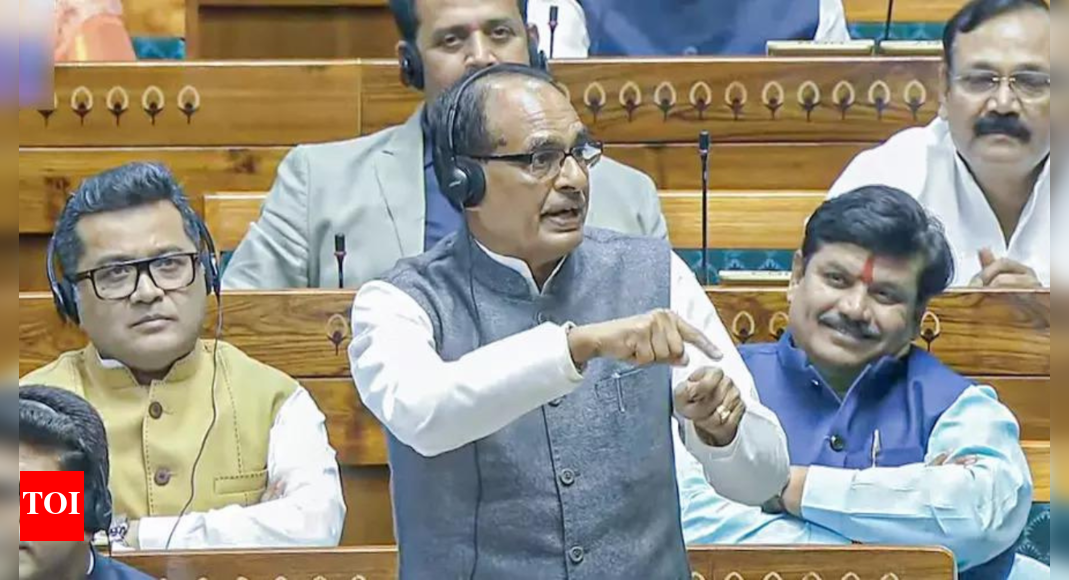
The Indian political landscape witnessed a significant development on Friday as Union Agriculture Minister Shivraj Singh Chouhan made a strong assurance to the Rajya Sabha regarding the government's commitment to procuring all agricultural produce at the Minimum Support Price (MSP). This declaration, made during Question Hour amidst ongoing discussions about MSP and a farmers' march to Delhi, carries substantial weight given the persistent concerns and demands from the farming community. Chouhan's emphatic statement, "I want to assure the House through you that all produce of farmers will be purchased at the minimum support price. This is the Modi government, and the guarantee to fulfill Modi's guarantee," resonates with the government's pledge to address farmers' anxieties. The context of this assurance is crucial, particularly against the backdrop of previous debates and protests related to MSP implementation and its efficacy.
Chouhan's defense of the Modi government's agricultural policies centered on the calculation of MSP, which he claimed incorporates a 50% profit margin over the cost of production since 2019. This claim, however, was juxtaposed with a critical assessment of past Congress-led governments, who he accused of neglecting farmers' needs and failing to offer remunerative prices. The minister's assertion that the current government provides a 50% profit margin on crops such as paddy, wheat, jowar, and soybean for the past three years serves as a central argument in his defense of the government's approach. This comparative analysis of governmental policies formed a significant portion of his response to questions raised during the session. The contrasting portrayal of past and present government actions underscores the political dimension of the issue, framing it as a contest between competing narratives about farmer welfare.
The exchange between Chouhan and Congress MP Jairam Ramesh further highlighted the stark political divide on the issue. Ramesh's inquiry focused on the government's commitment to MSP, prompting a reaffirmation from Chouhan that the MSP would be fixed at a profit margin exceeding 50% and that the government would indeed purchase the farmers' produce. The debate extends beyond mere numbers and figures; it reflects deep-seated ideological differences regarding the role of government intervention in agriculture and the responsibility for ensuring the well-being of farmers. The repeated mentions of past grievances and the current government's pledges to address these concerns illustrate the persistent nature of the agricultural crisis and the ongoing political tug-of-war surrounding its resolution.
In response to questions raised by RJD MP Manoj Kumar Jha about the possibility of a farm loan waiver framework, Chouhan shifted the focus from immediate relief to long-term income growth. He articulated the government's vision for sustainable agricultural growth, emphasizing initiatives aimed at increasing production, reducing costs, ensuring remunerative prices, offering compensation for losses, and promoting natural farming. This approach, characterized by a long-term perspective, diverges from the immediate financial assistance offered through loan waivers. Chouhan's statement, "Modi ji's government works with farsightedness. We will increase production, reduce costs, provide remunerative prices, offer compensation for losses, and promote natural farming to ensure farmers' incomes grow so much that they no longer need loan waivers," clearly outlines the government's strategic shift towards self-sufficiency and income enhancement rather than debt forgiveness.
The Rajya Sabha session highlighted the complexities inherent in addressing the challenges faced by Indian farmers. While the government's pledge to purchase all farm produce at MSP is a significant declaration, the implementation and effectiveness of this commitment remain to be seen. The debate also reveals a broader ideological clash concerning the most appropriate methods for supporting farmers: immediate financial relief versus long-term sustainable income growth. The discussion highlights the need for continued dialogue and collaboration between the government, farmers, and opposition parties to ensure that the concerns of the farming community are adequately addressed. The success of the government's policy will not only depend on its implementation but also on factors such as market fluctuations, technological advancements, and the overall economic climate.