
 |
|
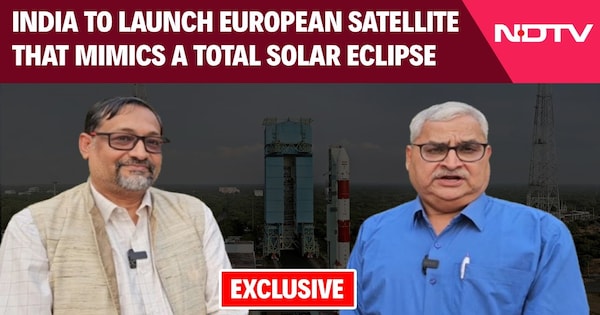
India's space program, spearheaded by the Indian Space Research Organisation (ISRO), continues to make significant strides on the global stage. The recent launch of the European Space Agency's (ESA) Proba-3 satellites aboard India's Polar Satellite Launch Vehicle (PSLV) marks a crucial milestone in international space collaboration and showcases ISRO's growing capabilities as a reliable launch provider. The mission, a testament to the increasing interdependence and shared ambitions within the global space community, underscores the significant technological advancements required for achieving such complex scientific endeavors. The selection of ISRO's PSLV, a proven and reliable workhorse rocket known for its cost-effectiveness and impressive track record, highlights the agency's expertise and its ability to meet the exacting requirements of international partners.
The Proba-3 mission is particularly noteworthy for its ambitious scientific objective: to mimic a total solar eclipse. This is achieved through a sophisticated technique called precision formation flying, where two satellites fly in precise formation to create an artificial eclipse. One satellite blocks the sun, enabling the other to study the faint corona, the outermost layer of the sun's atmosphere, without being overwhelmed by the sun's intense light. This innovative approach allows scientists to study the sun's corona with unprecedented detail, providing valuable insights into solar dynamics and their influence on space weather. The data gathered will be instrumental in enhancing our understanding of solar flares, coronal mass ejections, and their potential impact on Earth's technological infrastructure and climate.
The successful launch from Sriharikota represents not only a technological triumph for ISRO and ESA, but also symbolizes a deeper collaboration between nations in the pursuit of scientific knowledge. The partnership highlights the benefits of international cooperation in the complex and resource-intensive field of space exploration. By pooling resources, expertise, and technological capabilities, participating nations can accomplish far more than any single entity could achieve independently. This collaborative approach will be crucial in addressing the challenges and opportunities presented by the increasingly competitive and rapidly evolving landscape of space exploration. The Proba-3 mission serves as a powerful example of how international partnerships can accelerate scientific discovery and advance technological frontiers.
The mission’s success is a testament to the meticulous planning, rigorous testing, and dedicated work of the scientists and engineers involved. From the design and development of the satellites to the precise execution of the launch, every stage of the mission required exceptional skill and expertise. The detailed analysis of the data gathered by Proba-3 will undoubtedly contribute significantly to our understanding of the sun, its behavior, and its effect on our planet. This knowledge will not only contribute to fundamental scientific understanding but also has practical implications for predicting space weather, safeguarding satellite operations, and protecting critical infrastructure from solar storms.
Beyond the immediate scientific benefits, the Proba-3 mission carries broader implications for the future of space exploration. It highlights the growing importance of precision formation flying as a valuable technique for conducting scientific observations in space. This technology has a wide range of applications, from astronomy and astrophysics to Earth observation and space exploration. As technology continues to advance, we can expect to see more sophisticated and ambitious missions that leverage this technique for even more groundbreaking scientific discoveries. The success of this mission is an encouraging sign of what the future holds for international space cooperation and scientific advancement.
Source: India To Launch European Satellite That Mimics A Total Solar Eclipse