
 |
|
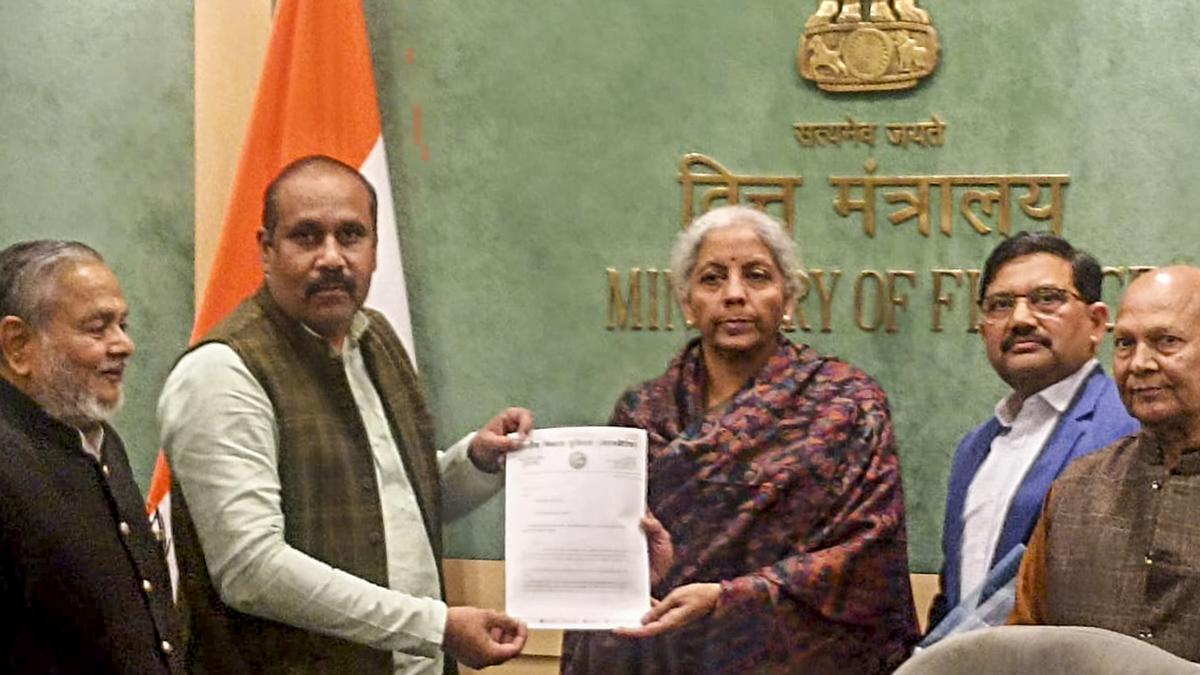
The pre-budget consultations between Union Finance Minister Nirmala Sitharaman and various stakeholders, including farmers' associations, agricultural industries, and economists, highlighted significant concerns within India's agricultural sector. A central demand echoed across the meeting was the substantial increase of the PM Kisan Samman Nidhi (PM-KISAN) scheme, a flagship program providing financial assistance to small and marginal farmers. Representatives from the Samyukt Kisan Morcha-Non Political (SKM-NP) and the Bharatiya Kisan Sangh (BKS) vehemently advocated for doubling the annual income support from ₹6,000 to ₹12,000. This demand reflects the widespread feeling amongst farmers that the current amount is insufficient to cope with rising input costs and ensure a reasonable standard of living. The persistent inflation and fluctuating market prices have made it increasingly difficult for farmers to maintain profitability, despite their crucial role in feeding the nation. The current support, stagnant for six years according to BKS, is viewed as woefully inadequate to address the current economic realities faced by India's farming community.
Beyond the financial assistance, the meeting exposed deep-seated concerns regarding the existing agricultural policies and their impact on farmers' livelihoods. Dharmendra Malik of the SKM-NP pointed to systemic issues, including the unreliable availability of essential inputs like seeds, fertilizers, pesticides, power, and labor. He underscored the inadequacy of the Minimum Support Price (MSP) system, arguing that it fails to even cover input costs. This criticism is grounded in the assertion that the current calculation method undervalues farmers' efforts and investment, rendering the MSP ineffective in protecting them from market volatility. The SKM-NP's call to adopt the MSP formula recommended by the M.S. Swaminathan Commission underscores the need for a fundamental reform in agricultural pricing policies. This commission's report suggested a cost-plus-50% formula, designed to guarantee farmers a fair return for their produce, a concept viewed as essential for ensuring their financial stability and motivating future generations to engage in farming. Furthermore, expanding the list of crops covered by MSP was also emphasized as crucial to ensuring broad-based support for farmers beyond a select few commodities.
The Bharatiya Kisan Sangh (BKS), aligning with the SKM-NP's concerns, expressed additional demands aiming at enhancing the effectiveness of existing support mechanisms. Their call for input tax credit (ITC) under the Goods and Services Tax (GST) seeks to alleviate the tax burden on farmers, aligning them with other businesses that benefit from ITC. Moreover, the BKS advocated for direct benefit transfer (DBT) of fertilizer subsidies to farmers, bypassing the intermediary fertiliser companies. This approach aims to improve transparency and ensure that subsidies reach the intended beneficiaries efficiently, minimizing leakages and potential corruption. Their support for natural farming, coupled with a call to utilize the country's livestock resources to bolster this approach, represents a push towards sustainable and environmentally friendly agricultural practices. This approach could potentially reduce reliance on chemical fertilizers, a significant input cost, thus directly impacting farmers' profitability and reducing the environmental footprint of Indian agriculture.
Ajay Vir Jakhar, chairman of the Farmers' Forum, highlighted the significant challenges faced by farmers in handling perishable goods like fruits and vegetables. He proposed the implementation of uniform taxation across agricultural markets, similar to the GST system, as a way to improve governance and market efficiency. Such a system, he argued, would help mitigate food inflation and price fluctuations, creating a more stable and predictable market environment. This proposal aims to encourage entrepreneurial activities in the agricultural sector, fostering healthy competition and ultimately benefiting both farmers and consumers. By streamlining the regulatory framework, his vision seeks to create a more transparent and equitable system that reduces market inefficiencies and supports the development of a more robust agricultural economy.
The concerns extended beyond the farming community to include the agricultural industries. These industries collectively sought GST exemptions on various essential agricultural inputs, including machinery, fertilizers, seeds, and medicines. The PHD Chamber of Commerce and Industry specifically called for a reduction in GST on pesticides, from 18% to 5%, aiming to reduce the cost of pest control for farmers. Simultaneously, they urged the government to crack down on the sale of smuggled and spurious pesticides, a significant problem affecting the quality and safety of agricultural produce. These demands reflect the interconnected nature of the agricultural value chain, highlighting the need for holistic policy interventions to support both farmers and the industries associated with them. The combined pressures of rising costs, erratic market prices, and unreliable supply chains demand a comprehensive and coordinated approach that addresses the systemic challenges plaguing the agricultural sector.
Source: Farmers urge Finance Minister to enhance PM Kisan Nidhi to ₹12,000 at pre-budget meeting