
 |
|
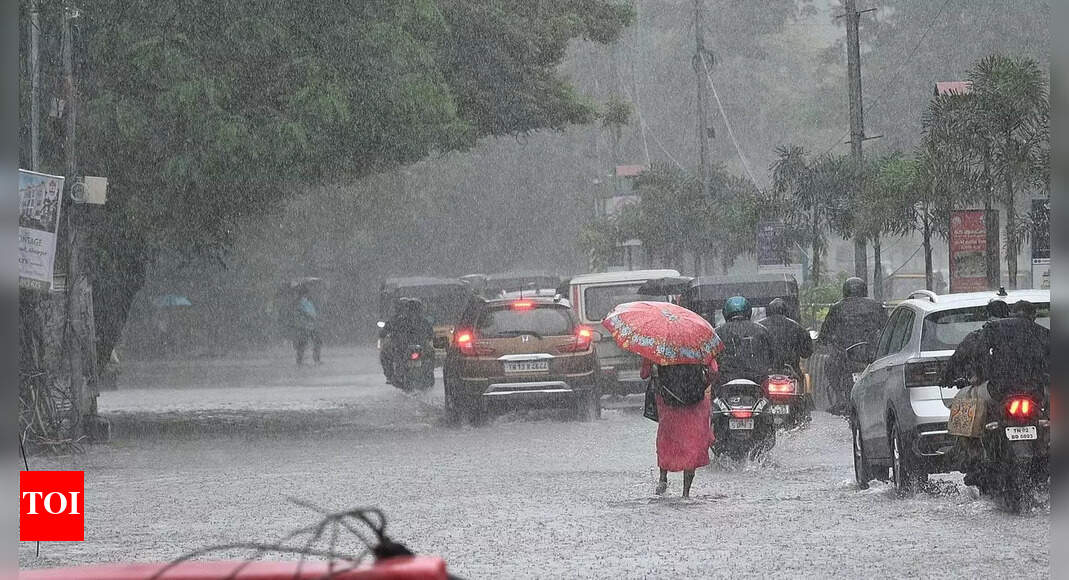
The city of Chennai, India, is currently experiencing a period of cool weather characterized by misty mornings and chilly nights. This weather pattern is expected to continue for the next few days, but a significant shift is anticipated in the coming week. Meteorological experts predict the return of rainfall to the region, driven by a weather system that initially intensified as a depression off the Andhra Pradesh coast. This system, while weakening, is expected to re-emerge as a weak atmospheric disturbance off the Tamil Nadu coast. This resurgence is projected to bring rainfall back to Chennai sometime around December 26th or 27th, according to blogger Pradeep John's online forecast. This prediction aligns somewhat with the India Meteorological Department's (IMD) seven-day forecast, which indicates a possibility of light to moderate rain in parts of Tamil Nadu, Puducherry, and Karaikal. The IMD's more specific, localized forecast for Chennai predicts light rain in some areas, accompanied by mist or haze during the early morning hours on Sunday. The forecast also suggests partly cloudy skies with maximum temperatures around 31-32 degrees Celsius and minimum temperatures of 24-25 degrees Celsius. The current cool weather experienced in Chennai can be attributed to the weather system off the Andhra Pradesh coast pushing cold northerly winds over north Tamil Nadu. This phenomenon has resulted in a noticeable drop in temperatures, with readings on Saturday reaching as low as 24.7 degrees Celsius in Nungambakkam and 24.2 degrees Celsius in Meenambakkam.
The significant rainfall recorded in Chennai this year adds another layer of complexity to the weather predictions. With only ten days remaining in the northeast monsoon season, Chennai has already accumulated significantly more rainfall than usual. Nungambakkam observatory recorded 103 cm of rainfall since October 1st, representing a surplus of approximately 22 cm compared to the average. Similarly, Meenambakkam recorded 99 cm, exceeding the average by about 18 cm. The cumulative rainfall for both observatories is considerably higher than their annual averages (182 cm against 140 cm and 138 cm respectively). Pradeep John highlights the city's impressive rainfall totals across various stations, many exceeding 200 cm. This abundance of rainfall is attributed to the combined effect of both the southwest and northeast monsoons, both contributing excess precipitation. Specific locations with exceptionally high rainfall include Manali New Town (226 cm), Tiruvottiyur (213 cm), Kolathur (211 cm), Vadapalani (208 cm), Anna Nagar West (206 cm), Perambur (203 cm), and Puzhal (202 cm). This substantial rainfall underscores the impact of the monsoon seasons on the city's water resources and infrastructure, potentially highlighting the need for improved drainage systems and flood mitigation strategies.
The predictions regarding the return of rainfall to Chennai after Christmas offer a crucial insight into the city's short-term weather outlook. The interplay between the weakening weather system and the existing cool conditions underscores the dynamic nature of the region's climate. The IMD's seven-day forecast, while suggesting potential rain, lacks the specificity of Pradeep John's prediction, suggesting a more localized understanding of the developing weather pattern. The difference in specificity highlights the challenges of accurate long-range forecasting, as many factors can influence the trajectory and intensity of weather systems. The current surplus rainfall recorded across various parts of Chennai presents a significant contextual factor in assessing the potential impact of future rainfall events. The city's infrastructure and drainage systems will need to be adequately prepared to handle any significant rainfall, particularly given the already saturated ground conditions. Monitoring the evolving weather patterns closely will be vital in managing the risks associated with potential flooding or other weather-related disruptions. The interplay between the IMD's official forecasts and independent predictions, such as those provided by Pradeep John, provides a valuable opportunity for a holistic understanding of the likely weather scenarios, enabling better preparedness and response strategies.